Follow Us on Google
“Power is the great aphrodisiac.”
—Henry Kissinger
By Omoniyi Salaudeen
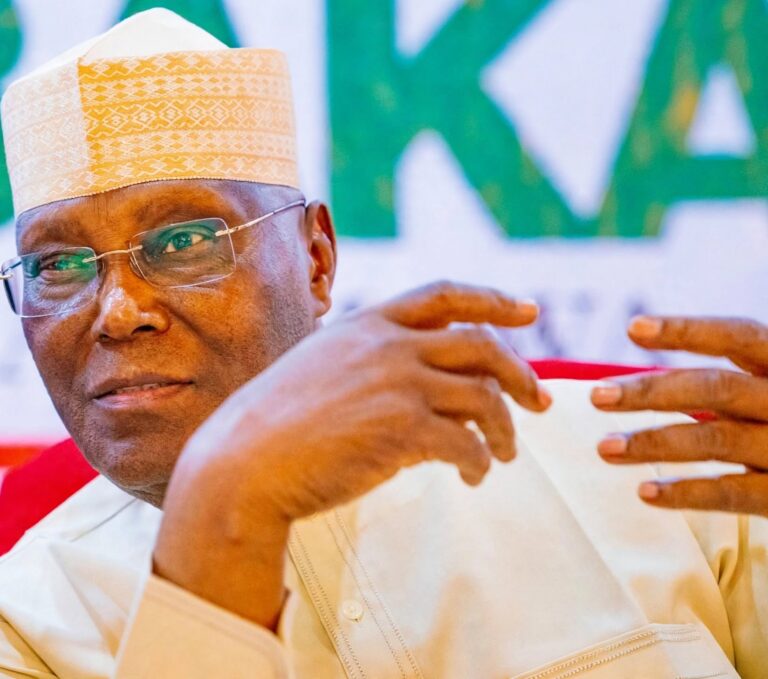
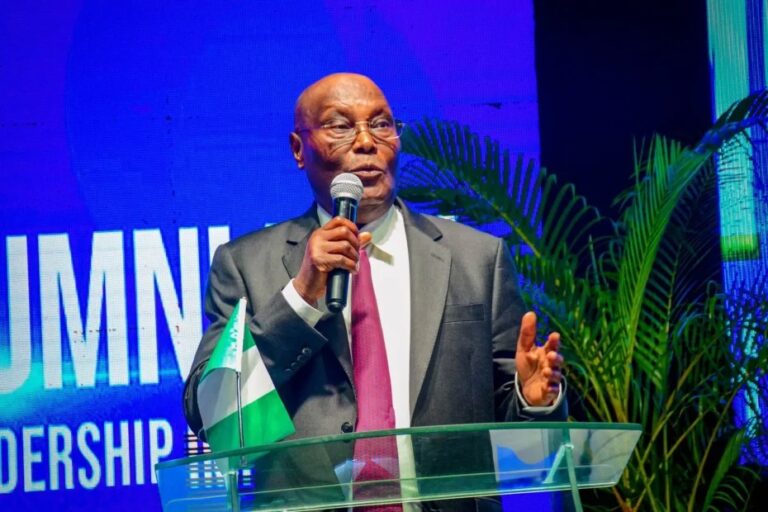
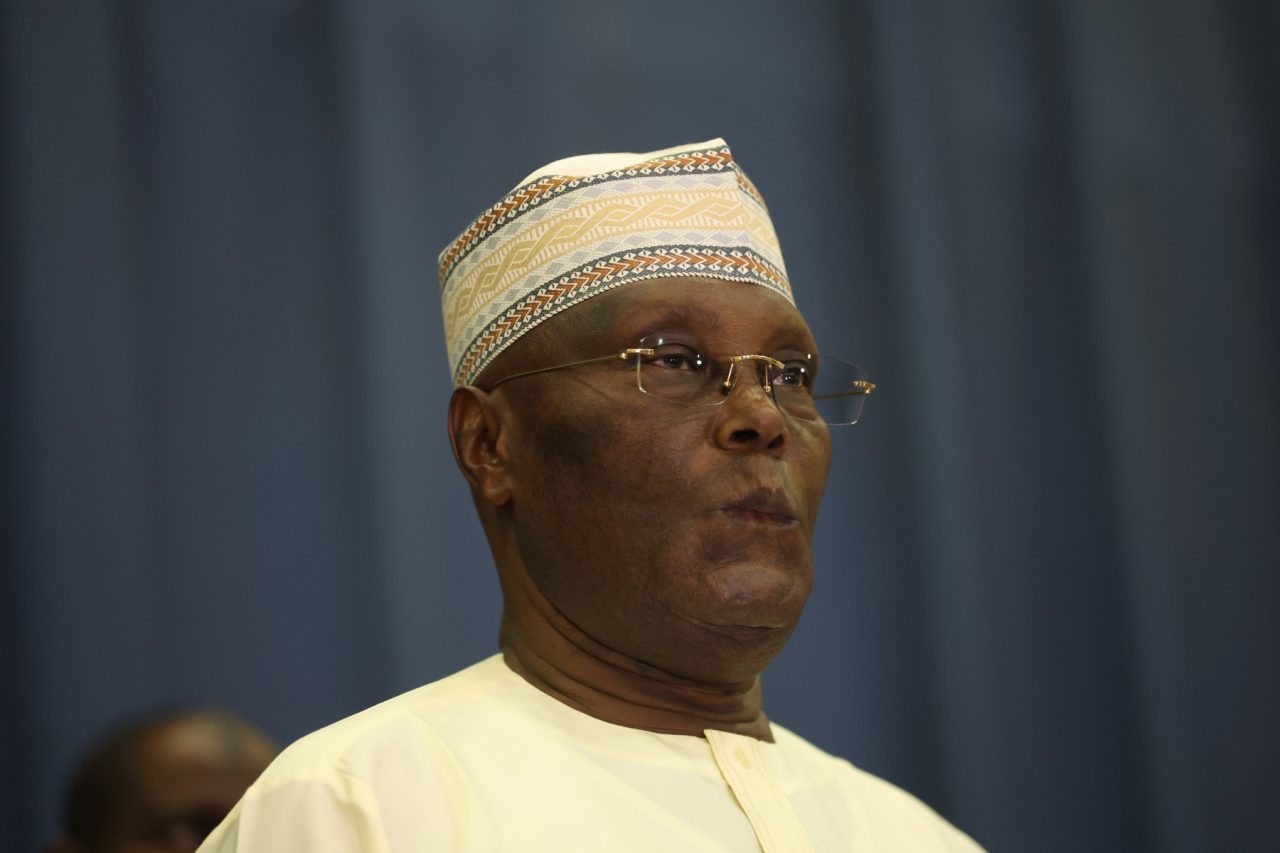
Atiku Abubakar is undeniably in the final phase of his political trajectory. At nearly 80 years old, the former Vice President still keeps his sight firmly set on the presidency, a goal that has eluded him for decades.
In a recent public statement issued by his media aide, Paul Ibe, Atiku delivered a political bombshell: he declared that he would not step down for any other aspirants within the African Democratic Congress (ADC) coalition. To some observers, this stance demonstrates more than just persistence; it signals a clear obsession with power. By refusing to pave the way for a younger or alternative consensus candidate, Atiku is signalling that for him, it is the presidency or nothing, even as the clock winds down on his storied career.
Currently, the contention for the African Democratic Congress (ADC) ticket—now the primary platform for Nigeria’s coalition forces—has become a two-horse race between Atiku and Peter Obi, the former Governor of Anambra State and Labour Party presidential candidate in 2023.
The contrast between the two could not be more striking. While Atiku leans on his vast political machinery and veteran status, Peter Obi brings to the table a surge of youthful energy and a formidable, organic following known as the Obidient Movement. This cult-like loyalty, which redefined the 2023 electoral map, remains Obi’s greatest leverage. For the coalition, the choice is now a precarious one: do they side with the seasoned experience and power obsession of the old guard, or do they embrace the disruptive, movement-driven politics of the former Anambra Governor?
The looming showdown between Atiku and Obi within the ADC is more than just a battle for a party ticket; it is a high-stakes gamble for the future of the Nigerian opposition. While the Obidient Movement offers a grassroots fire that the APC fears, Atiku’s refusal to step aside threatens to split the very coalition designed to unseat the incumbency. History has shown that a divided opposition is the ruling party’s greatest asset. If Atiku and Obi cannot find a middle ground—be it a “one-term pact” or a unified ticket—the ADC’s promise of a Third Force may crumble under the weight of ego and ambition. For the Nigerian electorate, the question remains: will the desire for a new direction overcome the old guard’s obsession with power, or will 2027 simply be a repeat of the fragmented opposition that paved the way for the APC’s victory in 2023?
The current friction within the ADC is a far cry from the former alliance between these two political heavyweights. Both gladiators had earlier run on a joint ticket on the platform of the People’s Democratic Party (PDP) during the 2019 general elections, with Obi serving as the running mate to Atiku’s presidential bid.
However, that partnership was short-lived. They went their different ways following the election, citing irreconcilable political differences that eventually saw Peter Obi exit the PDP for the Labour Party in 2022, and more recently, both men seeking a new identity within the ADC. Their history as a failed union adds a layer of scepticism to the current coalition talks; if they could not sustain a partnership as allies, many wonder if they can survive a battle for the same ticket without further fracturing the opposition’s chances for 2027.
While they remained cordial for a time, the irreconcilable differences largely stemmed from the PDP’s internal zoning crisis and the shift in political strategy leading up to 2023.
Other News
The ADC, acting as a primary coalition platform, now faces two tough options: to run under a joint ticket or to go their separate ways.
For the forces of the coalition, a joint ticket offers the only mathematical certainty of challenging the incumbency. However, the ghost of their failed 2019 partnership looms large. If these two heavyweights cannot reconcile their ambitions, they risk a repeat of the 2023 scenario, where a fragmented opposition paved a clear path for the ruling APC. The choice is stark: sacrifice individual ego for a unified front, or enter the 2027 arena as divided rivals, essentially handing the advantage back to the status quo.
The current scenario within the African Democratic Congress (ADC) highlights a profound shift from a partnership of necessity to a rivalry of ideology. In 2019, Atiku Abubakar and Peter Obi stood together on a joint ticket, united by a common goal to unseat the status quo. Today, they stand on opposite sides of a philosophical divide: one representing the veteran political machinery of the old guard, and the other embodying the disruptive, youth-led energy of the Obidient Movement.
With Atiku’s media team making it clear he will not step down, and Obi’s movement demanding a total departure from the past, the coalition finds itself at a dangerous crossroads. The burning question is: Who blinks?
If neither side yields, the Third Force risks becoming a house divided against itself—a outcome that would essentially hand the 2027 victory to the APC on a platter. For Atiku, it is a battle for a lifelong ambition; for Obi, it is a battle for the soul of a movement. In this high-stakes game of political chicken, the one who refuses to blink may secure their pride, but they might just lose the very essence of the coalition.
The current coalition within the ADC appears to be operating from a specific playbook: they aim to give President Bola Tinubu the Goodluck Jonathan experience of 2015. Much like the APC’s formation a decade ago, the primary glue holding these disparate forces together is the singular goal of unseating the incumbent.
However, critics argue that this fixation reveals a fundamental flaw in the opposition’s strategy. By being so intensely focused on sending Tinubu out of Aso Rock, the coalition forces appear to place a premium on selfish ambition rather than a genuine rescue mission for the country. If the driving force is merely the removal of one man rather than a cohesive plan for national governance, the coalition risks being seen as a marriage of convenience—one where the rescue mission mantra is simply a mask for the personal aspirations of its leaders
Regardless of the motive for seeking political power, age remains a critical variable in the 2027 equation. For Atiku Abubakar, time is perhaps his most formidable opponent. Born in 1946, he will be over 80 years old by the time the next president is sworn in.
In this new power exploit, age is simply not in his favour. The Nigerian electorate, increasingly dominated by Gen Z and Millennials, is leaning toward leaders who possess the physical and mental stamina to navigate a digital-first economy and a complex global landscape. While Atiku offers decades of experience, critics argue that his persistence overlooks the expiration date of the old-guard political style. In a country where the median age is roughly 18, a candidate in his 80s faces an uphill battle to prove he is the bridge to the future, rather than a relic of the past.
The recent alarm bell from Atiku’s camp, which blamed the APC for the brewing crisis within the opposition, is based on a fundamentally wrong premise. If Atiku Abubakar fails in his 2027 presidential bid, his loss will not be the result of APC’s antics or external sabotage.
For decades, Atiku’s political trajectory has been defined by a restless platform hopping, jumping from one party to another in a singular pursuit of the presidency. From the PDP to the Action Congress, back to the PDP, then to the APC, back again to the PDP, and now to the ADC, many have said that his journey suggests a man merely in search of a ticket.