Follow Us on Google
By Abdulkabir Muhammed
A professor of international relations and strategic studies at the University of Lagos, David Aworawo, has urged African countries to collaborate to achieve relevance in the international system.
Speaking on “Diplomacy in an age of multipolarity and unilateralism: Africa’s international relations in the early 21st century,” on Friday, 31 October 2025, the professor argued that the international system is so complicated that it is hard to discern if the world is multipolar or unilateral.
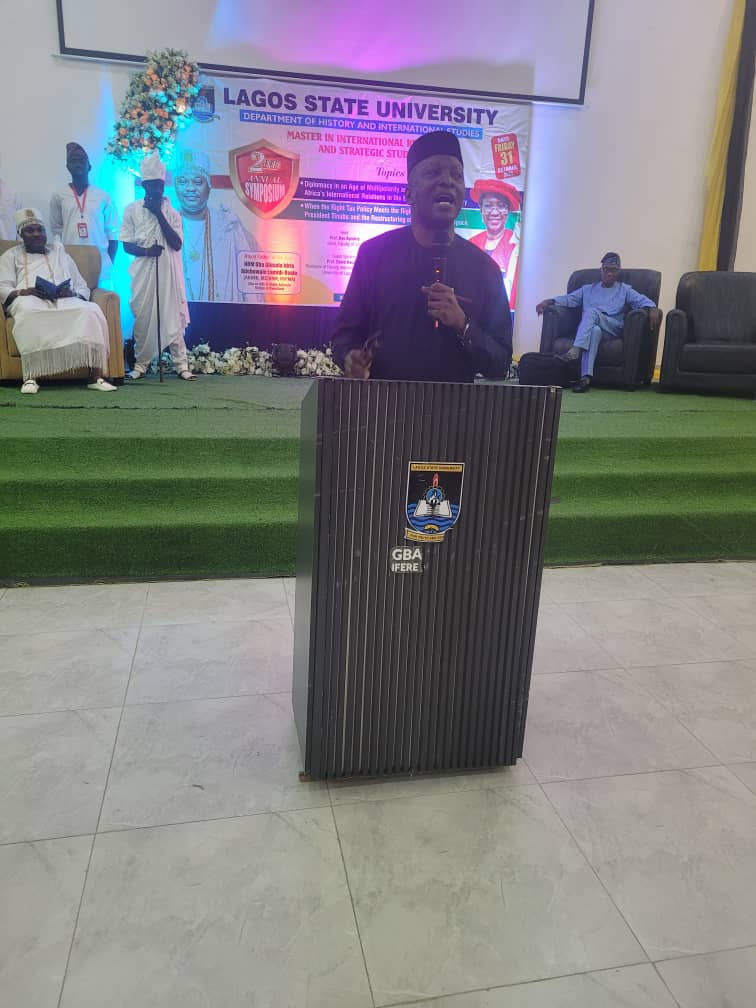
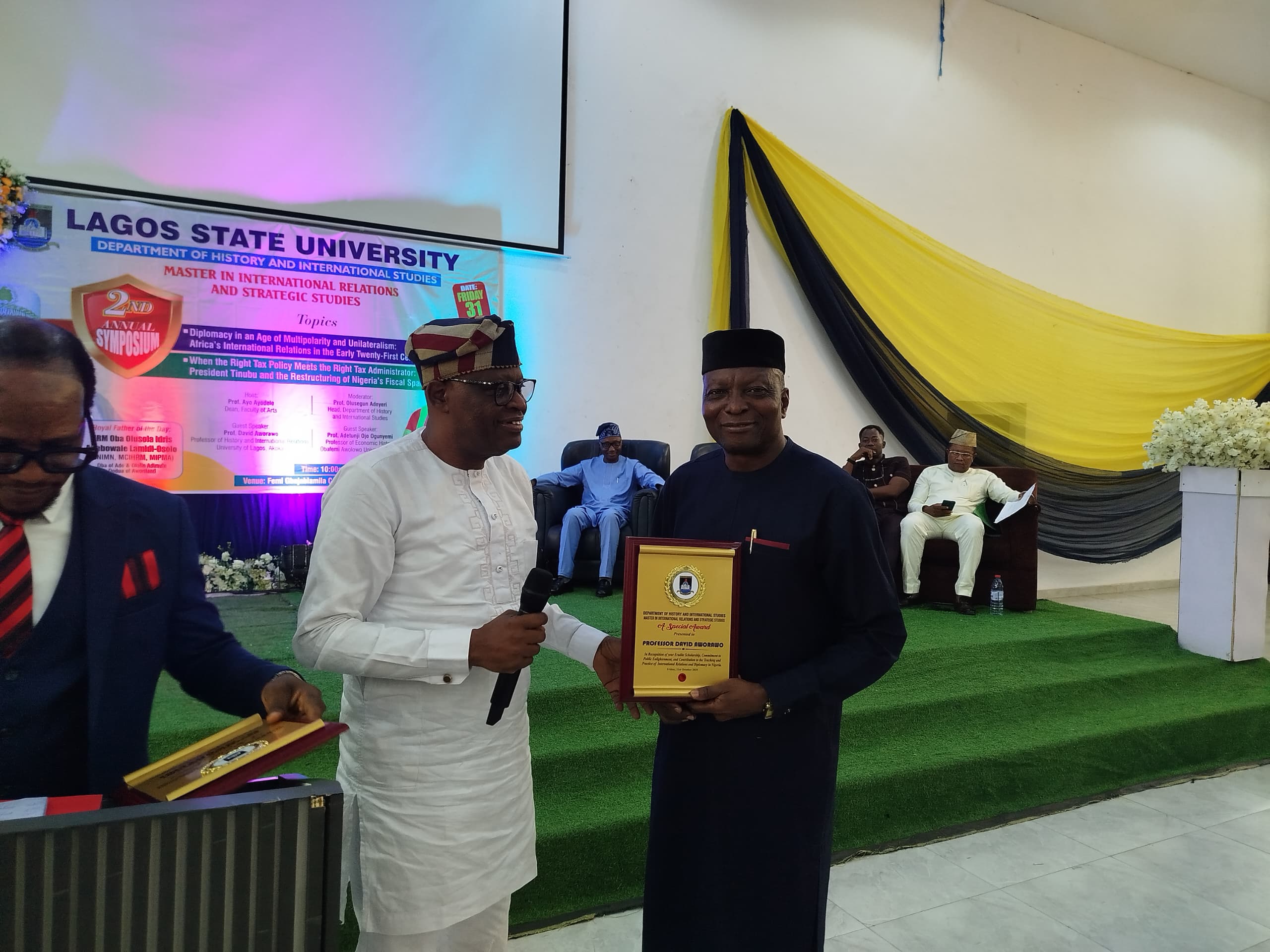
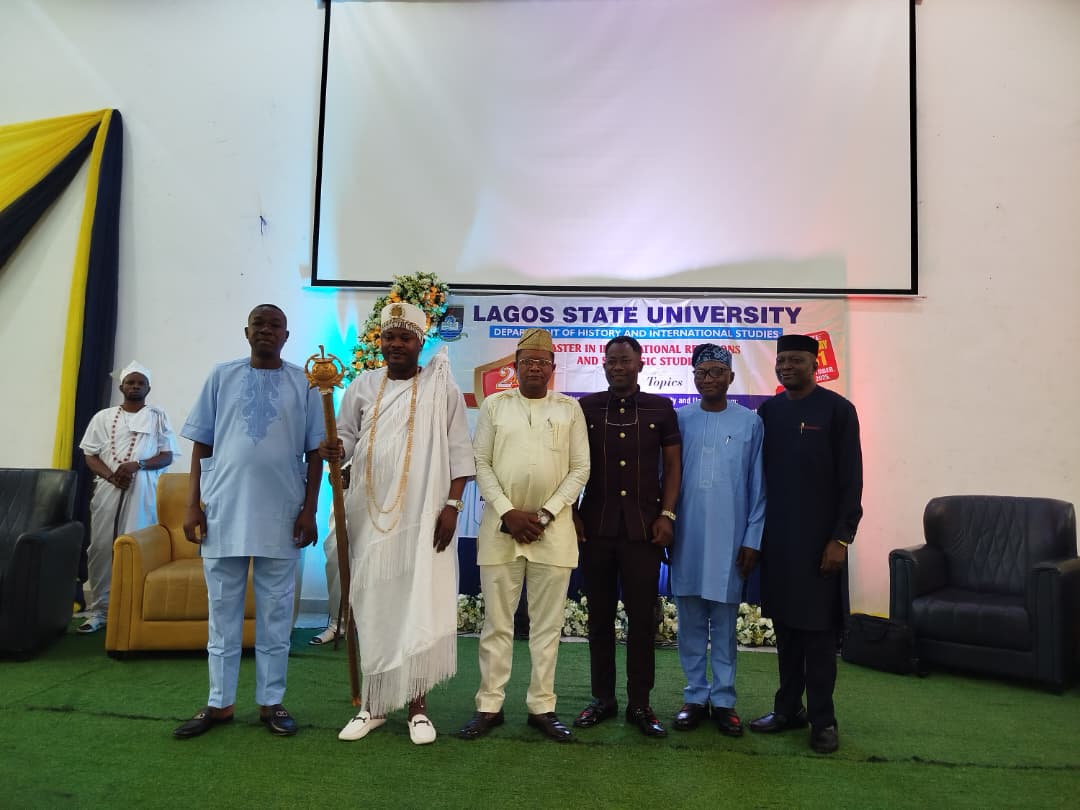
Aworawo, who spoke at the second annual symposium of the Lagos State University Master in International Relations and Strategic Studies (MIRSS), noted that Africa’s foreign policy had to shift from that of the post-independence years, because the system itself has changed.
At the event held at the Gbajabiamila Conference Hall, Aworawo argued that Africa should work toward its 21st-century objectives of good governance, utilising economic diplomacy, fostering economic integration, suppressing wars, and self-reliance.
“Africa needs to, of course, develop a foreign policy option that will enable it to fulfil its objectives. And what are the objectives for Africa to develop with greater rapidity than it has done since 2000?
“Africa has a population of 1.4 billion, that’s about 12% of global population. But Africa, compared to world trade, is just about 4%. So, economic development is crucial.”
Other News
The don also stressed the need for economic diplomacy, insisting that some states introduce the policy of economic diplomacy.
“Some countries have succeeded in that. More of that needs to take place.”
Prof. Aworawo further argued that African states needed to cooperate and shelve petty rivalry among themselves, recalling that the continent’s achievements before the 2000s—eradicating colonialism and apartheid—were achieved when African states united under the aegis of the OAU.
“African states will also need to come together. And they need to work together so as to be able to fulfil all of this. In the past, from 1960 to the 1990s, when Africa did well, all the achievements came when African states worked together.
“That is something that has been lacking. The other day, there was a complaint that Benin Republic was buying cement from China when Dangote produces cement here in Nigeria. That is the kind of thing that will set Africa back.
“So, how the AU and other regional organisations work to ensure that there is synergy, strong, tangible, sectoral specialisation to enable countries to benefit from one another is the way to go for Africa.”