Follow Us on Google

By Joseph Atobisi
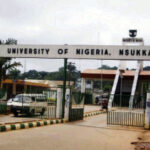
The strike by the Academic Staff Union of Universities (ASUU) has entered its sixth month. The protracted industrial action, no doubt, is taking its toll on students, parents, the university workers themselves and the university system in Nigeria as a whole. If the strike drags till September, it means that a whole academic session has been lost.
Like all well-meaning Nigerians, I am deeply concerned about this unwholesome situation in our university system, being fully aware of the role of education in national development. Besides, not all Nigerian parents can afford to send their children to study abroad, like the privileged few who constitute the country’s class.
Don’t get me wrong. I am not against the lecturers and the other university workers demanding for better conditions of service. I have severally heard the Honourable Minister of Labour and Employment, Sen. Chris Ngige, the chief conciliator of the industrial dispute, express sadness that university professors in Nigeria earn less than half a million Naira monthly. To me, this is disproportionate to the services they render in our ivory towers and a far cry from what their counterparts in neighbouring African countries are earning.
One, however, expects any agitation by ASUU for better welfare to be done conscientiously, taking into consideration the wellbeing of the students and the prevailing economic realities in the country today. The contrary appears to be the case, even when facts in the public domain show that the Federal Government has fully implemented five out of all the seven issues listed in the Memorandum of Action (MOA) signed by the government and ASUU.
For instance, in January/February 2021, the Federal Government paid N40b as 2020 Earned Academic Allowances (EAA)/Earned Allowances (EA) to the lecturers and other university workers respectively. A total sum of N22.27b was paid for 2021 EAA/EA. Regarding the revitalisation fund for universities, the Federal Government released N30b in 2021. By December 2021, the university workers had received N92.27b as agreed in the MOA.
Regardless, ASUU embarked on strike two months after and the other university-based unions-the Senior Staff Association of Nigerian Universities (SSANU), the Non-Academic Staff Union (NASU) and the National Association of Academic Technologists (NAAT)-later joined the fray.
Also, the issue of the visitation panels to the universities has been addressed. The President has signed the outcome for it to be gazette. With the minimum wage increase in 2019, there was 10 percent rise in the salaries of workers in the university system and N35b was paid to them in May 2022 as minimum wage consequential adjustment arrears.
For now, the two outstanding demands, which appear intractable, are the contentious payment platform and the renegotiation of the conditions of service of the university workers. The payment platform developed by ASUU, the University Transparency Accountability Solution (UTAS) is being tested by the National Information Technology Development Agency (NITDA), alongside the government platform, the Integrated Personnel Payroll Information System (IPPIS) and the University Peculiar Payroll Payment System (U3PS) developed by SSANU and NASU.
Meanwhile, the other university-based unions are insisting that even if ASUU’s UTAS is 100 percent perfect, they won’t be part of it. With the uncompromising stance of the two non-teaching unions, the government has found itself in between the devil and the deep blue sea.
The renegotiation of conditions of service of the university workers is another thorny issue. The process started in 2016-2017 when the Federal Government inaugurated a committee headed by Wale Balakin (SAN) for the exercise. Babalakin was at that time the Pro-Chancellor of University of Lagos. Following protest by ASUU, the Federal Government replaced Babalakin with Professor Jubril Munzali whose committee eventually proposed 200 percent rise in emoluments of the university workers.
The government rejected the Munzali proposal owing to the financial implications. The National Salaries, Incomes and Wages Commission (NSIWC) in particular said the document failed to comply with its template for wage increase. At this point, Ngige was approached and he saw nothing with a renegotiation on the grounds that even a Collective Bargaining Agreement (CBA), could be renegotiated. This was the situation when the Munzali committee elapsed.
A new committee headed by Professor Nimi Briggs was put in place by the Federal Ministry of Education. The Briggs committee has concluded its assignment, proposing 180 percent wage increase for ASUU members and 109 percent for members of the other university-based unions.
Quoting Sen. Ngige, with the Briggs proposal, the Federal Government would incur an additional N560b as salaries alone, on top of the current N412b, less all allowances and fringe benefits of the university workers, estimated at N170b. According to the Minister, in all, the salaries of lecturers and other workers in the university system would gulp the whooping sum of N1.12 Trillion.
The said outcome of the Briggs committee is now a subject of accusations and counter accusations between ASUU and the Federal Government. Contrary to the claim of ASUU that there is an agreement awaiting the President’s endorsement, Ngige insisted that the report of the Briggs committee is a mere proposal like that of its predecessor, Prof. Jubril Munzali. The Minister accused ASUU of trying to circumvent the relevant government authorities in charge of fixing wages in order to get the government to sign the proposal.
In a swift response, the President of ASUU dismissed the figures quoted by the Minister, saying his union was unaware of the N1.12 Trillion that the Federal Government said it would need to meet the demands of the university workers. Besides, Osodeke equally accused the Minister of misinforming the President on the ongoing strike of the university lecturers.
For now, it remains to be seen whether the Federal Government will at the end of the day, agree to the Briggs proposal, considering the poor state of the economy. Truth be told, the country’s fiscal position is deteriorating, resulting in higher debts and shrinking investment in infrastructure and human capital.
Just last month, the then Acting Accountant General of the Federation, Anamekwe Nwabuoku disclosed that “government income is challenged and the country borrows to pay salaries.” Also, the World Bank projects that an additional one million Nigerians would be pushed into poverty by the end of 2022.
George Santayana (1863-1952), a Spanish-American philosopher. Poet and humanist once said, “Those who do not remember the past are condemned to repeat it.” Most younger generation Nigerians, especially those born after the 1970s may not have heard about the controversial 1974 Udoji Award.
After the bloody Nigeria/Biafra civil war in 1970, the Federal Government under General Yakubu Gowon as the Military Head of State, set up the Public Service Review Commission headed by Chief Jerome Udoji, to reform the public service, with the aim of ensuring development and optimum utilisation of manpower for efficiency and effectiveness in the service.
The Gowon administration gave the Udoji commission the mandate to carry out a holistic reform of the civil service in terms of organisation, structure and management of the public service, investigate and evaluate methods of recruitment and conditions of service, establish scale of salaries corresponding to each grade and examine all legislations relating to pensions.
Among other recommendations, the Udoji Commission proposed a 100 percent review of salaries across board, in spite of warnings by economists that such an increase in salaries of public servants could spell doom for the economy in future. The Gowon administration accepted the proposal, arguing that it did so to reward public servants for their support and dedication during the civil war.
The Udoji Award, which came at the time of the oil boom in the 70s, made everybody excited as there was so much cash in the system. It increased the purchasing power of civil servants. Even before the Government announced the award, traders started hoarding their goods in anticipation of the rise in the salaries of workers. As soon as it was announced, the missing goods reappeared on the shelves with increased price tags.
True to the prediction of economists, the Udoji Award fuelled consumption with Nigerians engaging in spending spree. Civil servants developed appetite for imported commodities like sugar, canned milk, stockfish, dumping available local alternatives. More workers bought cars, furniture and expensive furniture. Nigeria soon became an import dependent nation. The manufacturing industry started collapsing. Unemployment spiraled. From 5.40 percent in 1973, inflation rose to 12.67 percent in 1974 and 33.96 percent in 1975.
Fiscal planning in Nigeria was not spared. Nigeria started spending more on recurrent expenditure/overhead than capital expenditure, worsening the infrastructure deficit in the country amid astronomical population growth. The country experienced steady decline in the funding of critical sectors, such as education, health, agriculture and water resources.
Many economic pundits believe that the 1974 Udoji Award and the later Structural Adjustment Programme (SAP) introduced in the mid 1980s by then Military President, General Ibrahim Babangida, contributed massively to the continuous downward trajectory of the Nigerian economy till date.
Hence, I will conclude by appealing to ASUU to show more understanding, notwithstanding the overwhelming public sympathy on their side. Indira Ghandi, the first and only female Prime Minister of India till date, once said:“History is the best teacher, who has the worst students.” Will ASUU prove her wrong? Time will tell.