Follow Us on Google

By Bianca Iboma-Emefu
Stakeholders at Agricultural and Rural Management Training Institute (ARMTI) has urged Nigerian youths to be fully involved in agriculture and practice mechanized farming. The institute stressed the need to fully go back to farming, noting that for any nation to attain food sufficiency, or achieve food security, the citizens and the private sector must be involved such that, when the government develops policies and programs, the people drive them.
“Agriculture remained the mainstay of the country’s economy before the discovery of oil in Nigeria,” they said.
They noted that the discovery of oil affected agriculture so much that people played down agricultural activities to the detriment of the nation’s economy.
On the other hand, they observe that what is heartwarming is the new crave to return to the farms to once more move up the country’s revenue in the face of dwindling global oil fortunes.
The executive board of governors of the institute stated that focusing on mentoring, knowledge management, replication of systems, bridging generational gaps, corporate resilience and mitigation strategies, the incumbents’ skills and expertise were garnished with the intellect and aptitude required for developing and advancing their knowledge, and ability for trans-generational performance.
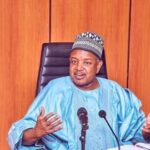
Executive director of the Institute, Dr. Olufemi Oladumi said there is need to improve on rice production and other farm produce. According to him, Nigerian youths need to go to the farm, not as labourers but engaged in commercial farming.
“Therefore, we are encouraging all Nigerian youths to join us so that we can make use of technology to advance farming whereby we can harvest, process, and develop our products,sell to other nations,” he said.
Oladummi noted the need to build human capacity so we can move agriculture to mainstays or mechanized farming.Agriculture is now a business not just a past time thing but something that can generate income or money for the country.
“Individual families and other stakeholders have increased the wealth for the nation. We want to increase the tons of food in our nation so that the issue of food shortage would be a thing of the past, and so that we would be able to be self sufficient. We want to produce the right type of tons of food, the right quantity and quality of food to improve the economy of this country.
“To mediate the clashes of farmers and herdsmen, we sent team members to have discussions with them on how they can co-habits, explaining and educating them that they compliment each other.
“So, when their crops are in production they won’t bring their cattle to graze it.This would enhance food supply.During COVID-19, we produce more even when we had to restrain farmers during lockdown.It was because we introduced some mechanisms into the farming system. The farmers were allowed to produced and equally sell, to the market.
“The challenges some of them might have is how can they process but we have introduced some trenching facilities for rice production and storage equipment. We have improved on the quality and when you travel around you see those leftovers poured on the road, that is a sign that more foods would be produced, what we should be looking at is the affordability of this foods to the consumers.
Basically we need to create and review policies that can guarantee food security.
“We want to completely change the farming system of the nation towards making agriculture a business and not a part time thing not only to farmers but as stakeholders, involved with the entire process including the consumers.
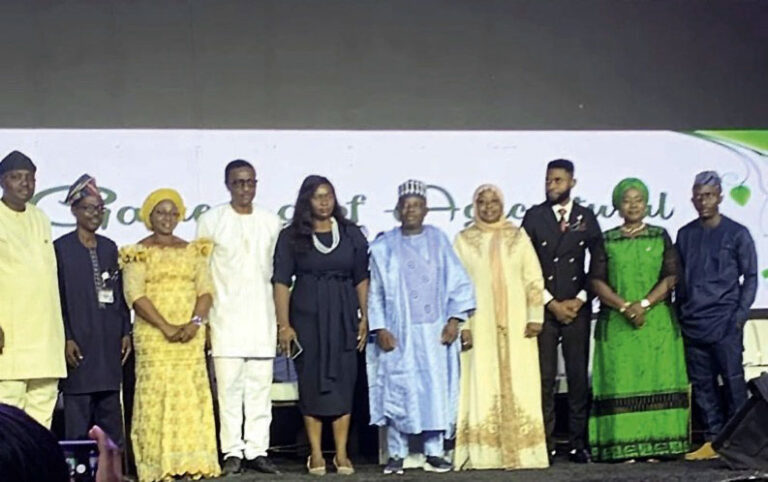
The chairman, Donatus Nwamkpe, expressed optimism that the workshop would change the face of agriculture training, saying it would be a step in the right direction for more awareness, lectures, training and future curriculum developers.
Nwamkpe stated that the training is important because with the new trends of technology in agriculture and agricultural revolution, there was need for new policy drive.
“We have to move from a monolithic economy that is dominated by oil production.
That’s why we need to train the people, what you see here are the disciples of agricultural resolution, who are now going to teach the people and for them to teach them they must know what they want to teach them.
The prevailing challenge we have now in agric is insecurity, how do they carry out,what we have trained if there is insecurity. We are just advocating for peace co existence.”