Follow Us on Google

Olamide Babatunde
“Nigeria is going back to Barbarism,” said Uchenna Nwankwo to the press at the public presentation of his eight book, Shadows of Biafra. As a writer, he has brought his expertise to weigh in on the Nigerian political scene explaining that one of the problems Nigeria is faced with is that local authority has been taken away, leaving restructuring as the only way forward.
While he condemned the unnecessary restiveness of youths in the south-east and wondered why they would fight the age-long gerontocracy style of the Igbo for centuries, he explained the rationale behind writing the book was the tenuous battle for the survival of Nigeria. He said that the book would help to set right Nigeria, which was built on a faulty foundation.
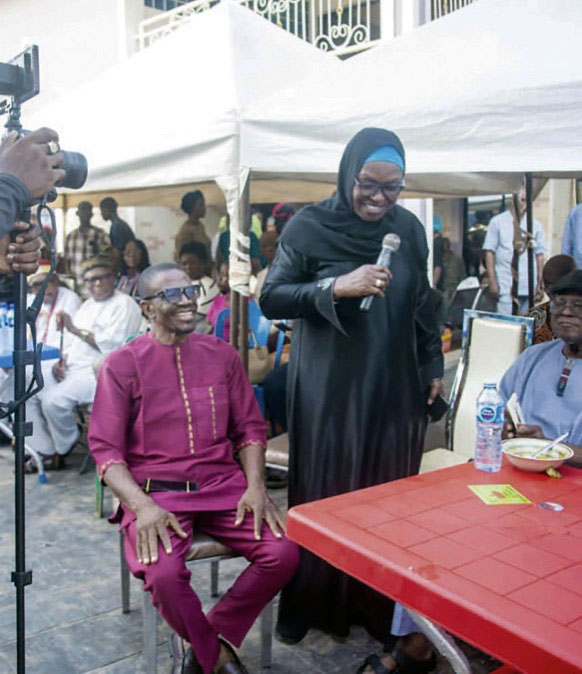
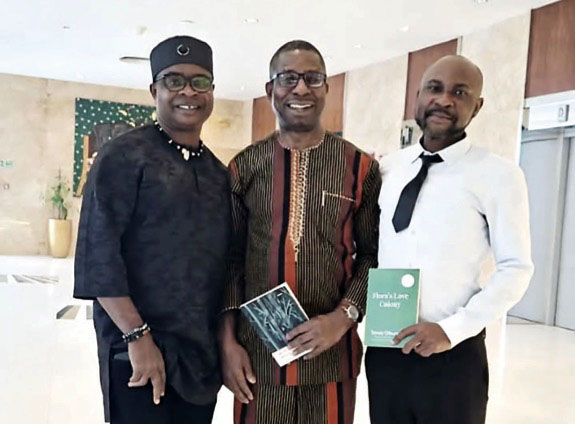
Sitting among other eminent Nigerians at the Nigerian Institute for International Affairs, he didn’t cut the look of an author as he shared banters and pleasantries with guest that came to celebrate him. Some dignitaries, who attended the event, included Ndubuisi Kanu, retired admiral and former Imo State military governor; Senator Ebenezer Ikeyinwa, Anambra Central representative in the third Assembly; Fred Agbeyegbe, Uche Dimgba, Eze Udo Ikeja; Supo Shonibare, Social Democratic Party, SDP, national vice-chairman, among others.
The book, an in-depth historical compilation of memories and facts condensed into 511 pages, revisits the pre and post-colonial set up, linking the dots that connects to present day administration and democratic governance with all its attending intricacies.
Tochukwu Ezukanma, the reviewer, noted that the author, remarkably, looked into the post-civil war problems confronting Nigeria from which it could be adduced that failure to mend fences between the victor and the vanquished on the part of the federal government at the end of the civil war.
“It gives an overview of the three broad political/cultural structures of the multi-ethnic agglomeration that was amalgamated and called Nigeria by British colonialism. It postulates that these three main pre-colonial, political and cultural ideologies, to a great extent, shaped the attitudes, tendencies and ideologies of the major political actors in Nigerian politics,” he noted.
The National Vice President of SDP, Supo Shonibare, commended the efforts of the writer for documenting the agitations of Biafra from a fresh and detailed angle, which opens up more conversations on state of politics going on in the country.
He advised that it was necessary to learn from it so that a formidable history will not repeat itself, “My take is that it is useful to us to read an account of event that was initially an agitation for self-determination and restructuring, and it is very apt at this stage of the Nigerian structure for us to realise that there is no nation in the world with different ethnicity that operates the kind of unitary system that we operate.
“The solution to all issue of tribalism and marginalisation the anecdote and only sensible reaction that Nigerians should have is that we restructure our country, and devolve powers to the various ethnic zones so that we can be a truly federal system and the issue of not allowing that to happen resulting in civil war should be something we should remind ourselves so that we don’t go that part again.”
The antecedent events detailed in this extensive work and the continuity it offers insightfully into the future makes for a deep source of reference for the younger generations and historians.