Follow Us on Google
From Scholastica Hir, Makurdi
The political landscape in Benue State is witnessing significant shifts ahead of the next electoral cycle, with growing concern around the replacement of several National Assembly members. The development, political analysts say, reflects an ongoing power tussle, realignments within political parties and manoeuvring among power blocs and interest groups seeking to reposition themselves for future contests.
Political observers note that the push for the replacement of certain senators and members of the House of Representatives is being driven by a combination of factors, including dissatisfaction with legislative performance, demands for equitable representation, internal party rivalries and a broader quest for change. In several constituencies, stakeholders have raised concerns over what they describe as inadequate constituency engagement, limited visibility and accessibility of elected representatives, and a perceived failure to attract federal projects.
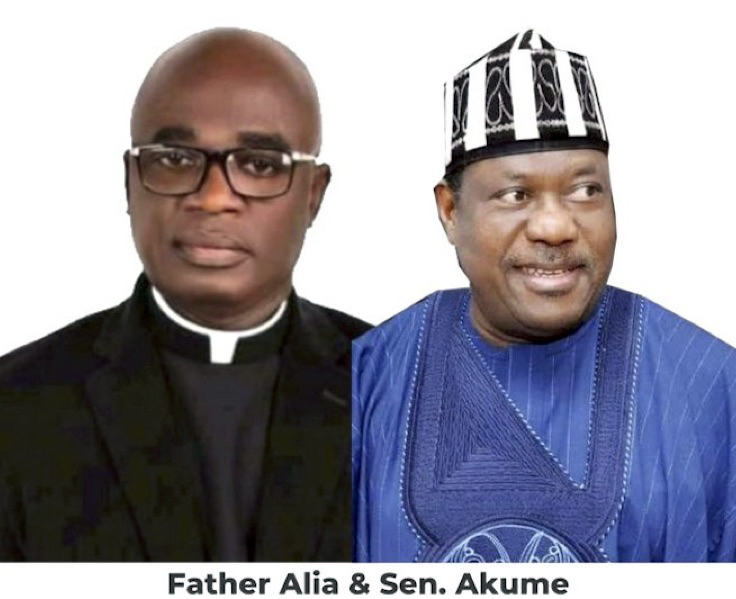
Another major factor influencing the changing dynamics is the growing influence of Governor Hyacinth Alia within the state’s political structure. Since assuming office, the governor has fought for and consolidated considerable political structures, creating new alliances while altering existing power equations. This has resulted in intense competition among politicians seeking alignment with the governor’s camp ahead of future elections.
Analysts also point to the lingering effects of the leadership crisis that affected the ruling party in Benue, particularly the disagreements between Governor Alia and the Secretary to the Government of the Federation, Senator George Akume, which created factions that continue to shape political calculations. As the various groups struggle for control of party structures, National Assembly members perceived to belong to rival camps have faced difficulty securing party tickets for re-election.
Recall that during the 3 May peace meeting held at Government House to resolve the internal crisis within the ruling Benue APC, the SGF had argued that President Bola Tinubu had approved automatic tickets for all elected candidates from state to national assemblies, including the governor. Governor Alia countered this, declaring that the party and the President had instead agreed that everyone should go to the polls. Going into the primary elections, Alia’s men had the upper hand and dominated the process, winning tickets and replacing incumbents. The primaries were followed by petitions before the appeal panel, culminating in the setting aside of several results.
The primaries were met with outcries as aggrieved aspirants expressed disappointment, frustration and dissatisfaction with their conduct in Benue. They judged the process unfair, manipulated and lacking transparency, arguing that the outcomes did not reflect the wishes of party members. Most political watchers insisted there had been an imposition of candidates by the governor’s camp, accusing them of hijacking the party’s internal democratic processes, seizing election materials, sidelining grassroots members and determining candidates without a genuine democratic contest.
There were also grievances that the governor had allegedly failed to exercise proper oversight over the party’s affairs, allowing unelected political actors to wield excessive influence. Many described the primaries as a struggle between powerful political factions rather than a process driven by the interests of ordinary members and voters.
The dispute reached its climax when the APC’s National Working Committee formally forwarded its revised list of candidates to the Independent National Electoral Commission. According to reports, the letter, signed by National Chairman Nentawe Yilwatda and National Secretary Ajibola Basiru, was titled “Forwarding of Approved List of Senatorial and House of Representatives Candidates” and explained that the changes followed the consideration and approval of recommendations submitted by the party’s Primary Election Appeal Committee, in line with the Electoral Act 2022 and INEC’s guidelines governing candidate nomination.
Nationally, the revision affected twenty six aspirants across nine states, namely Kogi, Abia, Benue, Taraba, Ondo, Niger, Kwara, Kaduna and Ebonyi, covering seven senatorial districts and nineteen House of Representatives constituencies, making it one of the most sweeping candidate overhauls the party has undertaken ahead of a general election.
In Benue specifically, the review saw two senatorial candidates and five House of Representatives candidates initially declared winners lose their tickets after appeals were considered. Those affected were perceived loyalists of the governor, while those who gained were aligned with Akume. For the Senate, incumbent Senator Emmanuel Udende, allegedly backed by the SGF, replaced former Benue State Governor Gabriel Suswam, who had earlier defected from the PDP, via a brief stint in the African Democratic Congress, to secure the APC ticket for Benue North East under Governor Alia’s camp during the 18 May primary.
Senator Titus Zam, another Akume loyalist, emerged in place of Benjamin Aber, a retired Assistant Comptroller General of the Nigerian Customs, for Benue North West. The Benue South senatorial ticket was not affected, with Francis Agbo, a former House of Representatives member for Ado/Okpokwu/Ogbadibo, remaining the candidate.
In the House of Representatives, Terseer Ugbor replaced Kohol Iornem for Kwande/Ushongo, while Sekav Iyortyom Dzua displaced Gideon, a loyalist of Governor Alia, for the Buruku constituency. The NWC also replaced Ikper Chris Terfa with Dickson Tarkighir for Makurdi/Guma, and Livinus Tsar with Sesoo Ikpagher for Vandeikya/Konshisha, while David Nongo lost the APC ticket for Gwer East/Gwer West to Austin Achado.
Other News
These substitutions make Benue one of the states most affected by the APC’s post primary appeal process, which swiftly overturned outcomes from numerous constituency primaries conducted earlier by the party.
Defending the sweeping changes nationally, APC Director of Publicity Bala Ibrahim insisted the alterations followed due process through the party’s established appeal mechanism, arguing that the new list reflects the party’s commitment to fairness and justice for aggrieved members, and that anyone unhappy with a primary outcome retains the right to appeal.
Elsewhere, however, the decisions have triggered visible unrest. In Ondo State, aggrieved party members staged public protests in Akure rejecting the revised candidate list, carrying placards describing the process as unrepresentative of the mandate given by voters across the state’s wards. While such protests have been more pronounced in Ondo, supporters of Kohol Iornem in Ushongo have similarly protested his replacement in Benue, and David Nongo, who lost the Gwer East/Gwer West ticket, described the decision as undemocratic.
Observers say the NWC’s decision has once again exposed shifting power dynamics within the ruling party and opened a new chapter in the contest ahwead of the 2027 general elections. By replacing two senatorial candidates and five House of Representatives candidates, the APC leadership has effectively redrawn the political map of the state. While the party maintains the changes followed appeal committee recommendations, the outcome is widely interpreted as a victory for Senator Akume’s camp, whose loyalists emerged as the major beneficiaries of the review.
Although Alia and Akume worked together to return the APC to power in Benue in 2023, their relationship has increasingly come under strain as both camps seek greater control of party structure and machinery in the state. At the heart of the dispute is the struggle for political relevance and influence ahead of 2027. For Alia, securing loyal candidates would have strengthened his hold on the party and provided a reliable support base for his administration, while for Akume, retaining influence over candidate selection is critical to preserving his standing as one of Benue’s most formidable political figures and a key national power broker within the APC.
The Benue rivalry mirrors a pattern playing out in several other states where the NWC’s review has similarly favoured governors, federal power brokers or entrenched incumbents over newly emerged aspirants. In Kogi, Sunday Karimi was restored ahead of Aro Bamidele for Kogi West, while in Abia, Paul Ikonne took over the senatorial ticket from Edinburgh Erondu. In Ondo, six House of Representatives constituencies were affected, alongside senatorial changes, prompting governorship level tensions as Governor Lucky Aiyedatiwa reportedly began exploring alternative platforms for loyalists who lost out, including possible engagement with opposition parties. Such developments suggest that Benue’s experience is not an isolated one but part of a broader national contest for control of party structures ahead of 2027.
In the build up to the elections, the issue of zoning and power rotation has also resurfaced across Benue State, with community leaders and stakeholders increasingly advocating for the redistribution of elective positions among local government areas and ethnic blocs. One such group, the Movement for the Actualisation of Kwande Gubernatorial Ambition, has intensified its campaign for the governorship to be zoned to the Kwande Intermediate Area in 2027, saying it has spent the past year engaging leaders and stakeholders to build support for what it describes as Kwande’s legitimate aspiration to produce the next governor. Such demands have placed further pressure on the incumbent governor and lawmakers seeking further terms, as new aspirants argue it is time for fresh representation.
The implications of these developments are far reaching. The emergence of new candidates could intensify competition within political parties and increase the likelihood of defections, as candidates denied tickets seek alternative platforms, potentially reshaping the electoral landscape and altering traditional voting patterns across the state. The replacement of incumbent lawmakers could either strengthen or weaken the influence of political leaders, depending on how candidate selection processes are managed going forward. Addressing the outcome of the primaries transparently may enhance party unity, while controversial substitutions could trigger internal disputes and litigation, as witnessed in previous election cycles.
Stakeholders warn that unresolved grievances could deepen party disunity and internal division as aggrieved members become dissatisfied with the process, erode grassroots confidence in the APC, encourage voter apathy and reduced turnout as citizens feel their votes and opinions no longer matter, and damage the party’s reputation through perceptions of injustice and favouritism. They further caution that imposed candidates lacking genuine electoral support could translate into setbacks at the polls, alongside continued legal disputes and political conflict arising from grievances over the primaries.
Ultimately, they say, it could weaken governance and accountability, if leaders emerge through manipulated processes rather than popular support, and further diminish democratic participation.
As citizens await the NWC’s decisions on the remaining State Assembly primaries, the argument persists that if the APC in Benue fails to restore transparency, fairness and grassroots participation, it risks losing the confidence of its members and followers, a development that could affect its fortunes in the 2027 general elections. For the ruling party, maintaining cohesion while balancing competing interests will be critical, and opposition parties are expected to capitalise on any divisions by recruiting aggrieved politicians and presenting themselves as viable alternatives.
Political analysts believe the unfolding developments signal a broader transformation in Benue politics, where performance, grassroots acceptance and strategic alliances are becoming increasingly important in determining political survival. As consultations and realignments continue, the contest for National Assembly tickets remains one of the most closely watched aspects of the state’s evolving political landscape, and how parties and leaders manage these competing interests will significantly shape both the state’s political direction and its electoral outcomes in 2027.