Follow Us on Google
By Steve Agbota
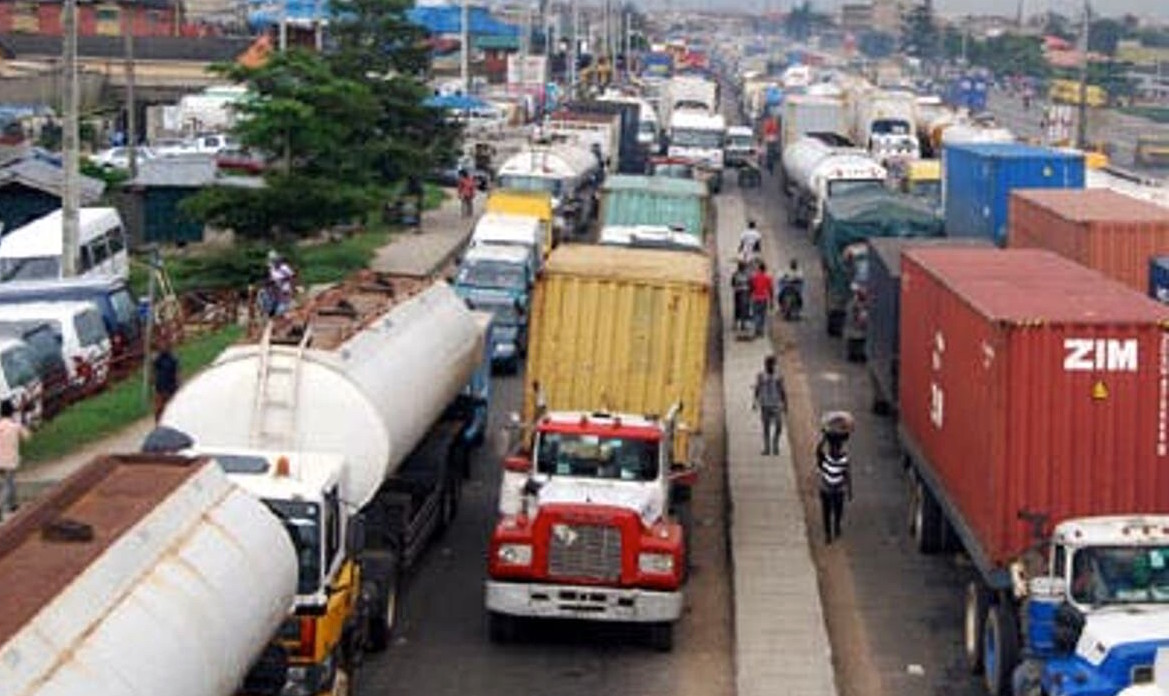
Truckers have identified inefficiencies of terminal operators, deep-seated corruption and customary yuletide cargo import rise as the major causes of the resurgence of gridlock and congestion around the Lagos ports.
Until recently, much of the blame for the chaos and congestion around the ports was placed on the ongoing repair works by the Federal Ministry of Works along the Marine Bridge section of the access road.
Truckers and other maritime stakeholders, however, have rejected assertions that the ongoing closure of Marine Bridge in Apapa or any infrastructure shortfall is behind the latest congestion at the ports.
Despite improvements recorded in recent months with the electronic call-up system, the sudden return of heavy congestion on the Apapa corridor has left truckers and port users sleepless, as cargo suffers delays and importers incur losses.
The truckers pointed out that terminal chaos, inefficiency, and corruption are responsible for the problem, compounded by a surge in cargo traffic.
Beyond the issues raised by the truckers, Daily Sun learnt that corrupt individuals, both state and non-state actors, are benefiting from the gridlock, deliberately undermining the electronic call-up system and the efforts of the Nigerian Ports Authority (NPA) to extort truckers and shippers.
Speaking with Daily Sun, Secretary General of the Association of Maritime Truck Owners (AMATO), Mr. Muhammed Sani Bala, said the recurring gridlock cannot be blamed on the Marine Bridge closure, describing its impact as “minimal at best.”
According to him, no advanced call-up technology system anywhere in the world can operate efficiently with erratic terminal operations and human interference along port access roads.
He stressed that the call-up system is designed to schedule the release of trucks from parking lots for terminal admittance without delay or interception by traffic controllers on the access roads.
He explained that when terminals operate at a snail’s pace, combined with multiple extortion points along the ports’ access roads, chaotic gridlock becomes inevitable.
He argued that erratic terminal operations remain the primary cause of truck delays and emphasized that these issues must be addressed to ease cargo movement.
Other News
“For us to achieve maximum efficiency of the call-up system, seamless evacuation of cargo, reduced cargo dwell time, and increased truck turnaround, the problem of terminal inefficiency and multiple checkpoints along port access roads must be addressed by the Federal Government.
“Some terminals have been inactive for nearly two weeks. Others operate for only a few hours before shutting down without notice. This prolongs cargo dwell time and blocks truck movement. Under such conditions, gridlock between pre-gates and the ports is inevitable,” he said.
He urged authorities to recalibrate terminal processes to ensure consistent truck flow within the port corridors.
A truck driver, Hassan Ahmed, told Daily Sun that the NPA attempted to address the issue a few weeks ago through the Port Manager when gridlock resurfaced, but those benefiting from the chaos are doing everything they can to frustrate the measures.
He also blamed the inefficiency of some terminals for the congestion currently affecting Lagos Ports, saying many of them are failing to support the smooth evacuation of cargo, especially during the Christmas season.
“We are beginning to see exactly what we experienced between 2016 and 2019 in the ports. The gridlock was so severe that we spent weeks stuck in the same spot. Corrupt officials turned the situation into a means of extorting truck drivers. We all witnessed it, but I believe the authorities will not allow that to happen this time,” he said.
He added that truckers are being exploited by both state and non-state actors, noting that once a system fails, extortion becomes inevitable, and if authorities fail to tackle it seriously, chaos will follow.
“Extortion is very common in Nigeria, and it has become endemic. This only happens here. Extortion occurs when a system fails. Once the system breaks down and traffic chaos ensues, truckers start offering bribes to traffic officials to gain easier access to the port.
“We have a failed system in Nigeria because nothing seems to be working. Once law and order break down, everyone tries to outsmart each other for port access. The few traffic controllers on the road exploit the confusion to make quick money.”
He said one solution is for the NPA to renew the ETO contract with Truck Transit Park (TTP) and issue electronic tags for truckers, calling this the only way to curb extortion along port access roads.
Another truck union leader, who requested anonymity, accused certain actors within the port ecosystem of manipulating the call-up system through fake plate numbers and special alliances that allow them to jump queues.
“The industry has been sold to those who want fast delivery at a premium. Some officials stop trucks just to push prices up, worsening traffic,” he alleged.
He further claimed that some port personnel and terminal handlers intentionally delay trucks, divert them to private garages, or reroute them to manipulate call-up allocations, all of which fuel the congestion cycle.