Follow Us on Google

From Fred Ezeh, Abuja
It is obvious that Nigerians are begining to drop the fear, anxiety and culture that accompanied the outbreak of the COVID-19 pandemic in the country. It’s an indication that people are either tired of COVID-19 safety protocols or have lost fear of the virus to attack and possibly kill.
Also, many Nigerians are beginning to view the disease and the activities that surrounded it as a “scam” and a deliberate ploy by some individuals to instill fear in them with the intention of exploiting them financially and otherwise.
Besides, some highly placed Nigerians, including senior government officials and religious leaders were completely indifferent to COVID-19, right from when response began in February 2020, even though many of them were not confident enough to openly state their position because of the political positions they occupied in the society.
At the peak of the pandemic, February 2020, which was accompanied by national lockdown and other restrictions, use of face mask, regular hand-washing and use of hand sanitizers, among other measures, were like a “national anthem” in every household in Nigeria and other public gatherings, as was recommended by the World Health Organisation (WHO), as primary way to avoid contracting the virus and not the cure.
At the same time, there were several myths, misconceptions and misinformation that caused more confusion and anxiety among Nigerians. This was, perhaps, due to limited information that was available to health workers and Nigerians regarding the virus.
Health workers and top researchers in academia were running from pillar to post and could not explain the behaviour and reactions of the virus, especially at the early stage of the pandemic, until a few months into WHO sponsored research by experts and virologists, resulting in early recommendation of the non-pharmaceutical measures as preventive measures.
In Nigeria, there was bandwagon effect on the response as recommended by the global community. The then Presidential Task Force on COVID-19, which later transformed into Presidential Steering Committee, had hard time convincing Nigerians about the danger of disease until few days after when
confirmed cases and deaths begun to soar astronomically.
Amidst strong doubt and disbelief from Nigerians, the government officials intensified campaign on testing, isolation, quarantine, treatment, and most importantly, preventive measures, notably, the non-pharmaceutical measures.
Expectedly, Organized Private Sector (OPS) rose to the support of government’s response through the platform of the CACOVID. There was massive donation of hospital items and manpower required to respond to the devastating disease.
However, unimpressive results was being recorded across the country in terms of compliance with COVID-19 safety protocols until the number of confirmed cases and deaths began to rise. The fear and anxiety increased when the former Chief of Staff to the President, Abba Kyari, among other prominent persons in and out of government died of COVID-19.
The consciousness of Nigerians was, however, reawakened to the reality and danger of COVID-19, and that resulted in increased caution. After then, there was significant increase in testing, isolation, quarantine and other responses, including the ones sponsored by private organisations, individuals, faith-based organisations and other international donor partners.
The consciousness was extended to markets, churches, schools and other areas of public convergence, which was significantly limited by the government’s response officials against COVID-19.
Unfortunately, the guards have begun to drop with many people partially and totally discarding the COVID-19 safety protocols, even when the Nigeria Centre for Disease Control (NCDC) had insisted that COVID-19 was still much around in Nigeria.
There are indications that several isolation centres across the country might have been closed because of low or complete absence of patronage. In addition to that, other strict measures and protocols established to assist in the fight have been reduced.
Few weeks ago, the Presidential Steering Committee on COVID-19, released a revised guidelines on COVID-19 response in which it practically lifted all the restrictions hitherto introduced at the peak of COVID-19 pandemic, but encouraged people to always take personal responsibilities for their health and wellbeing.
The Committee said their decision was in view of the declining number of COVID-19 confirmed cases, reduced risk of importation of new variants, as well as the availability of vaccines and increasing number of vaccinated people in Nigeria and globally.
The fight against COVID-19 has yielded the desired result, perhaps, due to the impressive collaboration and support received from stakeholders and Nigerians, even though the fight is still ongoing and the NCDC committed to public sensitization.
However, there are indications that many of the COVID-19 isolation centres across the country have been shut, perhaps due to lack of patients. But on the contrary, some of the isolation centres in Abuja are still functional, though, with few patients.
At ThisDay Dome isolation centre, treatment and other activities are still ongoing with doctors attending to few persons in the centre. Findings further revealed that patients in the isolation centres are not only COVID-19 positive patients but people with different ailments that required isolation.
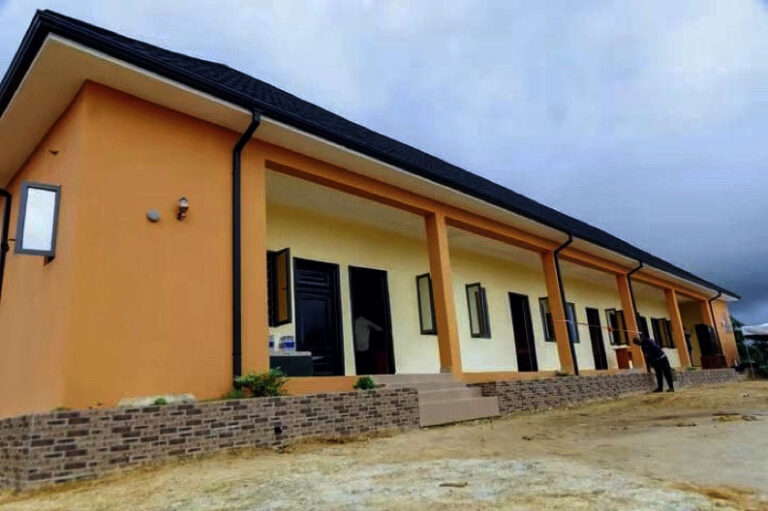
However, National Hospital, Federal Medical Centre (FMC), Abuja, as well other FCTA owned District hospitals run isolation centres that was built in the hospitals long before the coming COVID-19 in February, 2020.
An official of National Hospital, Abuja, who pleaded anonymity, said they have been running the isolation centre for long, though for other diseases, but they had to retool the facility for use against COVID-19, even though it was not enough to accommodate the high number of people that required isolation.
“That was, probably, the reason for the emergence of several isolation centres across FCT, notably, ThisDay Dome, isolation centre at University of Abuja Teaching Hospital, among several other ones established by the FCT Administration.”
However, data from the National Primary Health Care Development Agency (NPHCDA) and NCDC indicated that as at Friday, June 3, 2022; there were 5,188,353 samples tested for COVID-19 out of which 256,028 samples were confirmed cases. There are 2,849 active cases; 250,036 discharged cases, and 3,143 deaths.
Meanwhile, as at 22nd May, 2022; 26, 040, 191 of total eligible population targeted for COVID-19 vaccination representing 23.3 per cent of population have been partially vaccinated, while 17,615, 858 (15.8%) have been fully vaccinated. Kaduna, Lagos, Oyo, Ogun and Nasarawa states led with over one million vaccines administered in each of the states, inclusive of booster shots introduced to strengthen people’s immunity against COVID-19.
Catherine Ekem, a resident of Lokogoma, Abuja, said that COVID-19 was a total “scam” carefully designed by experts across the world, beginning from China, to extort and deceive the people of the world including Nigerians. Unfortunately, African leaders played into the hands and scripts of these people to deceive the people.
“I wonder how the world fell to this trick and deceit. Few individuals, obviously, benefitted from the pandemic, financially and otherwise, but majority of people suffered unjustly because of ignorance of the world especially Africa with weak economy and governance system.
“I can boldly tell you that I lost confidence in the COVID-19 few weeks into the national restrictions. I realized that we were being used by our government to make fortunes and satisfy the interest of the western world who were worst hit by the COVID-19 which, to us here, is malaria and typhoid that we are used to.
“I was completely against the national restrictions that was announced by the government several times because of its effect, economically and otherwise, and we are feeling it in our economy and security system especially the fact that small and medium enterprises (SMEs) many of whom folded during the period resulted in thousands of people being sent to labour market.
“More people went back into poverty because their source of livelihood was affected. Crime in the society has skyrocketed and no one is exempted from the activities of these criminals terrorizing the communities,” she said.
For Karim Azeez, a resident of Zuba, Abuja, COVID-19 was an overhyped malaria and typhoid put together. All the symptoms listed were what we are familiar with since the time of our forefathers. Fever, headache, sneezing and several others are some of the symptoms, according to the government.
These are things we suffer everyday and used to. So, I was not worried about the COVID-19 from day one and everyone around me could attest to that.
Oluwatosin Ogunmola, a resident of Dawaki, Abuja, said she contracted the virus at the early stage of the pandemic and it was like a death sentence for her. “I almost died of fear, anxiety and loneliness. I was completely avoided by people just the way it was during the peak of HIV/AIDS. No one talked to me nor had anything to do with me. I was alone for several weeks until I tested negative which I made public to enable people accept me again back in the society.”
She confirmed that COVID-19 is real but not as deadly and devastating as people made us to believe. “Besides, many of the people we rely on for information have limited of it. It was pure ignorance that was our problem then. There was limited information about the virus and how best to respond to it.
“I was consistently being treated with anti-malaria medicine for the long I was in isolation until my test returned negative. Afterwards, I introduced some local roots and herbs that helped clean up my system.
To me, COVID-19 is overrated malaria.”
Chidimma Ike, a resident of Kurudu, Abuja, described COVID-19 as hoax, demanding that Federal Government apologize to Nigerians for the suffer they were subjected to during the period.
“I used to be against Kogi Governor, Yahaya Bello and some renowned Pastors like David Oyedepo of Winners’ Chapel, for not believing in existence of COVID-19 and telling their members to disregard the pandemic. But I am now one of their converts.
“I was one of the few people that suffered the ignorance of the COVID-19. Fear enveloped me after I began to read about the COVID-19. I followed the rising daily deaths in the US, UK and other parts of world, and became more frightened. My house was locked for weeks when the national lockdown was declared following the rising number of confirmed cases and deaths in Nigeria. But I know better now.
Femi Aderigbigbe, a resident of Kubwa, Abuja, said that COVID-19 is real and as deadly as being claimed by global health leaders. “Nigeria and Africa was lucky with the disease because its effect was not catastrophic in Nigeria and Africa as it was in United States, United Kingdom, China and other developed countries.
“I was in US at the peak of the pandemic, and I saw, first hand, its effect on the people. People were dropping dead like overriped fruits. We were just lucky in Nigeria because we were far in terms of sophisticated health care system to had handle the challenges.”
Emeka Collins from Wuse 2, Abuja, said he contracted COVID-19 and isolated and treated at ThisDay Doom. “I had my worst time in life during my two weeks at the isolation centre. I was consistently praying to God for his kind help to quicken my healing. I am better now, more confident and knowledgeable than before. COVID-19 is real,” he said.
NCDC warns
NCDC has registered serious concerns at the high rate with which people are beginning to disregard the COVID-19 safety protocols, reminding them of vulnerability of Nigeria being a member of the global community.
NCDC Director General, Dr. Ifedayo Adetifa, told journalists at recent press conference at the headquarters of the Federal Ministry of Health, Abuja, that some countries of the world have introduced partial or total lockdown due to rising cases of COVID-19 and deaths.
He said the fact that fatality rate was not as high as cases in some Western countries does not mean Nigeria was off the hook, while Nigerians be less careful about the efficacy of the virus.
He said: “COVID-19 is still much around and it is killing people on daily basis. Some people may doubt it but that’s the fact. So, we shouldn’t drop our guards. We should, rather, maintained our non-pharmaceutical measures against the virus, get vaccinated and also encourage others to get vaccinated in order to reduce the chances of community transmission of the virus.”
He confirmed that significant progress is being made as regards vaccination. Nevertheless, he advocated more caution, insisting that vaccination alone was not enough to combat the deadly COVID-19 virus.
He asked organizations, religious centres, groups and other interested parties to approach NCDC and National Primary Health Care Development Agency (NPHCDA) for mass vaccination against COVID-19.
NCDC, however, raised concerns about the possibility of significant rise in number of confirmed COVID-19 cases and deaths due to ongoing massive political activities ahead of 2023 general elections.
He encouraged political parties to adhere to COVID-19 safety protocols in the political activities ahead of 2023 general elections, also requesting that NCDC be consulted for advisory ahead any political gathering.
He, however, reassured Nigerians that NCDC was ready and better prepared to respond to any epidemic or pandemic outbreak in Nigeria, soliciting the support and cooperation of Nigerians and other relevant stakeholders including foreign partners to the responsibilities of NCDC of protecting Nigerians against health crisis.