Follow Us on Google
From Obinna Odogwu, Awka
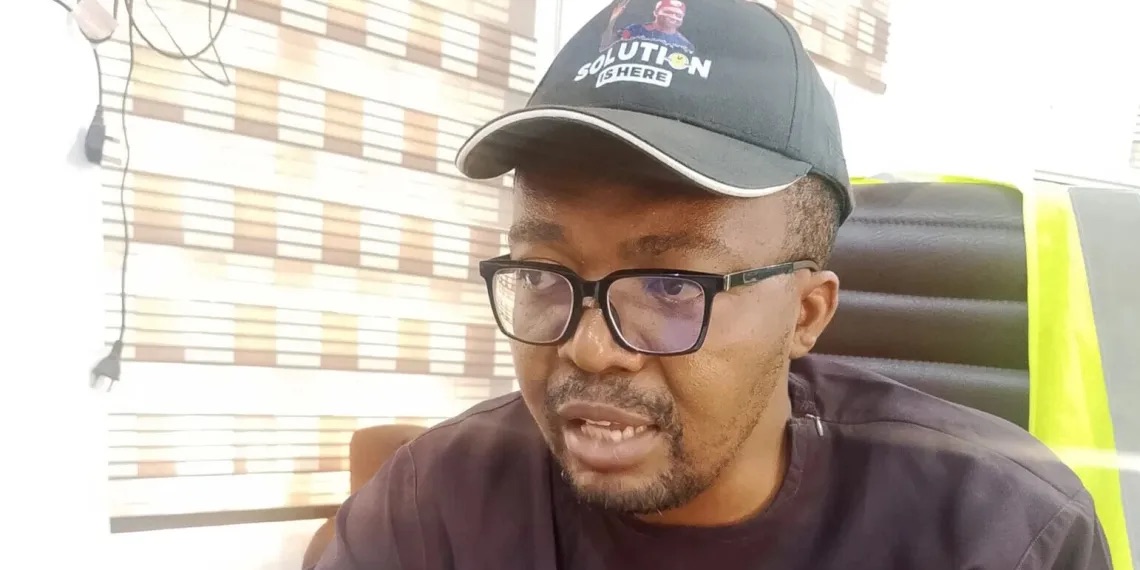
Anambra State Commissioner for Health, Dr. Afam Obidike, has recounted the gains of the state’s free ambulance service, explaining that it has saved so many lives during emergency situations in the state.
Obidike detailed the gains of the service in Awka, the state capital, while briefing newsmen about the positive impacts of the Anambra State Emergency Medical Services and Ambulance System (ASEMSAS), which was officially commissioned in May 2023.
He said that the government activated toll free numbers through which residents of the state could access free ambulance services during emergency situations.
“The system operates toll-free emergency hotlines, supported by real-time ambulance tracking to optimise response times and efficiency”, he explained.
“Residents are encouraged to access emergency services through the 112, 5111, and 08002200008 hotlines. People can get relief and support from that and the money will be paid for them.”
Obidike said that the government has registered 40 ambulances for these emergency services, saying that more ambulances would be registered with time.
“What it means is that anywhere you are in the state and you have an emergency, just call the number, they will come; even to the school.
“Last Saturday, we picked up a child from a school in Awka, a catholic school. The mother called 5111 and the ambulance went to the school and took the child to the hospital.
“The good news is that the transportation is free. The treatment within 24 hours is free for the patient that cannot afford to pay for it. But after 24 hours the patient will start paying”, he further explained.
Speaking on the arrangements made to enable rural dwellers to benefit from the free ambulance service, the commissioner said that they were not left out.
“We had the rural dwellers in mind while making these arrangements. In Anambra East for example, we have almost three ambulances there. We have two at Umueri General Hospital. There is one in Enugwu-Otu.
“That is not all. We also have this thing that we started doing. We provided a means of transportation for every woman going for antenatal. We have Keke NAPEP dedicated for that service such that even inside the rural community, there is a means of transporting the person to the urban centre.
“So, we have that comprehensively thought through. Even a woman in labour that wants to deliver could call the emergency number. She could also call the Keke transporters to pick her from where she is at that point in time.
“So what we are now doing is that in each of the facilities, I have told them to accredit three good Kekes that are in each facility that they can easily call to come and pick them when there is a need to. The issue is that we want to eliminate any death that may occur as a result of not having access. I want to stop it and it is simple.
On the Basic Healthcare Provision Fund and its implementation in the state, the health commissioner said: “Basic Healthcare Provision Fund is normally not for every Primary Healthcare Centre. It is mainly one per ward but now they want to do two per ward.”
“They have the structure. And we try to do strict oversight as much as possible. But you may not totally control the activities of people but we thank the federal government for continuously investing in it because that has actually helped to improve the services”, he said.
The commissioner encouraged everyone to also help in monitoring the activities of the healthcare workers in the PHCs to ensure accountability.
“You are also a member of the oversight team in your primary health centre. There was a time the Minister of Health, Ali Pate, wrote a letter, that everybody should go and monitor what the money sent there is meant for.”
The commissioner, however, said that he was not impressed with the health programme’s utilisation rate, saying that it’s not where he expected it to be.
“The utilisation is not as efficient as I want it to be. There are no two ways about it”, he stated.
“There is now what I formed in each community, what we called Primary Healthcare Champions in each ward. It comprises the representative of the traditional ruler of that ward.
“Why we made it the representative of the traditional ruler is because one town may have two or three wards. Then we have the representative of the President-General; representatives of the WDC, youth, religious leaders’ representatives. What we did is for accountability.
“Nobody will intentionally want to take the money meant for the efficiency of the PHC for personal consumption. But we also want to make sure that the communities guide, because when you go to the community and tell them that N100,000 entered my PHC here, I want to know what you will use it for, if the OIC there refuses to give you answers, you get back to me,” Obidike explained.