Follow Us on Google
By Maduka Nweke
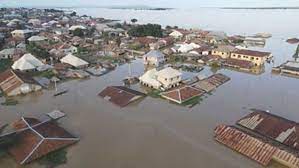
Environmental scientists from Anambra state are unveiling solutions to urban flooding and other challenges associated with climate change.
They note that the population, infrastructure and ecology of cities are at risk of the impacts of climate change which affect urban ventilation and cooling, urban drainage and flood risk and water resources.
They posit that built areas exert considerable influence over their local climate and environment, adding that urban populations are already facing a range of weather-related risks such as heat waves, water pollution and flooding.
According to Okonkwo Austin of the Department of Environmental Management, Anambra State University, Uli, under a changing climate, an increase in the frequency of drought, extreme rainfall, high temperatures, and wind are expected.
“We can expect an exacerbation of the health impacts associated with these events. It has been argued that extreme events that currently have return frequencies of 1 in 100 years could have return frequencies of 1 in 5 or 1 in 10 years by prevailing climate change conditions. As temperatures increase, evaporation will also increase and the atmosphere will be able to hold more moisture. Higher amounts of moisture in the atmosphere will result in more severe precipitation in Anambra State.
“Although the precise impacts of climate change will differ depending on the climatic and environmental characteristics of specific regions, it is often thought that extreme precipitation events could increase in severity by approximately 15 percent. Storm water management infrastructure in Anambra State has traditionally been designed with the assumption that weather and climate conditions are static, and historical climate conditions can be used to accurately predict the future climate.
“Understanding public perceptions of natural hazards is an important part of non-structural hazard management. In comparison to structural approaches to hazard management, which attempt to alter the hazard to reduce risks to population (e.g., building dams and levees to control flooding), non-structural approaches attempt to alter human behaviour to reduce vulnerability. A commonly applied non-structural measure may be the use of floodplain maps to steer development away from flood prone areas. Non-structural measures also include education programs and actions designed to increase the awareness and risk reducing actions of the individuals who are exposed to hazard risk,” he maintained.
Speaking in the same vein, in an Indexed African Journals Online, Ezeabasili Austin of the Department of Civil Engineering & Construction Management Heriot Watt University, England, UK, said that hazard perception studies were first conducted in the 1960s, and throughout this time, a few findings have generally remained constant in the literature. “First, people who live in areas subject to hazards are largely unaware that they could sustain damages, personal injury, or death. In most cases, less than half are aware of their exposure to natural hazards. Second, people who live in hazard prone areas rarely take actions to protect themselves. Many studies have revealed that less than 15 percent of individuals exposed to hazards take actions to reduce their risk of sustaining damages.
“When people do take action, they generally take inexpensive and less effective actions such as evacuating at the last minute, or moving valuable items to a higher level in their home during a flood event typically of what obtains in some built environment in Ogbaru local Government, Nigeria. Since early September 2013, vulnerable areas are expected to take precautionary measures which have not been done till now”.