Follow Us on Google
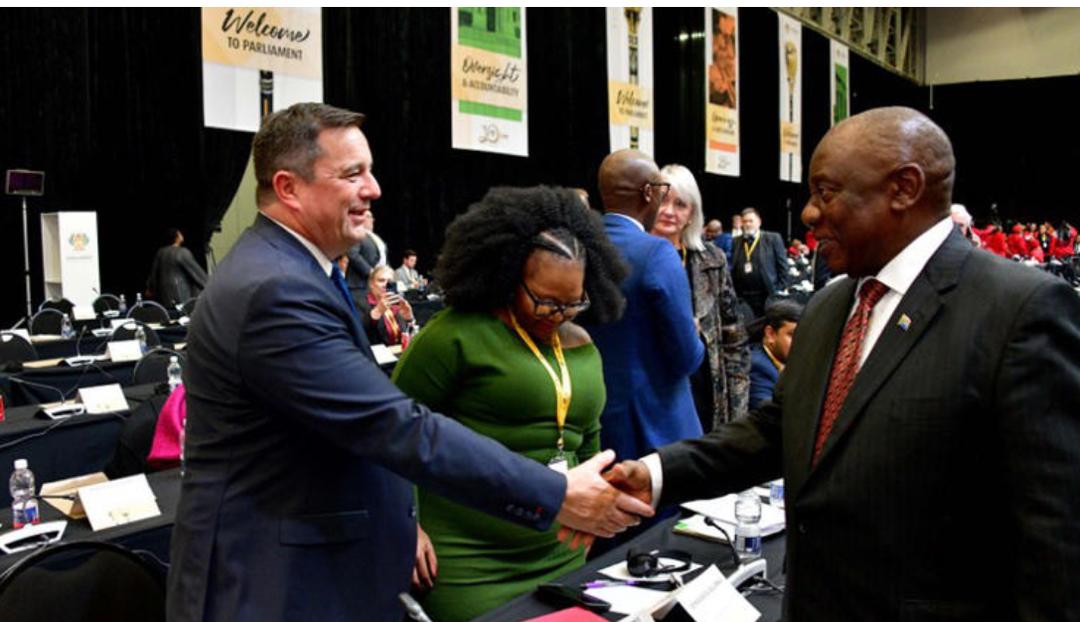
In a recent article by City Press, it was reported that the Democratic Alliance (DA) a political party in South Africa is eyeing seven cabinet posts and a key role as the leader of government business in a new Government of National Unity (GNU).
South Africa for the first time since apartheid has formed a coalition government that will soon be inaugurated.
This potential power shift has sparked considerable debate and speculation about the DA’s future in these roles.
But a political analyst, John Zulu in his latest evaluation of the situation explored the likely positions the DA might be granted, their implications, and whether they should be entrusted with critical portfolios like the Foreign Ministry.
According to him, the DA is poised to take on significant roles in the GNU, with a strong likelihood of being assigned key portfolios in energy and water supply. These areas are crucial for the country’s infrastructure and daily functioning, making them high-stakes assignments.
He argued that the DA’s track record and policy proposals suggest they might bring a fresh perspective to these sectors, “potentially addressing long-standing issues with efficiency and innovation. However, the transition from opposition to administration will be a litmus test of their practical governance skills.
Historically, the DA has been a vocal critic of the government, particularly in sectors they are now set to manage. Their aggressive opposition tactics have positioned them as staunch defenders of accountability and reform. With the potential to now govern, the DA faces the challenge of living up to their rhetoric. This transition is crucial; their previous attacks on the government will now be scrutinized under their administrative capabilities. This change of roles could either validate their criticisms and proposed solutions or expose their shortcomings in a more complex governing environment.”
Mfumu further said that, “It is important to speculate on the fact that the DA should not be allowed into the Foreign Ministry or similar positions in foreign policy because they are pro-Western liberals and have supported Israel. This stance could introduce bias into South Africa’s diplomatic relations. The Foreign Ministry requires a balanced, nuanced approach to international affairs, respecting diverse global perspectives. Given the DA’s ideological leanings, there is concern that their control over foreign policy might skew the country’s diplomatic engagements, potentially alienating non-Western allies and disrupting established foreign relations.
Buttressing his points, he said “The DA’s potential entry into key government roles, particularly in energy and water supply, presents a significant opportunity for the party to demonstrate its governance capabilities. This shift from opposition to administration will either confirm their capacity to lead effectively or expose the gap between their populist rhetoric and practical governance. The debate over their suitability for foreign policy roles underscores the broader question of whether their ideological positions align with the country’s diverse diplomatic needs. In any case, the DA will need to prove that their years of critique can translate into constructive, responsible leadership, and they must be held accountable for the outcomes of their governance,” he concluded.