Follow Us on Google

Adetutu Folasade-Koyi
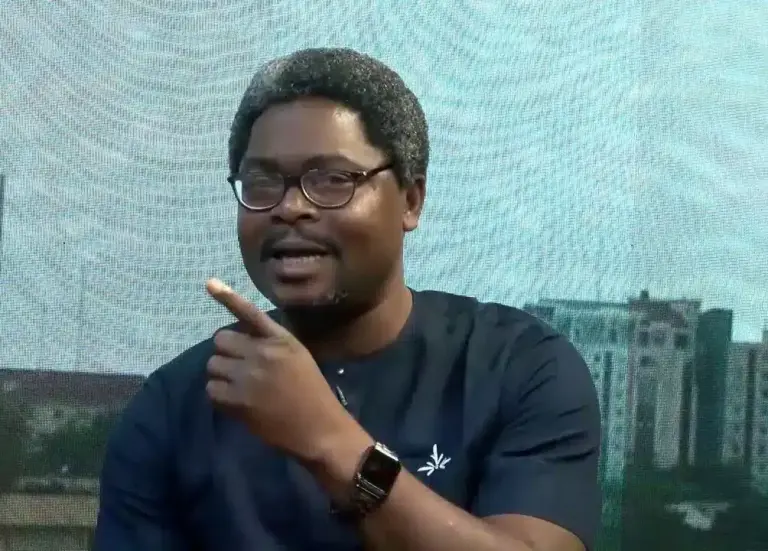
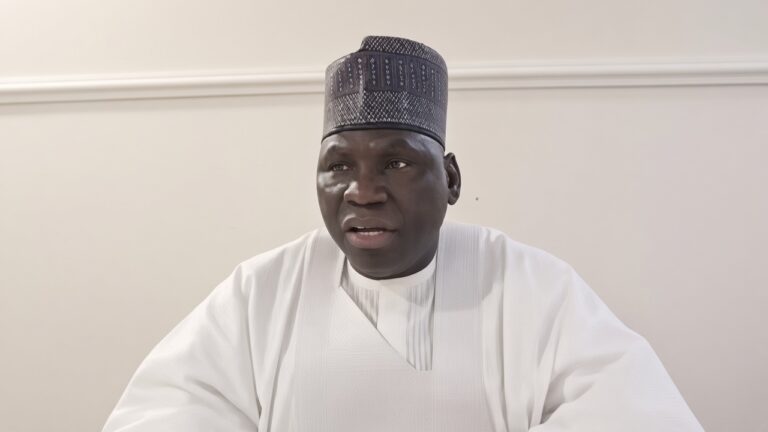
Special Adviser to the President on Niger Delta and Coordinator of the Presidential Amnesty Programme, Prof. Charles Dokubo, speaks on how the programme evolved from disarming, demobilisation training of militants to empowerment and tapping into diverse job opportunities in the economy; as well as the challenges of reintegration.
What’s your mission and vision at the Amnesty Programme?
I came in with an agenda; in the past, the two Ds had been concluded; that is, Disarmament and Demobilisation. Now, I am concerned with the Reintegration phase. The people of Niger Delta, in the past, had claimed that they had not been given access to things that they should have benefited from; in the area, especially in the oil industry. I decided to look at the issues and how to redress them. You cannot redress the issue by just paying stipends to the people. We must create an environment in which they can be educated, vocationally trained and empowered, so that they could attain heights and also have access to employment opportunities in the Programme. Not only that, but also to look for job placement so they can work and we can also stop their stipends once they have jobs. These are issues that we always confront and since we have dealt with the two Ds, the reintegration is a serious issue to those at the helm of affairs in this office. For me, that mandate is what I want to do. We have done a lot of training, it is now how do we get jobs for these people that we have trained, so that they could earn salary, pay taxes, and also, you know about the multiplier effects of earnings?
Why focus on vocational training centres?
For me, the highest point of my appointment was the commissioning of the training centre in Agadagba, Ondo State. The training facility in Ondo state is world class, and, it is to provide middle and lower class workforce for the oil and gas industry. It is mainly a centre for oil and gas trainees. For those who can’t go there, they could also have other places that we are negotiating with… That is why we are doing it with Petroleum Training Institute, Effurun, Delta State. These are people that are training the people that we have there, so that they will be certificated and look for job in other places. That is where I have decided concentrate on. We cannot continue to send our people abroad. Resources are limited and we try to do things inwardly because there are lots of organisations that have the capacity to train our people, and that is what I am doing. In the fishing sector, we have an agreement with a Greek company and they are training about 2,500 of our beneficiaries so that they will have knowledge of seamanship, ship-building, and all that. This is foreign training with support from us and the Ministry of Agriculture. It is not my place to criticise any other person. I want to rule a line and do my own thing my own way that is what I have always done. I don’t criticise people; I have been told to do a work and that work I will do. We have done something at Gelegele, in Edo State. The Agadagba Oil and Gas Vocational Training Centre is my flagship, as far as I am concerned, because, if you have ever been to that place, it is not like other places in Nigeria; the investment there, the type of training academics we have there and the way our people are going to be trained there, in various aspects of the oil and gas industry. Then, I also did what I call empowerment programme; empowering those who had been trained; to give them what they need to start life. I decided to go to them and give them starter packs, for them to start whatever businesses they want. We did that in all the states in Niger Delta. Before February, this year, we started doing it and then, we were able to successfully carry it out. The only place we had a problem was Kiama (Bayelsa State).
What actually happened in Kaiama?
I was in Port Harcourt (Rivers State) waiting to commission the training centre in Kaiama, the next day, when somebody called me that they have started destroying the place. The compound was littered with things that had been there for a very long time. I addressed these people, because I cannot just stand aside to see the foundation that Federal Government money had been spent on, destroyed… I called the security agencies but if you look at the number of people there, they overpowered them (the security agencies). They could not shoot; we don’t want any narrative to come out of the Niger Delta because of the election, that we shot people and all that, so, I told them not to even shoot in the air; they should just prevent them, but they overpowered them. On that day, I was ashamed to be from the Niger Delta. The narrative of the Niger Delta is that we have been marginalised, ostracised, repressed and depressed. That is the identification we have; that we are an internally colonised people; but now, when things are beaming for us, to better our lives, people will go and destroy it. Is there no other better way of making money than to destroy something that has been there all these years and then, to remove the roof also? Who can ever imagine that this kind of thing is happening in Niger Delta? I believe that, in all the states of the Niger Delta, there must be an Amnesty Programme facility that will cater for the demands of the people and bring the government and the programme back to the community where they truly belong so that if there is a problem, instead of rushing down to Abuja, you can go to your local liaison office and then, from there, the issues are addressed. It is when the issue cannot be handled by the liaison office, then, we can go there and deal with it. Also, to decentralise functions to various parts of the Niger Delta, I have started setting up liaison offices. The Port Harcourt one was commissioned shortly before the last presidential election. We have also got a place in Yenagoa. When I assumed office, I questioned the establishment of a centre in Kaiama; it was so far away from the centre of Yenagoa. If it had been in Yenagoa urban, it won’t have been destroyed. If it were to be in Yenagoa, the security agencies would be able to checkmate it…For me, it was a planned and well-executed act; they knew what they wanted and what they want to do, but, the shame of it is that these things belong to the Niger Delta people. The fact that we have a warehouse in Kaiama does not mean that those things belong to the people of Kaiama; it is for all the states in the Niger Delta.
When I came into this office, the things I saw, I have never heard of them; coming from my background. Because somebody wants to travel, they need N5 million they call millions as if it is small money.
I came from an academic background; if I am travelling from Lagos to Abuja, what I get is about N90, 000, sometimes, or N60, 000. That is what I get. Sometimes if I pay air ticket, the money will be shorter, so, I travel by road. I am not vilifying anybody but that idea; the previous people who have been here, they got used to this idea of money.
I am not claiming to be a saint, but, I try to be the best I can, irrespective of any situation. If I am found wanting, take me to jail and nobody should cry for me. I will do my best.
What are you doing to take Amnesty Programme to the next level?
This one year has been a very trying period, coming from the background that I am coming from, but, I have come to realise that in every part of your life, you will encounter challenges that you didn’t even think of, and, for me, this is a terrain that I am now well grounded in and my second year will be totally different from my first year. Actions will be taken; trainings will be done, and empowerment will be done immediately after. You don’t have to wait for years or wait to be trained and trained before you get your empowerment. The Amnesty Office is ready to move forward. We will be forming synergies with the private and government institutions. Recently, we sent names to the Nigerian Navy so that they can employ people from the Niger Delta. We have sent names to the Police, so they can be employed. These things we are doing so that people from the Niger Delta will stop depending on stipends. Stipends do not develop a community; it only sustains the peace and not their future. What we want to do is to take people who have got jobs out of the stipends; make arrangements with multinational companies like Shell, Chevron, Mobil, that operate in the Niger Delta, to work in concert with us, as part of their Corporate Social Responsibility so that those who have been trained can also be given jobs. Job placement is the next stage of my plans for the next year and I believe that if we can achieve that, we are going to do well. The amount of money government has spent on this programme is a lot and I know that if we judiciously expend it, most people from the Niger Delta will benefit immensely. I want this programme to be a success, if not, our children yet unborn will keep asking us what we have done for them if we say we have fought for Niger Delta. This tale about being deprived should not be something we should keep saying. We have been given access. No part of Nigeria has more agencies than the Niger Delta. Now that we have these things, I will implore the people of Niger Delta to know that the sky is their beginning; if they will work when they are given a job. Job placement is now the motto of the Amnesty Office and, at the end, we will leave beneficiaries of the Amnesty Programme gainfully employed and be made employable so that we can also know that we have done something for our people.
What are the challenges you are facing in the quest for fresh initiatives for job creation?
How do we reduce the dependence in the people that we are training? How do we also make them realise that employment is not only by government and private institutions; that they can also do something for themselves and also employ other people in the process? And, on that, my office is ready to give anybody who is ready to set up a business the necessary financial assistance because we cannot continue to have a long list of people depending on stipends. The stipend culture should be removed from our programme. Looking at the region where we are coming, the major sector for job is the oil industry. That is why the Agadagba Training Centre is there for middle and lower level oil and gas manpower to be absorbed by the companies. Also, we have signed an MOU with the National Board for Technology Incubation (NBTI) so that our people would not just be trained by certain individuals, they would also be certificated by a known body and with their certificates, they can secure jobs. That is what I want to do. I told you about the Greek fishing company that will train 2,500 of our delegates and they are going to employ 2,000 of them. We are making strides in the right direction; so, it is not just training for training sake; it is training to get a job.