Follow Us on Google

By Moses Akaigwe
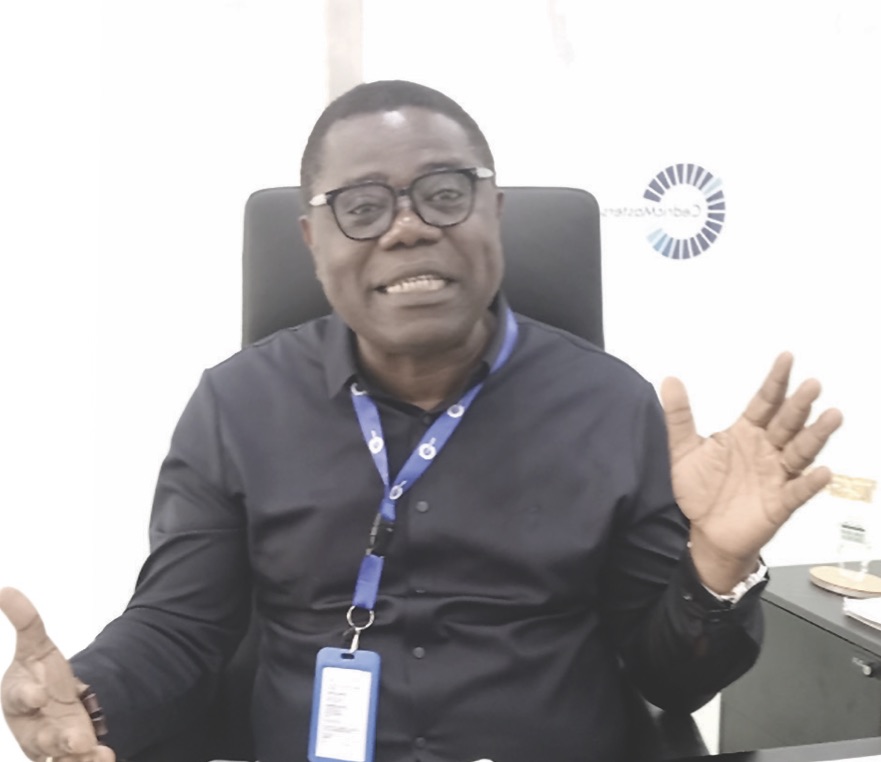
Chief Anselm Ilekuba is the Chairman and Chief Executive Officer of Cedric Masters, a Lagos-based Group of companies with investments in various sectors of the economy, including vehicle assembly and dealership. He doubles as the National Coordinator of Automotive Local Content Manufacturers Association of Nigeria (ALCMAN), an umbrella stakeholder group in Nigeria’s automotive industry, representing local manufacturers of auto components and parts.
It is by virtue of Chief Ilekuba coordinating the affairs of ALCMAN that he is also a member of the Governing Board of the National Automotive Design and Development Council (NADDC).
In this interview, he speaks on the efforts by ALCMAN to galvanise auto components manufacturers towards certifying their products for acceptance by Original Equipment Manufacturers (OEMs) and taking advantage of the African Continental Free Trade Area AfCFTA trade opportunities. He also spoke on Cedric’s made-in-Nigeria Jim Isuzu pick-ups and buses, as well as his Group’s latest investment – the production of electric vehicle charging stations in Lekki, Lagos.
My name is Chief Anselm Ilekuba, Chairman and Chief Executive Officer (CEO) of Cedric Masters Group. Cedric Masters Group operates across multiple sectors of the Nigerian economy through five subsidiaries. Our core business areas include automobiles, real estate, medical supplies—both laboratory hardware and consumables—and logistics.
In the automotive space, we are widely known as Tyre Masters Nigeria, through our subsidiary Cedric Tyres. Across Nigeria—whether at the Trade Fair Complex in Lagos, Sabon Gari in Kano, Kaduna, Abuja (Apo), Onitsha, Aba, or Trans-Amadi in Port Harcourt—the name “Tyre Masters” is synonymous with Cedric Masters Group.
I am also the National Coordinator of the Automotive Local Component Manufacturers Association of Nigeria.(ALCMAN).
ALCMAN is a galvanising organisation that rallies around and struggles with every difficulty to make sure that governments send some support to the auto component makers as a live wire of automotive development in Nigeria.
Cedric Motors and Assembly Plant
Under our dealership arm, Cedric Motors, we operate conventional dealerships for leading automotive brands. We import and sell brand new vehicles, provide robust after-sales services, and stock spare parts. However, the flagship of our automotive operations is Cedric Automobile Assembly Company, which represents our long-term commitment to Nigeria’s industrial development.
Location of Assembly Plant
Our assembly plant is located in Lekki, Lagos. It is a modest, but highly productive facility where we currently assemble two vehicle models: the Jim Isuzu Pickup and the Roar Jim Bus. These are the only models in production at the moment, but we have additional models in the pipeline.
We are finalising technology transfer agreements with Original Equipment Manufacturers (OEMs) to expand our product portfolio in line with our development roadmap.
Partnership with Jim Isuzu
Jim Isuzu—formally Jiangxi Isuzu Motors—is a joint venture between the Chinese and Japanese governments, headquartered in Nanchang, China. We have entered into an OEM partnership with full approvals to assemble these vehicles in Nigeria, enabling us to participate meaningfully in the local automotive industry.
Vehicle Quality Assurance
Absolutely—100 percent. The Jim Isuzu brand is built on a hybrid of Japanese and Chinese technology. We have introduced this combination to Nigeria to deliver superior value to consumers.
Our vehicles feature rugged suspension systems—drawing from the legacy of the legendary Isuzu Tiger—combined with modern interiors, improved infotainment systems, and enhanced comfort. Japanese engineering ensures durability and powertrain strength, while Chinese advancements contribute aesthetics and media technology. Global brands maintain uniform quality standards regardless of assembly location.
Installed Production Capacity
Our current installed capacity stands at approximately 2,000 vehicles annually, with room for expansion. Based on feasibility studies, we intentionally avoided over-scaling production in the early stages to prevent excessive borrowing and high operating costs. We are fully prepared to scale production as market demand increases.
.ALCMAN and Auto Components Industry
The Automotive Local Content Manufacturers Association of Nigeria (ALCMAN) was established during Nigeria’s first automotive revolution in the 70s/early 1980s. I must acknowledge Dr. D. V. C. Obi, the founder and father of ALCMAN, whose personal commitment laid the foundation for Nigeria’s component supply chain.
ALCMAN serves as an advocacy body, working tirelessly to secure government support for component manufacturers—the backbone of automotive development.
Challenges of Local Content Development
When battery manufacturers like Exide, the glass manufacturers, windscreen makers and the rest of them, were in existence, they were specifically set up to serve those key CKD (completely knocked down) assembly plants that were set up in the 70s/early 80s
The assembly plants included Volkswagen of Nigeria (VWoN) in Ojo, Lagos; Anambra Motor Manufacturing Company Ltd (ANAMMCO), Emene, near Enugu; Peugeot Automobile Nigeria Ltd PAN), in Kaduna; Steyr Nigeria Ltd in Bauchi; National Truck Manufacturers (NTM), Kano; and Leyland Nigeria Ltd (NLN) in Ibadan.
So, when the assembly plants collapsed, it affected the component manufacturers.
But they (the component manufacturers) did not close shop. They stayed on and continued their manufacturing to serve the after-sales market.
They survived the collapse of earlier CKD plants by pivoting to the after-sales market. However, lack of OEM engagement, inadequate standardisation, cheap imports, and limited government support hindered their growth.
Today, with the second wave of automotive assembly—featuring companies like Cedric Motors, Innoson, Jet Motors, and Mikano—we are advocating for component manufacturers to meet ISO and OEM certification standards.
Through partnerships with Afreximbank and international counterparts in India and South Africa, ALCMAN is working to certify Nigerian-made components for OEM use and AfCFTA trade.
So, our basic effort now is the advocacy to bring these component manufacturers back to their standpoint. We have identified everybody. We have seen what they are producing. This is because that is the key problem we have. It is not that they are not manufacturing filters, for instance, but the filter they are manufacturing cannot be classified as acceptable by the OEM.
Synergy gaps between auto parts makers and assembly plants
Most component parts manufacturers manufacture for the after-sales markets. It is the responsibility of ALCMAN and not those assembly plants to establish a linkage. Moreover, most assemblers currently operate SKD (semi knocked down) models, where using uncertified local components voids OEM warranties. ALCMAN’s role is to bridge this gap by harmonising component specifications and advocating for certification.
We are engaging NADDC, NAMA (Nigeria Automotive Manufacturers Association), the Customs, and the Ministry of Industry to align policies and standards.
The important thing is that the components need to be standardised so that they will be recognised and accepted for the assemblers to be able to delete them in their import list. We are not talking about government deletion. We are talking about company deletion first.
Other News
So for us to get this done is an advocacy that will be run by ALCMAN. And for us to be able to run this advocacy in the interest of our economy, ALCMAN needs support from the government. As of today, I will tell you authoritatively that before 2025, I have been running ALCMAN with my personal funds because of the passion I have for the industry, believing that one day the government will come to our aid.
But under the leadership of the current DG of the NADDC, Otunba Joseph Osanipin, we have been assured that at least the government will give us some advocacy support, no matter how little it is.
So this is the real problem we have because we need to meet the standards of the OEM for them to be acceptable to go into their SKD list.
Tariffs And Customs Advocacy
A major challenge is misinformation regarding tariffs. Many manufacturers lack proper registration or use incorrect HS (Harmonised System) charge codes. ALCMAN provides free advocacy, facility assessments, and liaison with Nigeria Customs to ensure manufacturers enjoy available incentives.
You see, don’t forget that tariffs are made by the government in consultation with stakeholders. And we are the stakeholders. But if you are not in touch with the stakeholders, how will you know what is happening?
So, some of these reports you people are getting are actually not the position of law. And people will just rely on their uneducated clearing agents. Most of these manufacturers you are seeing don’t even fill their forms by themselves. Their clearing agents will fill those forms, and create problems for them
That’s why we are calling them to come, so that we will be able to put them through and make sure that they enjoy the dividends of being manufacturers in Nigeria.
AfCFTA and Industrial Clusters
You see, we have to be very, very optimistic about the development of this industry in Nigeria. As the leader of ALCMAN in Nigeria, I have gone around and I can tell you that we’ll have what it takes to contribute 40 percent local content (in vehicles made in Nigeria).
When you look at the plastic capability, we have; and the rubber capability, we have,; the paper capability, we have, and the sawdust too. When you bring all these together, we have component makers in Nigeria, but the truth, as I said earlier, is that the majority of them are manufacturing for the after-sales market.
So, Nigeria has the capacity to achieve 40 percent local content in vehicle production. However, issues such as packaging, labelling, and certification persist. The solution lies in automotive industrial parks and clusters, which provide shared facilities and streamline compliance.
We are advocating for the concessioning of existing parks in Nnewi, Oshogbo, and Kaduna to private operators to accelerate development.
If we have industrial parks and we have shared facilities, we will be intentional about supporting these people to help us meet our 40 percent benchmark. But, if you are not interested in continuing with the investment, please concession it to us.
CKD vs SKD and Market Forces
Nigeria’s earlier CKD model collapsed under economic pressure. Today’s SKD approach aligns with global trade liberalization. As market volumes grow, consolidation and scale will naturally follow.
Without sufficient sales volumes—at least 500 units annually—CKD operations are not commercially viable.
Harmonisation of vehicle models
Harmonisation is already taking care of itself. This is because 95 percent of the vehicles assembled in Nigeria are coming from China. That is true, and today, if you look at every pickup except one, all of them are using the same engine. The powertrain, the frame, the gearbox, the majority of them are now harmonised, because if you go to China itself, there is a robust supply chain that is funded by the government.
And to be able to do this effectively, they have started this and it is already making our life easier. But the numbers we are talking about will also not come by that. Numbers are an integral part of investments of each company. You don’t expect Cedric Motors to invest millions of dollars and for us not to be able to sell up to 100 vehicles.
That’s another thing. That is where the problem is coming from. What is the total number of vehicles, brand new vehicles sold in Nigeria, including imported and assembled? So that is where the biggest issue is. Then why are we not able to do that? Let’s take a clue from others. We don’t have trade, we don’t have credit schemes for people to be able to buy vehicles.
Somebody can live in Aja and tomorrow live in Ogbomosho and the next day live in Nnewi. These are some of the challenges. So we have a combination of social problems, security problems, financial problems and government policy problems.
Nigeria’s green mobility initiative
The green mobility initiative is commendable. You see, leadership is about being very thankful of what you will introduce that will stimulate the economy.
By introducing the CNG policy, the President brought something new into the status quo of the automotive economy.
Today, people have made investments in CNG stations, reticulation of gas pipelines, CNG component parts, CNG cylinders, CNG gas, then all the supply chain of CNG have created labour, created business and made people to make a living. So it is commendable that government did that. The more commendable is the fact that government thought it wise not to restrict everybody only on CNG.
They have now allowed us to go into infusion. During the last Federal Executive Council (FEC) meeting, you saw that the government approved the acquisition of 200 electric vehicles. You know my happiness with that because there was a FEC meeting that made a pronouncement that every vehicle that would be procured by a government agency must be CNG.
So, for them to now approve electric vehicles means that the government has liberalised that policy. So we have to make it very, very important so that nobody will come out tomorrow to come and tell us that whatever vehicle the government is buying will be CNG, because these 200 electric vehicles, they are not CNG.
So it is a liberalisation statement by the government. Those of us that have invested in green energy component parts, in ALCMAN, we are encouraging our people to continue to fire on. I know a company that is associated with us, Cedric Clean Energy Solution. Under Cedric Clean Energy Solution, Cedric Group is assembling electric vehicle chargers in Nigeria. Right now, we are proud to say that we are the first to start this initiative in Nigeria.
Key Users Him Isuzu and Market Acceptance
Our vehicles are widely adopted by regulatory and government institutions in Nigeria. Notably, the Director-General of the National Automotive Design and Development Council (NADDC) uses our vehicle; and the Minister of State for Industry, Trade, and Investment are both users of our vehicles. The Nigeria Customs Service is our largest institutional client, having awarded us 80 percent of their pickup vehicle requirements after rigorous evaluation.
Our vehicles are also in use at the Ministry of Finance, Department of State Services (DSS), and several state governments, including Anambra State.
The Jim Isuzu pickup is our flagship product. We deliberately focus on a limited product range, prioritising excellence over overextension. Our vehicles are engineered specifically for Nigerian terrain and operational realities, offering a credible, Made-in-Nigeria alternative to imported models such as the Hilux.
Jim Isuzu Engine capacity, technology
Our vehicles are powered by a 2.4-litre turbocharged engine, designed in line with global emissions standards. Modern automotive engineering now favours smaller turbocharged engines that deliver higher performance, lower emissions, and improved fuel efficiency. The market response to this technology has been overwhelmingly positive.
After sales back-up
After-sales service is a core strength. Our partnership with a global brand ensures that any technician familiar with Japanese vehicles can service our products. Spare parts—both OEM and aftermarket—are readily available nationwide.
We maintain offices in Lagos, Abuja, and Port Harcourt, supported by a nationwide service network through our Tyre Masters centres, as well as licensed dealers in Nigeria and Cameroon.