Follow Us on Google

By Chinyere Anyanwu, [email protected]
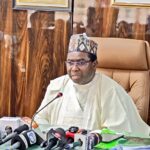
The Agricultural Extension Service Bill, 2024 (SB. 646), championed by Senator Saliu Mustapha, has successfully passed its first reading in the Nigerian Senate.
This reflects the Senate’s continued commitment to revitalising the country’s agricultural sector, highlighting the critical role agriculture plays in national development.
The bill, supported by key agricultural stakeholders, including the Women Farmers Advancement Network (WOFAN) and the Integrated Community-led Network (ICON2), aims to revolutionize agricultural extension services across Nigeria. Specifically, it seeks to enhance smallholder farmers’ productivity, ensuring food security and sustainable development nationwide.
A core objective of the bill is to empower extension workers with advanced, technology-driven skills tailored to meet the evolving needs of the agricultural sector. By equipping these workers with demand-oriented expertise, the bill aims to significantly improve the delivery of extension services, thus strengthening the backbone of Nigeria’s agricultural industry.
Senator Mustapha, representing Kwara Central, emphasized that the bill’s ultimate goal is to facilitate the effective implementation of the National Agricultural Extension Policy and Strategy. He highlighted that this legislation would lay the foundation for establishing a robust and sustainable framework for agricultural extension services, aligning with the broader objectives of agricultural reform in the country.
Furthermore, the bill envisions the creation of an integrated, pluralistic, and demand-driven e-agriculture extension system, aimed at boosting efficiency and ensuring that extension services align with the needs of farmers across the agricultural value chain.
Senator Aliyu Abdullahi, the Minister of State for Agriculture and Food Security, has commended the efforts of all stakeholders involved, particularly the WOFAN-ICON2 project and the National Agricultural Extension and Research Liaison Services (NAERLS), for their pivotal role in drafting the bill. He praised their dedication to transforming Nigeria’s agricultural extension framework to meet the demands of modern agriculture.
Agricultural experts affirm that the passing of this bill is crucial to transitioning Nigeria’s agricultural practices from outdated methods to a knowledge-driven approach. With the country’s population and urbanization rates increasing rapidly, there is an urgent need to modernize the agricultural sector. The bill addresses this need by strengthening the capacity of agricultural extension services to teach smallholder farmers innovative farming techniques that will boost productivity and sustainability.
The current agricultural extension system in Nigeria faces significant challenges, including limited capacity and an outdated approach. By establishing a legal framework for agricultural extension, this bill paves the way for an inclusive, dynamic, and efficient system that will enable Nigeria to better meet its food security goals in the face of rapid demographic growth and changing environmental conditions.
With this first reading, the bill moves a step closer to becoming a law that will fundamentally reshape the future of agriculture in Nigeria.