Follow Us on Google

By Chinwendu Obienyi
The Central Bank of Nigeria (CBN) has dismissed concerns over the apparent scarcity of coins and lower-denomination banknotes, clarifying that they have not been withdrawn from circulation.
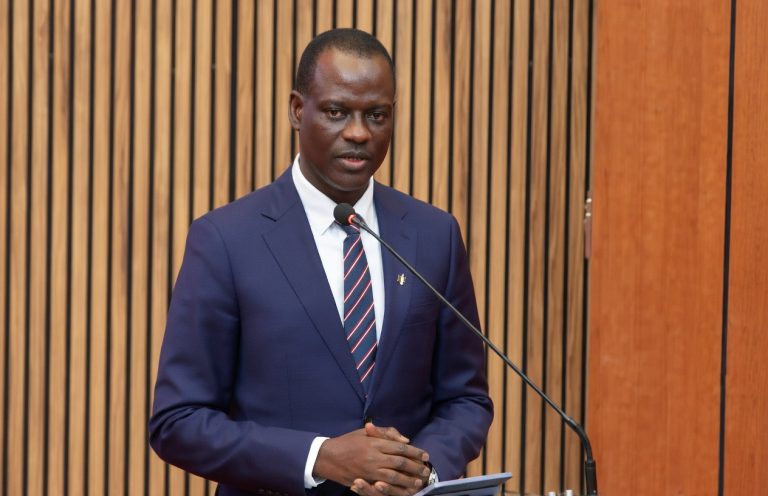
Instead, the apex bank said their declining visibility reflects Nigerians’ growing preference for digital and electronic payment channels, rather than any policy to phase them out.Fielding questions from newsmen after the 306th Monetary Policy Committee (MPC) meeting, Cardoso while speaking on the pace of disinflation, decline in lending by deposit money banks (DMBs) among others, said the apex bank remains committed to ensuring Nigerians have access to a broad range of secure and efficient payment options, adding that the transition towards digital payments is reshaping the country’s cash ecosystem.
Excerpts:
CBN’s opinion on the pace of disinflation
Quiet frankly, we expected that by early 2027, Nigeria would be where we wanted to be on inflation, firmly on course toward achieving single-digit inflation.
Unfortunately, unforeseen external shocks, particularly the renewed geopolitical tensions, have disrupted that path and persisted much longer than anyone anticipated. At this point, it is difficult to predict how long those uncertainties will last, so they are not challenges we can simply wish away. They are realities that policymakers must respond to. That said, we are encouraged by two important developments. First, headline inflation has begun to moderate, even if only marginally. This provides evidence that the monetary policy measures we have implemented are beginning to produce the desired results or bearing desired effect and that our policy tools are working.
Secondly, we recognise that inflation is also being driven by structural rigidities that monetary policy alone cannot address. These constraints come from different parts of the economy, reinforcing the need for stronger coordination between fiscal and monetary authorities. At a time like this, such collaboration cannot be overemphasised, and we are committed to deepening that partnership to ensure both sides effectively discharge their responsibilities. The central bank will continue to take whatever measures are necessary to contain inflationary pressures and steer inflation back towards single digits. That objective remains unchanged, and we remain fully committed to achieving it.
MPC decision to hold rates
The Monetary Policy Committee (MPC) retained the Monetary Policy Rate (MPR) at 26.5 per cent, while leaving all other key monetary policy parameters unchanged. The Committee maintained the asymmetric corridor around the MPR at +50/-450 basis points, retained the Cash Reserve Ratio (CRR) for Deposit Money Banks at 45 per cent, the CRR for Merchant Banks at 16 per cent, sustained the 75 per cent CRR on Non-TSA public sector deposits, and left the Liquidity Ratio at 30 per cent.
Its decision followed a comprehensive assessment of prevailing domestic and global economic conditions. Although headline inflation moderated marginally in June 2026, members noted that renewed hostilities in the Middle East have heightened global uncertainties, particularly through their potential impact on international energy prices and the possible pass-through to domestic inflation.
Against this backdrop, the MPC concluded that maintaining its current monetary policy stance was the most appropriate course of action, as it would allow the Bank to closely monitor incoming economic data and assess the inflation trajectory before considering any policy adjustment.
Despite the external headwinds, the Committee observed that the Nigerian economy has remained broadly resilient, reflecting the gains from recent fiscal and monetary reforms.
Members also welcomed the Federal Government’s renewed commitment to strengthening policy coordination with the Central Bank, noting that closer alignment between fiscal and monetary authorities has helped cushion the domestic economy from the impact of the Middle East crisis and will further enhance the effectiveness of macroeconomic policy.
To reinforce macroeconomic stability, the Committee highlighted the expected benefits of Executive Order No. 9 and commended the government’s efforts to improve crude oil production. It also urged relevant agencies to accelerate reforms in the solid minerals sector and other non-oil industries to diversify government revenue and strengthen the economy’s resilience.
The MPC further welcomed the successful conclusion of the banking sector recapitalisation exercise, describing it as a significant milestone in strengthening the resilience of Nigeria’s financial system. Members noted improvements in key prudential and financial soundness indicators but emphasised the need for the Central Bank to sustain robust supervision and surveillance to safeguard financial stability, preserve price stability and mitigate emerging risks to the economy.
Broader developments
Headline inflation (year-on-year) moderated slightly to 15.91 per cent in June 2026, from 15.93 per cent in May, bringing to an end three consecutive months of rising inflation. The marginal decline was driven by a slowdown in the non-food component, which offset the continued increase in food prices.
Food inflation rose to 17.52 per cent in June from 16.96 per cent in May, reflecting persistent supply constraints in major food-producing areas and elevated transportation costs. In contrast, core inflation eased significantly to 15.92 per cent from 16.82 per cent, largely supported by sustained stability in the foreign exchange market.
The Committee also observed that the 12-month average inflation rate declined for the sixth consecutive month, falling to 17.63 per cent in June from 18.36 per cent in May, indicating a gradual moderation in underlying price pressures. On a month-on-month basis, headline inflation slowed to 1.66 per cent from 1.75 per cent, driven mainly by lower core inflation.
On the domestic economy, the MPC noted that real Gross Domestic Product (GDP) expanded by 3.89 per cent in the first quarter of 2026, compared with 4.07 per cent in the preceding quarter. Growth continued to be driven primarily by the resilience of the non-oil sector, which grew by 3.94 per cent, supported by strong performance in telecommunications, financial services, trade, transportation and other service-related activities.
Growth in the oil sector, however, moderated to 2.57 per cent in the first quarter from 6.79 per cent in the fourth quarter of 2025, largely due to maintenance activities at oil facilities and installations.
Despite the moderation in overall GDP growth, the Committee noted encouraging signs of improving economic activity. The Composite Purchasing Managers’ Index (PMI) rose to 50.1 points in June 2026, up from 49.6 points in May, signalling a return to expansion in business activity.
The MPC also welcomed the continued improvement in Nigeria’s external position. Gross external reserves increased to $52.52 billion as of July 17, 2026, from $50.47 billion at the end of May, driven mainly by higher crude oil-related tax receipts and third-party inflows. The reserve level is sufficient to finance approximately 11 months of imports of goods and services, significantly exceeding the international benchmark of three months’ import cover.
Global Outlook
The committee noted that world economic growth is projected to slow to 3.0 per cent in 2026, compared with 3.5 per cent in 2025, reflecting the combined effects of heightened geopolitical tensions in the Middle East, trade policy uncertainties and tighter fiscal conditions across several economies.
Members also observed that risks to global inflation remain tilted to the upside, driven largely by rising crude oil and commodity prices. Inflationary pressures could be further intensified by supply chain disruptions and climate-related shocks affecting food production, while exchange rate volatility and fiscal constraints continue to pose significant inflation risks for many emerging and developing economies.
Domestic Outlook
Economic growth is projected to remain resilient in 2026, anchored on the recent improvement in crude oil production, expansionary purchasing managers index, and the positive impact of timely policy reforms.
Inflation is projected to moderate further in the medium term, on the back of continued stability in the foreign exchange market, lagged effect of previous monetary policy tightening, and improved food supply conditions as the harvest season approaches.
The key risk to the outlook, however, remains the severe and prolonged escalation of the Middle East conflict. In the light of these considerations, the committee reaffirmed its commitment to preserve price and financial system stability, and remains prepared to take appropriate policy measures guided by evolving macroeconomic conditions.
Central bank award recognition
When I received the award, I deliberately dedicated it not to the Governor of the Central Bank, but to the staff and management of the institution. That was intentional because the progress we have made has been the result of a collective effort. The hard work, commitment and professionalism of the people across the Bank have been instrumental in achieving these outcomes, and I believe they deserve the recognition.
Awards such as this also provide an opportunity to reflect on how far we have come and why our reforms are increasingly being recognised internationally.
This is not merely a local recognition; it is an acknowledgement by the global financial community of the difficult but necessary reforms Nigeria has undertaken.
One point I made during the award ceremony is that the work of a central bank carries enormous responsibility. The decisions we make affect millions of lives and, in Nigeria’s case, hundreds of millions of people. It is therefore only right to recognise those who work tirelessly behind the scenes to ensure the institution fulfils its mandate. The award also speaks to the resilience of the Nigerian people.
The reform journey has not been easy, and we fully appreciate the sacrifices that have been made. I am often asked when the benefits of these reforms will become more visible to ordinary Nigerians. My response is that one of the most significant achievements over the past two years has been the restoration of macroeconomic stability. Without stability, investment cannot flourish, and without investment, sustainable economic growth becomes difficult.
Today, we are seeing stronger external reserves, greater stability in key macroeconomic indicators and growing investor confidence. These developments are laying the foundation for stronger and more sustainable economic growth. While the benefits may not be immediate, the resilience shown by Nigerians is beginning to yield tangible results.
Finally, this recognition reminds us that Nigeria is not operating in isolation. The international community is closely watching the reforms we undertake. The difficult decisions we have made have been carefully assessed by global institutions and have earned international recognition because they are beginning to restore confidence in the Nigerian economy.
As these reforms continue to take root and are complemented by other policy measures, I am confident that they will translate into stronger economic performance and better outcomes for the country.
Other News
Naira undervalued or devalued
Our position remains unchanged. We will continue on the reform path we have embarked upon, which is to ensure that Nigeria has a foreign exchange market that is transparent, liquid and driven by the principles of a willing buyer and a willing seller.
Exchange rates are not static, they are determined by market dynamics and are influenced by a range of economic fundamentals. Ultimately, where the naira settles will depend on factors such as crude oil production and exports, foreign direct investment (FDI), improved domestic productivity and a reduction in the country’s reliance on imports. These are the fundamentals that will sustainably support the value of the currency.
From the Central Bank’s perspective, we are comfortable with the progress that has been made. We now have a market that is open, transparent and increasingly liquid. On some trading days, foreign exchange market turnover exceeds $1 billion, reflecting growing confidence and improved market efficiency. More importantly, the market is responding positively to the reforms and policy measures we have implemented.
The country also needs a competitive exchange rate or competitive currency that supports investment, exports and economic growth. Based on current market developments, we believe the exchange rate is moving in a direction that enhances the competitiveness of the economy while remaining anchored on market fundamentals.
NOFR
The Nigerian Overnight Funding Rate (NOFR) is Nigeria’s official overnight risk-free benchmark rate. It reflects the actual cost of overnight secured funding in the interbank market, making it a more accurate measure of short-term funding conditions.
In the past, we had a situation where banks would simply give a rate that they believed should be reflective of what interest rates should be. We have now done away with that. This system ensures that the real transactional rates, as opposed to judgmental, are the rates that are being used. We are not the first ones to do this. We are taking ourselves up to benchmark world standards. The UK has fully transitioned away from GBP LIBOR to SONIA (Sterling Overnight Index Average) as its main risk‑free benchmark for sterling markets. SONIA is now the standard reference rate for new GBP derivatives and most new GBP floating‑rate debt and loans.
The U.S has likewise moved away from USD LIBOR to SOFR (Secured Overnight Financing Rate) as the primary risk‑free benchmark for US dollar markets. Hence, Nigeria is therefore bringing its financial market infrastructure in line with globally accepted standards.
Going forward, we expect stronger alignment between the Monetary Policy Rate (MPR) and the NOFR. While the MPR will continue to serve as the Central Bank’s policy benchmark, the NOFR will provide a clearer indication of the actual rates at which overnight transactions are taking place in the market.
As we gradually transition towards an inflation-targeting monetary policy framework, the NOFR will become an important operational tool, a key ingredient, providing a more reliable market-based benchmark for transmitting monetary policy and improving the effectiveness of interest rate signaling.
Decline in lending by DMBs
It is important to distinguish between what is temporary and what is structural. The recent moderation in bank lending should not be interpreted as a sign of weakness in the banking sector or a permanent tightening of credit.
Forbearance we felt had outlived its time and if many of you will recall, this is something that came as a result of COVID-19 pandemic. We are in 2026 and we believed it had outlived its usefulness and should no longer remain a feature of banks’ balance sheets. As a result, the central bank withdrew those temporary relief measures, prompting banks to reassess and recalibrate their loan portfolios.
In the course of that adjustment, it is only natural that there would be a temporary decline in outstanding risk assets and credit growth. That is part of the transition process and should not be a cause for concern.
As banks complete their recapitalisation, strengthen their capital buffers and enhance their lending capacity, credit expansion is expected to recover and return to levels that reflect the size and strength of the institutions.
So I do not want anybody to get the wrong impression. It reflects a transition to a more sustainable and better quality credit environment, which is what we all want. We do not want these unanticipated shocks that come in a boom and bust fashion. One moment you are happy, the next moment you are having to take out things that you never anticipated. We are avoiding that by all means. So please don’t get that wrong impression. The banking system continues to be safe and sound, and you will see in the fullness of time many of these things will settle, and credit will go back up again.
Revocation of microfinance bank licences
At the time, we had no option but to take regulatory action against the affected institutions, including suspending or revoking their licences where necessary. These decisions were not taken lightly; they followed persistent compliance and supervisory issues that had remained unresolved over a period of time.
The outcome has been a necessary shake-up in the microfinance banking sector. The industry has become more conscious of its responsibilities, particularly the need to meet minimum regulatory thresholds and maintain adequate capital and prudential ratio standards.
For us at the central bank, the most important consideration is the protection of depositors’ funds. That remains our primary responsibility and the foundation of our supervisory mandate. We will continue to take all necessary steps to safeguard depositors’ money and preserve confidence in the financial system.
The response of the central bank will always depend on the nature and severity of any regulatory breaches. Where institutions fail to meet required standards or pose risks to depositors, appropriate supervisory measures will be taken to address those concerns.
Ultimately, our objective is to ensure that the microfinance banking sector remains safe, sound and capable of supporting financial inclusion while protecting the interests of Nigerians who entrust their funds to these institutions.
Post recapitalisation and status of banks yet to recapitalise
I believe it is important to acknowledge the significant progress made by the Nigerian banking industry through the recapitalisation exercise. The ability of banks to raise the required capital without extensions to the deadline is a major achievement.
Out of the 37 banks required to meet the new capital threshold, 33 successfully achieved the requirement within the stipulated timeframe. This is highly commendable, particularly because a substantial portion of the capital raised came from domestic investors. It reflects strong confidence in Nigeria’s banking sector and the broader economy.
This achievement is even more significant considering the growing influence of Nigerian banks across the African continent. Nigerian financial institutions are playing important roles in supporting trade, investment and economic development across several African markets.
The recapitalisation exercise has considerably strengthened the banking industry, and we expect that as banks continue to build their capital buffers and enhance their capacity, the sector will become even stronger and more resilient.
However, this is not an exercise that should be viewed as a one-off event. Our objective is to avoid the boom-and-bust cycles of the past, where banks experience rapid expansion only to require another recapitalisation exercise years later. The focus is on building a sustainable banking system supported by strong supervision, effective regulation and sound risk management.
For banks that have not yet fully met the new capital requirements, it is important to understand their individual circumstances. Some of these institutions faced specific challenges, including regulatory interventions at certain points, which affected their timelines and ability to complete the process within the same period as others.
The central bank is fully aware of these circumstances and is working closely with the affected banks. Various options are being considered to ensure that they achieve the required capital levels and operate on the same strong footing as their peers.
At this stage, customers of these banks should continue their normal banking activities with confidence. These institutions remain under the close guidance and supervision of the Central Bank, and the interests of depositors remain fully protected.
Our ultimate objective is a stronger, healthier and more resilient banking system capable of supporting Nigeria’s economic growth over the long term.
Bank notes and coins
Yes, banknotes and coins remain legal tender. Unless the CBN issues a formal notice stating otherwise, members of the public should continue to regard them as valid means of payment.
The reason some denominations, particularly coins and lower-value notes, appear to be less available in circulation is largely a matter of demand and supply. The payment ecosystem is evolving, and Nigeria is increasingly moving towards greater financial inclusion and digital payment adoption.
As more people embrace electronic payment channels, the demand for certain denominations naturally changes. Where there is limited demand for specific notes or coins, there will also be less need to increase their circulation.
This transition is consistent with our broader payments strategy. As part of our recently launched payments vision for the next two years, we have set ambitious targets to deepen financial inclusion, expand access to payment services and encourage a more efficient and inclusive financial system.
The objective is not to eliminate cash, but to ensure that Nigerians have access to a broad range of secure, convenient and efficient payment options that meet their evolving needs.