Follow Us on Google

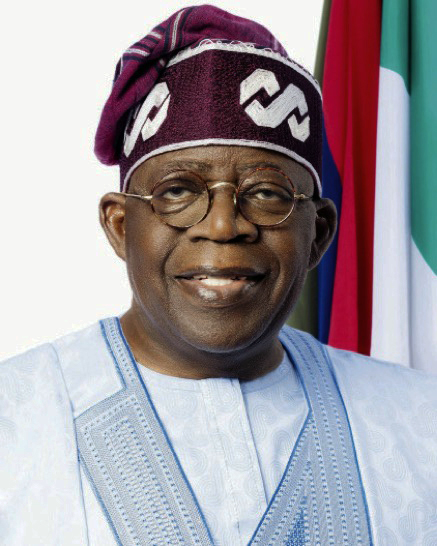
At the inaugural Federal Executive Council (FEC) meeting of the new administration, President Bola Tinubu told the members of FEC that the revival of the economy should be given priority attention. He also urged them to roll out actions to revamp the economy and make life less difficult for Nigerians. The President equally unveiled a three-year economic revival plan that will address the nation’s social and economic challenges. Tinubu also tasked members of his cabinet to work hard and chart a new direction for the economy.
The ministers should see their appointments as a clarion call to service. For the economic team, it is a call to salvage the ailing economy. Without doubt, the nation’s economy is broken and battered. It is facing serious challenges from multiple fronts. Widespread anxiety and pessimism pervades the economic environment. These problems require concrete fiscal and monetary policies to save it from imminent collapse.
Data from the Debt Management Office (DMO), Nigeria’s debt service alone rose to N1.24trillion in the Q1 2023. Nigeria can no longer afford to spend most of its revenue on servicing debt. The latest figures from the National Bureau of Statistics (NBS) showed that 26 sectors of the economy shrank in Q2 2023. Also, figures from the Central Bank of Nigeria (CBN) showed that commercial banks and merchant banks had borrowed N12.46 trillion in the last eight months from the CBN through the Standing Lending Facility (SLF).
In the corresponding period of 2022, banks’ borrowing from the CBN stood at N6.96trillion. This represents an increase of 79 per cent in the last one year. This comes on the heels of ballooning national debt, depletion of foreign reserves and shortage of foreign exchange. JP Morgan, a U.S based financial services and rating agency, says that Nigeria needs urgent reforms that will attract foreign investments considering the country’s high debt service rate and low net foreign exchange position. Along with a structural balance of payment deficit, JP Morgan in its report of August 17, 2023, said this would mean higher forex needs in the coming years. Moreover, external reserve has significantly dropped in recent months. It stood at $33.88billion as of August 10 2023, down from $37.08billion at the end of 2022.
Although the CBN faulted JP Morgan’s report that Nigeria’s foreign reserve dropped to $3.7billion as of end of 2022 from $14billion as of 2021, latest figures from the CBN showed that Nigeria’s external reserve dropped by $167.2million after it officially floated the naira and liberalised the forex market. However, the CBN’s interventions could not clear the backlog of current forex demand. The reserve, which stood at $34.66billion on June 14, 2023 when the naira was floated, fell to $33.74billion as of August 24, 2023. This has provided limited space to plug the gap in forex demand unless there is a stream of foreign direct investment in the economy to attract forex inflows. Therefore, the government should initiate policies with definite timelines that will address the economic challenges. With surging inflation and rising cost of living, the Tinubu’s economic team must hit the ground running. This is not the time for the blame game, a pastime of the past administration of Muhammadu Buhari. The economic team should holistically review of the economy and come up with measures to make the business climate more competitive for growth.
At present, the business environment is stifling growth. The cost of doing business in Nigeria is so high. The ease of doing business is also very poor. Business owners have to contend with high interest rates, infrastructure deficit, policy inconsistencies, multiple taxation and insecurity. Under this harsh economic climate, it will be difficult to attract direct foreign investments. If the trend persists, the economic potential contained in Tinubu’s ‘Renewed Hope’ agenda, will be hard to achieve. The encumbrances in the economic space have resulted in the recent drop in the country’s Gross Domestic Product (GDP). For example, GDP in the oil and gas sector dropped by 1.66 per cent in Q2’2023, with the oil revenue accounting for only 60 per cent of total government revenue due to oil theft.
This has contributed to Nigeria’s poor ranking on the Ease of Doing Business index. This has affected investments in the real sector. Government should address the menace of oil theft. According to the National Security Adviser to the President, Nuhu Ribadu, about 400,000 barrels of crude are lost daily to oil thieves. This translates to $4 million loss every day. This is a huge drain on the economy. This is the right time to diversify the economy through the expansion of non-oil exports.
Let the CBN diligently discharge its monetary functions, including maintaining price stability, managing the nation’s foreign reserves, and safeguarding monetary and financial stability. Politics must not interfere in its statutory responsibilities. The government should restrict itself to the fiscal policy framework and implementation without meddling into the monetary policy functions of the CBN. Above all, for the economy to rebound, the cost of governance needs to be drastically reduced. Also, revamping the economy requires expanding the production base that will stimulate economic recovery and growth. A vibrant economy will reduce insecurity, poverty and unemployment.