Follow Us on Google
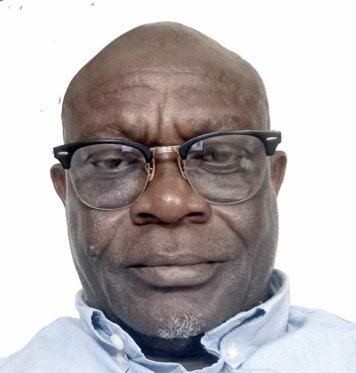
By Damiete Braide
For more than four decades, the stroke of Albert Ohams’ brush has entertained, educated and provoked thought among readers across Nigeria.
Through cartoons laced with wit, satire and humour, he has transformed everyday experiences and national issues into memorable visual stories that resonate with people from all walks of life.
Today, his name stands among the most respected figures in Nigerian cartooning, a reputation reinforced by his recent emergence as the Best Cartoon Illustrator at the fourth edition of the Humour Awards organised by the Humour Awards Academy at Eko Hotel and Suites, Victoria Island, Lagos.
The award was particularly significant for Ohams, who had been nominated for the honour three consecutive times before finally emerging victorious. For the veteran cartoonist, the recognition was not just another trophy but a validation of years of dedication to a profession he has passionately pursued since the early 1980s.
Born in 1965, Ohams graduated from Yaba College of Technology in 1990 with a Higher National Diploma in Fine Art, specialising in painting. His artistic journey, however, began long before graduation. Since 1983, he has steadily built a career that has seen him become one of Nigeria’s most recognised editorial cartoonists. He has worked in various media organisations for more than 35 years and has served as the Cartoon Editor of Sun Newspapers since 2003.
Throughout his career, Ohams has received numerous accolades, including the Nigerian Media Merit Award (NMMA) Cartoonist of the Year in 2000 and the Diamond Award for Media Excellence (DAME) Editorial Cartoonist of the Year in 2007. He has also been honoured by the Wole Soyinka Investigative Journalism Award and Journalists Against AIDS, among others. Beyond awards, his work has been exhibited both individually and collectively in several art exhibitions within and outside Nigeria.
Speaking about his recent triumph at the Humour Awards, Ohams expressed immense gratitude and satisfaction. According to him, what makes the award unique is its selection process. Unlike many competitions where participants submit entries, the organisers independently assess works published in newspapers and on social media before choosing winners.
“I have been looking forward to winning this award for a long time,” he said. “The organisers do not ask for entries. They search through your published works and assess cartoons that truly contain humour, wit and creativity. I had been nominated twice before, and this was my third nomination. I thank God that I finally won.”
He noted that the award carried extra significance because it reflected consistency over time rather than a single outstanding entry. The organisers, he believes, recognised the quality and originality of his work over many years.
Humour has always been at the heart of Ohams’ creative philosophy. He believes cartoons should do more than criticise society; they should also make people laugh. According to him, every situation in society, no matter how difficult, contains elements of humour that can be transformed into compelling cartoons.
“What inspires me most is society itself,” he explained. “Whether it is poverty, government policies, village life or the struggles of ordinary people, I always try to find humour in it. I believe a day without laughter is wasted. That is why I make humour a central part of my cartoons.”
This approach has distinguished him from many editorial cartoonists. While his works often comment on politics, governance and social issues, they do so in a subtle and entertaining manner. Through humour, he delivers criticism without losing the attention of his audience.
Ohams attributes part of his success to his formal training in fine art. Beyond creating humorous content, he places strong emphasis on illustration quality. He believes a cartoon should communicate effectively even without words.
“A good cartoonist can tell a complete story through illustrations alone,” he said. “The humour and the drawing should be strong enough to communicate the message.”
In addition to his work as a cartoonist, Ohams has invested heavily in developing the next generation of creative talents. In 2017, he established The Brush Cartoon and Animation Centre Limited, where he trains aspiring cartoonists and animators while also operating an art gallery. The centre organises an annual online cartoon competition for secondary and tertiary school students, providing young artists with opportunities to showcase their talents.
His commitment to professional development extends beyond Nigeria. The Brush was appointed West African representative of the Cartoonists’ Rights Network International in 2020. Ohams is also affiliated with several professional bodies, including the Society of Nigerian Artists, the Cartoonists’ Association of Nigeria and the Nigerian Union of Journalists. He is equally a member of Cartooning for Peace, a global organisation that promotes peace through cartooning.
Reflecting on the evolution of the cartoon industry, Ohams noted that technology has transformed the profession dramatically. In the early years, cartoonists relied entirely on manual processes involving pencils, brushes and ink before submitting artworks for printing. Today, digital tools have simplified the process and expanded opportunities.
“Now, a cartoonist can wake up with an idea and create a professional illustration directly on a computer or electronic sketch pad,” he said. “The internet and social media have also made it possible for millions of people to see your work instantly.”
Despite these advancements, he expressed concern about the future of editorial cartooning in newspapers. According to him, many young artists are gravitating towards animation because it offers greater financial rewards than traditional media.
Nevertheless, he encouraged aspiring cartoonists and illustrators to remain committed to their craft. He believes the growing animation industry presents enormous opportunities for talented and hardworking young people.
“Stay focused, keep learning and take the profession seriously,” he advised. “Animation is becoming a major industry and can provide rewarding opportunities for those who are dedicated.”
As he enters the later stage of his career, Ohams is considering a gradual transition from full-time cartooning to painting, another passion he has nurtured throughout his life. Having participated in exhibitions both locally and internationally, he hopes to engage more actively in global artist residencies and expand his artistic horizons.
He also dreams of establishing a larger studio that will enable him to train more young artists. Funding, however, remains a major challenge in achieving that vision.
Looking ahead, Ohams plans to publish another compilation of his cartoons. Having already released two editions, he hopes the third will be a colourful masterpiece that chronicles his remarkable journey and contributions to the profession.
After more than 40 years in the industry, Albert Ohams remains a symbol of creativity, resilience and excellence. Through humour and artistic brilliance, he has entertained generations, challenged authority, highlighted societal issues and inspired countless young artists. His recent award is not merely recognition of a single year’s achievement but a celebration of a lifetime dedicated to making people think, smile and laugh through the power of cartoons.