Follow Us on Google
By Kareem Islamiyat
Study reveals molecules from African medicinal plants that may block SARS-CoV-2’s RNA-protective enzyme, offering new leads for antiviral drug discovery.
As the world continues to grapple with the lingering effects of COVID-19, a team of African and European researchers has identified natural compounds from African medicinal plants that could inhibit a key viral enzyme essential to coronavirus survival.
Published in the Journal of Molecular Structure, the study titled “African-derived phytocompounds may interfere with SARS-CoV-2 RNA capping machinery via inhibition of 2′-O-ribose methyltransferase”, is being recognized as one of the earliest computational efforts from Africa to propose natural-product leads against SARS-CoV-2.
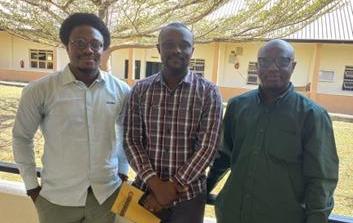
The research was a joint effort by Nigerian Scientists, Gideon Gyebi (Bingham University), Adedotun Adefolalu (Federal University, Lafia), Oludare Ogunyemi, Adegbenro Adegunloye, and Saheed Afolabi, in collaboration with scientists from the Universidad Católica de Murcia, Spain. They investigated 226 plant-derived molecules traditionally used in African herbal medicine for their antiviral or anti-malarial properties. Using advanced computational tools such as molecular docking and molecular dynamics simulations, the team examined how these molecules might interact with the coronavirus enzyme 2′-O-methyltransferase (nsp16), a crucial protein that helps the virus disguise its RNA to evade the human immune system.
Their analysis identified four lead compounds, mulberrofuran F, 24-methylene cycloartenol ferulate, 10-hydroxyusambarensine, and 3-benzoylhosloppone, that strongly bound to the enzyme’s catalytic site, outperforming reference inhibitors such as sinefungin. The simulation showed that these plant-based molecules could disrupt viral RNA “capping,” thereby exposing the virus to immune detection and halting replication.
“What’s remarkable,” said co-author Adedotun Adefolalu, a lecturer at the Federal University of Lafia, “is that our indigenous flora, plants long used in African ethnomedicine, are yielding molecules with potential global relevance. It shows that biodiversity and traditional knowledge are powerful scientific assets.”
The team’s computational workflow also evaluated the drug-likeness, solubility, and safety of each candidate, suggesting that several of the compounds possess favorable pharmacological properties and could be developed into orally available drugs. Mulberrofuran F, derived from Morus mesozygia (the African mulberry), and 10-hydroxyusambarensine, an alkaloid from Strychnos usambarensis, both demonstrated strong interactions with the conserved residues that control viral RNA methylation – the same mechanism exploited by coronaviruses to mimic human messenger RNA.
The study, co-investigated by notable Spanish scientist, Dr. Horacio Pérez-Sánchez, a senior author from UCAM’s Bioinformatics Group, demonstrates “how cross-continental partnerships can accelerate discovery. The research drew on high-performance computing facilities in Spain, as well as the Bioinformatics Network for African Phytomedicine (BioNetAP), reflecting the international nature of the collaboration made possible through digital science.
The study adds to the scientific influence of Nigerian scholars and underscores Africa’s emerging role in computational drug discovery, an area once dominated by laboratories in Europe, North America, and East Asia. “Since laboratory access was limited during the pandemic, computational expertise became a viable tool,” Adefolalu noted. “It allowed researchers in resource-limited settings to contribute meaningfully to global drug-discovery efforts.”
Experts say the findings could inform the design of next-generation antiviral agents targeting RNA methyltransferases, enzymes conserved across several coronavirus species including SARS-CoV and MERS-CoV. While further laboratory validation is needed, the in-silico results provide a promising blueprint for future testing. Beyond its scientific results, the paper has become emblematic of Africa’s growing contribution to pandemic-era biomedical innovation. It demonstrates how open-access data, traditional medicinal knowledge, and computational expertise can converge to address global health challenges. The authors hope that this momentum continues.
“African environments hold vast chemical diversity waiting to be explored,” said Adefolalu. “If we invest in our natural-products research ecosystem, we’ll not only uncover new drugs, we’ll redefine Africa’s place in the global scientific conversation.”