Follow Us on Google
By Uche Usim
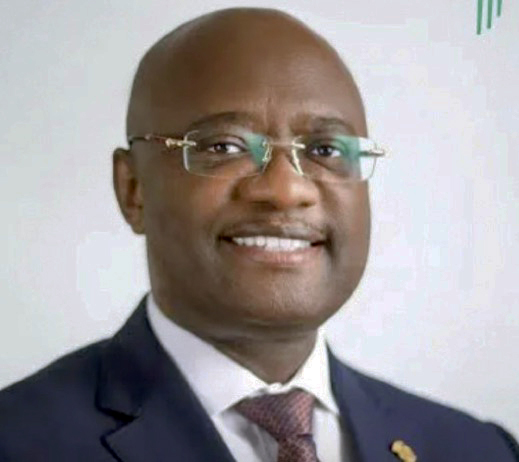
Dr. George Elombi, President and Chairman of the Board of Directors, Afreximbank assumed office in 2025 after more than two decades of service at the pan-African multilateral financial institution.
His appointment marked the first time a long-serving executive from within the bank rose to its highest office, succeeding Benedict Oramah following the completion of Oramah’s tenure.
Widely regarded as one of the architects of Afreximbank’s institutional transformation, Elombi has played a central role in shaping the bank into one of Africa’s most influential development finance institutions. Since joining the bank in 1996 as a legal officer, he has held several strategic leadership positions spanning legal affairs, governance, administration, treasury, and corporate services. His broad institutional knowledge, combined with his experience in managing complex financial and governance issues, positioned him as a natural successor to lead the bank into its next phase of growth.
Before becoming President, Elombi served as Executive Vice President, Governance, Legal and Corporate Services.
In that role, he oversaw the bank’s legal framework, corporate governance, human resources, institutional strategy and administrative functions. He also played a leading role in structuring many of Afreximbank’s innovative financing programmes and ensuring the bank maintained high governance standards while expanding rapidly across the continent.
A lawyer by training, Elombi holds advanced academic qualifications in law and has built a career at the intersection of legal practice, finance and economic development. His understanding of international commercial law and sovereign finance has been instrumental in negotiating complex cross-border transactions and developing legal structures that have enabled Afreximbank to mobilise billions of dollars for African trade and industrial development.
Throughout his career at Afreximbank, Elombi has been closely associated with some of the institution’s most significant milestones. He helped strengthen the bank’s governance architecture during a period of rapid expansion and contributed to the creation of financing mechanisms that supported African governments and businesses during periods of economic stress, including the COVID-19 pandemic. The bank emerged as one of the continent’s most active crisis-response financiers, providing emergency trade finance, vaccine procurement support and liquidity facilities to member states.
As President, Elombi has signalled continuity in Afreximbank’s core mission of promoting intra-African trade while placing greater emphasis on industrialisation, value addition and financial sovereignty. He has repeatedly argued that Africa must move beyond exporting raw materials and instead build domestic manufacturing capacity capable of producing higher-value goods for both regional and international markets.
A strong advocate of the African Continental Free Trade Area Secretariat, Elombi sees trade integration as Africa’s most powerful tool for accelerating economic growth. Under his leadership, Afreximbank continues to finance infrastructure, manufacturing, logistics and payment systems that facilitate cross-border commerce and deepen regional integration.
One of the flagship initiatives championed by the bank is the Pan-African Payment and Settlement System (PAPSS), a platform designed to enable businesses to settle cross-border transactions in local currencies without relying heavily on foreign exchange. Elombi believes expanding participation in PAPSS will reduce transaction costs, improve liquidity and strengthen intra-African trade.
Elombi has also emerged as a vocal critic of global credit rating practices affecting African economies and financial institutions. He argues that international rating agencies often apply inconsistent methodologies that exaggerate Africa’s risk profile while overlooking the continent’s improving credit fundamentals. In response, he has advocated the establishment of an African-owned credit rating agency capable of providing assessments that better reflect local realities while maintaining global professional standards.
His broader economic philosophy centres on financial independence. He has consistently encouraged African institutions to diversify funding sources beyond traditional European capital markets, pointing to increased access to liquidity from Asian markets, African central banks and domestic institutional investors. According to Elombi, reducing dependence on external financial centres will strengthen Africa’s resilience against global economic shocks.
Industrial development also remains central to his vision. He has urged African governments to leverage the continent’s vast reserves of critical minerals to develop domestic processing industries, particularly in sectors such as electric vehicle batteries, renewable energy technologies and digital infrastructure. Rather than exporting raw materials, he believes Africa should capture more value through local manufacturing and technology transfer.
Beyond finance, Elombi places significant importance on strategic communication. He has argued that international perceptions influence investment decisions, borrowing costs and economic opportunities. Consequently, he has called on African media to present balanced reporting that highlights the continent’s economic progress alongside its challenges, saying perception plays a critical role in attracting investment.
Under his leadership, Afreximbank is pursuing ambitious growth targets, expanding its support for infrastructure, manufacturing, healthcare, energy and trade-enabling projects across the continent. The bank continues to strengthen partnerships with governments, private sector investors and development institutions while positioning itself as a leading catalyst for Africa’s economic transformation.
He speaks more about the bank in this session with the media
Cementing media partnerships
The media is critical because it shapes perception. Perception influences how money is raised, how business is conducted and how relationships are built. The synergy between the media and Afreximbank is very important. We should work towards the same objective and ensure we get things right as a bank. We are fully committed to supporting Africa’s economy.
Why did Afreximbank part ways with S&P and Fitch?
This is not new. We left S&P in 2014 because, at the time, they considered us too small and irrelevant. S&P has not rated us in years. We also exited Fitch recently.
Ratings are like examinations, they can change as institutions evolve. We were established by African states to promote trade finance because trade is the foundation of development. Through trade, countries produce and grow.
Back in 2014, they didn’t see the value of what we were doing. Today, they recognise that Afreximbank has become too important to ignore. It took years to demonstrate that changing Africa’s mindset around trade could transform the continent.
You have criticised global rating agencies. Why?
Initially, about 80 per cent of our borrowing came from one part of the world. We later realised we could access cheaper liquidity elsewhere. We also recognised that African capital was sitting outside the continent, so we introduced central bank deposits and attracted funds from corporates.
Other News
Today, about 38 per cent of our funding comes from Asia and 12 per cent from the Middle East. We’ve diversified our funding sources, yet this is described as a weakness because we are no longer relying mainly on European markets.
We’re told lending in Africa is inherently risky, but the facts don’t support that narrative. Africa is not the region with the highest loan defaults. Ratings often fail to reflect the actual performance of African assets.
If we constantly amplify negative stories about Africa, rating agencies will continue using those narratives against us. We need to tell Africa’s positive stories as well.
How does Afreximbank manage lending risks?
Loans account for about 95 per cent of our assets. Unlike many multilateral institutions that mainly lend to governments and wait for repayment through national budgets, we lend largely to the private sector.
Importantly, around 85 per cent of our loans are collateralised, providing an additional layer of protection.
How have shareholders reacted to the recent downgrade?
It has not shaken their confidence at all because they know our record. When businesses and countries needed funding, we stepped in. We provided Dangote with $2.5 billion and supported many other strategic projects.
Our shareholders believe our rating should be much higher. They feel the current risk narrative does not accurately reflect the strength of our balance sheet or our impact.
About 80 per cent of our assets are loans supporting roads, ports, manufacturing and other productive investments across Africa.
Why are you advocating for an African credit rating agency?
Africa needs one. The African Peer Review Mechanism has shown Africans can assess themselves professionally.
Why should Africa be the only region without its own rating agency? It doesn’t require huge funding, just experienced bankers, auditors and professionals capable of properly assessing African businesses and economies.
An African rating agency would provide better context for evaluating risks because virtually all our lending takes place on the continent.
What is Afreximbank seeking from its engagement with China?
There’s a global revolution in electric batteries. Africa has the raw materials, but we need the expertise to process and manufacture them locally.
The same applies to data centres. We have capital, but we still import expertise. We want investment that builds industries within Africa, not just mining companies that extract raw materials and export them.
What is the latest on the Pan-African Payment and Settlement System (PAPSS)?
PAPSS remains a strategic priority. It provides the payment infrastructure Africa needs to facilitate intra-African trade.
The PAPSS card is about to be unveiled, and the company behind it has already been established. We now have 190 commercial banks and fintechs participating, while Afreximbank works with about 600 commercial banks. The ecosystem must continue to expand for PAPSS to achieve its full potential.
Can PAPSS compete with cryptocurrencies and stablecoins?
Absolutely. Payments will always be needed. Crypto has its place, and so does PAPSS. We don’t see them as competitors but as complementary systems.
Stablecoins are welcome, but PAPSS operates within the regulatory framework of African central banks. It can only function where central banks approve it.
So far, 28 central banks have joined the platform, reflecting growing confidence in the system and its role in advancing cross-border payments across Africa.