Follow Us on Google
• Project to accommodate over 6,000 people, create jobs
• Dare links project to subsidy removal, Ogra highlights employment opportunities
From Juliana Taiwo-Obalonye, Abuja
No fewer than 1,000 Nigerian Army personnel and their families are expected to benefit from new accommodation as the Bola Ahmed Tinubu Barracks Phase II project in Abuja nears completion.
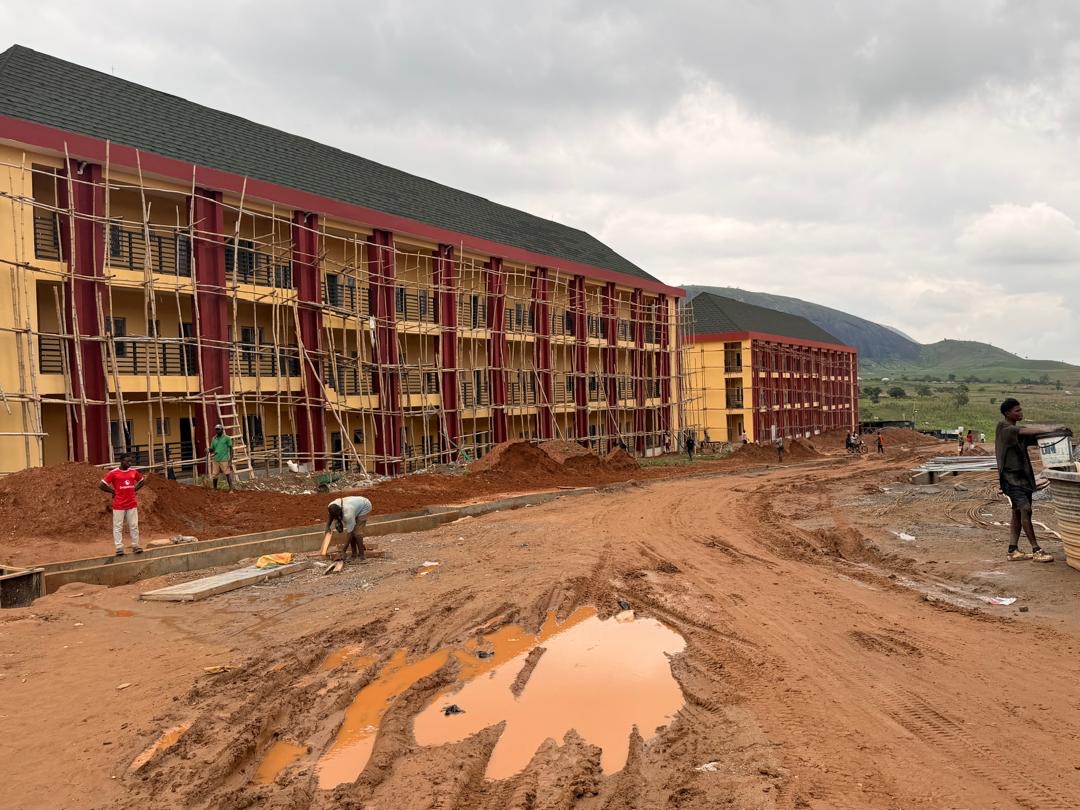
The project, which is designed to serve a population of more than 6,000 people, comprises 30 blocks of family quarters, six blocks of senior officers’ accommodation, an Army club, a MAMI market, bridges, drainage systems and other supporting infrastructure.
The development, approved and funded by President Bola Ahmed Tinubu, is part of the Federal Government’s investment in military infrastructure and personnel welfare, with the Chief of Army Staff, Lt.-Gen. Waidi Shaibu, overseeing the Army’s broader infrastructure development drive.
The progress of the project came into focus on Tuesday when the Presidential Media Team, led by the Special Adviser to the President on Media and Public Communications, Chief Sunday Dare, and the Senior Special Assistant to the President on Digital and New Media, Otega Ogra, inspected the facility in Abuja.
Speaking during the inspection, Dare described the project as one of the tangible outcomes of President Tinubu’s decision to remove the fuel subsidy and redirect resources towards infrastructure and other development priorities.
He said the barracks demonstrated how resources previously committed to subsidy payments could be channelled into projects with lasting benefits for Nigerians.
According to him, the project was evidence of the administration’s commitment to translating its economic reforms into visible development, particularly in areas critical to national security.
Dare urged Nigerians to continue to believe in the Renewed Hope Agenda, saying the government’s policies were beginning to yield tangible results across different sectors.
He said the significance of the project extended beyond the construction of residential buildings to the provision of a conducive living environment for military personnel and their families.
Ogra, in his remarks, highlighted the economic benefits of the project, particularly the employment opportunities it had created for Nigerians during construction.
He said the project had engaged thousands of people, directly and indirectly, including engineers, artisans, labourers, suppliers and other service providers, thereby generating economic activities around the construction site.
The Presidential aide said such investments served multiple purposes by strengthening military infrastructure, improving personnel welfare and creating livelihoods for Nigerians.
A labourer at the construction site, Usman, provided a personal account of the project’s impact, saying the employment opportunity he secured there had enabled him to marry and start a family.
“I cannot thank President Bola Ahmed Tinubu enough. Before I got this job, I could not afford to get married. Today, I am married and have a child,” he said.
Usman’s account offered a human perspective on the economic impact of the project, demonstrating how employment generated by public infrastructure investments could transform individual lives.
The barracks project is also part of a wider military infrastructure development programme extending beyond Abuja, with similar projects nearing completion in Ekiti State and ongoing expansion works at the Nigerian Army Depot in Amasiri-Edda, Ebonyi State, as well as a project in Osogbo, Osun State.
The initiatives form part of the Army’s efforts under Shaibu to improve its infrastructure and provide better facilities for personnel across its formations.
The investments come amid other measures by the Tinubu administration to strengthen the military, including the creation of additional Army divisions, increased recruitment, salary adjustments and the acquisition of combat-support equipment, including drones.
Other initiatives include enhanced military training, intelligence-sharing arrangements and educational support for children of fallen military personnel.
The Abuja project is expected to provide a residential community with essential facilities for soldiers and their families, including recreational and commercial amenities, when completed.
The development underscores the importance of accommodation and family welfare in supporting military personnel, particularly those