Follow Us on Google
From Obinna Odogwu, Awka
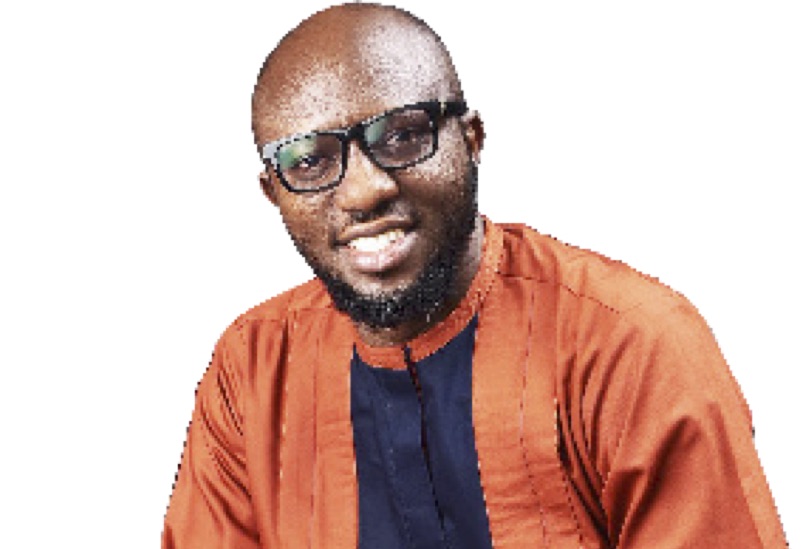
Chukwuemeka Fred Agbata (CFA) is the Managing Director/Chief Executive Officer of the Anambra State ICT Agency. Before public service, CFA championed tech adoption as the founder of Techbuild.africa, host of Tech Trends on Channels TV, and a newspaper columnist.
He also co-founded Pacer Ventures, Optimus AI Labs, Climate Action Africa, GoDo Hub, and others.
An advocate for Africa’s startup ecosystem, CFA served as the Regional Director for Africa at Founder Institute (the world’s largest startup pre-seed accelerator) and helped launch companies across the continent.
Beyond his professional work, CFA remains an active volunteer. He currently serves as the Treasurer of the Nigeria Internet Registration Association – NiRA (manager of .NG domain names) and was the immediate past Chairman of Innovation Support Network (ISN) Hubs, a network of 250+ hubs and co-working spaces across Nigeria.
In this interview with Saturday Sun, he spoke on a wide variety of ICT issues. Excerpts…
It’s been about three and half years since you came on board as the MD of this agency. How has the journey been?
It’s been an amazing journey coming from the private sector and being given an opportunity to serve in the public sector. Even, the job came at a point in time when I was considering a transition into tech in the foreign land. So, having to look at the decision when Mr Governor offered me this job, I will say it’s been worth it; considering that experience, you could be part of shaping a society in your own field. So, I’ll say that it has been an amazing experience.
A few months after the governor was sworn-in on March 17, 2022, he made mention of turning Anambra State into a digital power house. The weight of that vision rests on your shoulders. How have you been moving it?
The governor came into office with a mantra: everything technology, technology everywhere. After he appointed me and I put the team together, we spent some days just brainstorming; how do we even start? Like, where do we even start from in that situation; just because you need to start somewhere in fulfilling that vision. So, we had to look at our mandate as an agency, the law setting us up. We also had to look at the human resources that we have and we set out on the journey to simply do one thing, which is the mission to actualise Mr Governor’s vision of everything technology, and technology everywhere. And we knew that we needed to do a few things; a few things we needed to get right. Number one, we needed to get the tech infrastructure right. So, what would you require to build a digital smart state? You need infrastructure. So why the governor set out to build the road infrastructure, which he has done fantastically well, we also looked at what are the basic ICT infrastructure or the telecoms infrastructure that is required? It led us to a number of things that we did. We had a series of meetings with possible partners that can expand fibre dots within the state. We built a ring around the capital. We also engaged some foot soldiers to run digital tech surveys around the state civil service, just to give us an idea of what people were. And when we got the numbers, that’s the data; so the data that we got gave us an idea of where the state was at that point in time, so that whatever we added to that, we will be able to measure it. If you can’t measure it, it means nothing. So, I will say that as an agency we’ve worked tirelessly to actualise that vision, and a number of wins that we’ve scored, we know that more can be done. We realise that. That’s why we are hopeful that the second tenure of Mr Governor will be an opportunity to actually add to what has been done in this first tenure.
I think you said sometime in the past, that Anambra was the first to waive charges for Right of Way (RoW) infrastructure. What is it about and how has that benefited this state?
We may not exactly be the first. What usually happens is that states waive; they renege and waive again. What has happened with Mr Governor’s tenure is that we have consistently stayed on the waiving policy. So, we’ve waived it and stayed consistently. You have states like Lagos, Kaduna that waved previously. What happens is that when you waive Right of Way, it sort of encourages telecom operators. The payment that the federal government recommends is N145 per linear metre. But most states don’t charge that; they even charge higher. Some charge as high as N2,000 per linear metre; some N3,000, some N4,000. It depends on the state. But what we have done here through Mr Governor was to waive the Right of Way charges. That way, anybody who wants to partner with the state does not have to pay that Right of Way. It is just our own way of encouraging people to come and expand your offerings here. What that basically means is that that serves as a way of encouraging players to see Anambra as an investor-friendly state. And it helped greatly. Today people now have services in their homes. As low as 25, 30, N35,000 people have unlimited fibre into their homes. I live here in Awka. I use strictly fibre internet and I do strictly streaming. That’s the kind of TV that I watch. And it is working. When I first came to Anambra, when Mr Governor invited us, first to the transition committee, it was tough even holding zoom meetings. Why? It is because there was not enough capacity. But when we allow some of these to happen, it increases capacity; and that’s why you’ve seen improved connectivity across the state.
About a year or two ago, the state government distributed some ICT gadgets to civil servants and some political officeholders. From the information available to you, how have they embraced the use of technology in the course of carrying out their duty every day?
Before Mr Governor came, civil servants will have to find their way to various business centres to go and do some basic word processing; which was in my opinion an anomaly. How could you not have those basic things? Thankfully to Mr Governor, we approached the situation and he approved. We supplied the first set of 200 systems to various public servants and civil servants; and that included computers, printers, scanners and those basic things that they needed to work. But that even happened in the first year, which is 2022. Since then we’ve gone on to distribute thousands to teachers. I mean, in the last count, we have done over 5,000 across various segments – teachers, public servants, civil servants. And we are also doing that in the smart schools. So, Mr Governor is a digital first governor and he sees that vision. We didn’t only stop at that. Right now, we have internet connectivity even in those places. And he also approved solar systems because, again, technology and electricity work hand in hand. If you put the best of tech tools and there’s no power, then it’s not useful. So, a lot of the MDAs now have their solar systems, which means that they have 24/7 light. So, that way, the system that we have put in and the internet connectivity that they have, have all combined to improve the efficiency and effectiveness of civil and public servants. We have also created emails. Now, using email is no longer a luxury. A lot of public and civil servants use email, and this is in addition to the various training we have also offered them. So, yes, we now have a much more digitally advanced civil service; not to say that there is no room for improvement, but we are not where we used to be.
It is said that Africa has not really embraced technology the way it should. And here in Nigeria, people are always talking about ICT being the next ‘oil well’ and all that. But do you think we have the digital infrastructure that can carry the weight of ICT programmes’ implementation?
Well, this is a tricky question that you’ve asked me. If you look at it from the philosophical point of view, we don’t have the baseline infrastructure required to really play at the global level when it comes to tech. For example, if you put an AI-powered base station in Nigeria, our grid can’t even supply power to it because it will consume almost 3,000 megawatts of power. It is not even enough to feed one of the power-guzzling datasets that power the GPUs, the AIs that we enjoy. But I will say it is challenging. However, when life throws lemons at you, you make lemonade out of it. So, the challenge is already there. Africa will likely always play catch up. Where we have a comparative advantage to an extent, and this is where we can empower our people, is really around the human capital. Because we are a very young population; Africa is young, it means that we can actually improve the capacity of our young people to compete with the human resource base and other kinds of skill sets required within the ecosystem. And of course train more engineers; train more people that will still play a role. But the baseline infrastructure of core tech is not here. Maybe if you check out South Africa, there may be base stations here and there, but Nigeria, apart from Rack Centre, MainOne and a couple of the telcos that have base stations, it is really a far cry. There is a lot of investment that needs to go in and Africa doesn’t have that. But we have an advantage which is the fact that we have a young population. All you need is just to train them and push them out like what India is doing.
What challenges have you encountered since you assumed office?
Other News
Mr Governor would always say that if you take all the money of Anambra to a particular local government, you will spend it all there and without a dime remaining. There is no limitless budget anywhere. So, a lot of the things that you would require to do, you would have to face the reality of the fact that 95 per cent of Anambra’s wealth or Anambra’s GDP is in the private hands. One of the biggest challenges is really getting private sector investment into tech in Anambra. It is growing but I think that that is one of the biggest challenges. And it has to do with the fact that people will have to make decisions. But I think that Anambra’s stellar position in ease of doing business which ranks it number one in the entire Southern region is a good step in the right direction. It can only get better. Where we were is not where we are today. That’s why continuity is very important. As long as we ensure continuity; there is no policy summersault at this point; at this critical stage, Anambra can truly takeoff over the next four years at the very minimum of consistent leadership from Mr Governor. So, I would say that the challenges are there but we are finding ways to surmount them.
I understand that some places in Anambra enjoy free internet services. What is it costing the state? Who is funding it and how many places more do you plan to cover?
Well, it’s a collaboration with the private sector. Like I mentioned to you, most of the funds of Anambra State are in the private sector. So, how you unlock some of these opportunities or some of these benefits for our people is through private sector collaboration. So what you see happening is actually a private sector collaboration. Some of it, like the ones that you may have experienced in the public institutions is funded by the state but most of the ones you see in the public areas, for now, it’s in the capital. It is still a collaboration. What will happen is that in the second tenure of Mr Governor, we would see how to expand it in more places – Onitsha, Nnewi, Ekwulobia, some key public spaces because the whole idea is to just give people the opportunity, the empowerment to enjoy the internet and hopefully leverage it for their betterment. So, I would say that it’s more of a collaboration with the private sector. And we hope to actually get more of those collaborations. I think I have some in the pipeline that will be good for the state.
It’s been 65 years since Nigeria gained her independence from her colonial masters. What would you make of this country at 65? Do you think we have made progress? Or do you think things have not been impressive?
Apart from the fact that Mr Governor offered me this role, if at the end of this tenure or the next tenure after Mr Governor’s eight years, I literally could live anywhere I want to live except for some divine instruction, I will most likely be here in Nigeria and I will most likely be here in Anambra. So, I wouldn’t be taking those decisions if I don’t think there is hope for progress, hope for redemption. I acknowledge the challenges; I acknowledge the missed opportunities that we have experienced as a country and I know the clamouring of the young people. A lot of young people are complaining about Nigeria; people have lost hope. Everybody wants to ‘japa’. ‘Japa’ is the new trend. A lot of people have left their good paying jobs to go and wash corpses abroad. People have made some very interesting choices. You wouldn’t blame them; everyone sees things through different perspectives. So, I think we have made progress.
In Anambra, how would you rate the performance of the present administration under Prof. Chukwuma Soludo?
Mr Governor has been exceptional when it comes to how he has steered the ship of the state. Everybody wants more; everybody is Oliver Twist. It is understandable. People sit down critically and look at where this state was three and half years ago, where about eight local governments were under lock and key by insurgents; where schools without teachers; hospitals without doctors and nurses, dilapidated roads everywhere. Even just in Awka here; I am an indigene of Awka; just in Awka here, I am seeing Awka really begin to take shape and look like a capital. People can actually have places to go sit down, that is not a bar or beer parlour, to go sit down and wine and dine away. It wasn’t there before. So, Mr Governor’s vision is to build a liveable and prosperous smart megacity. We can see that it is starting to take shape and it can only get better. I sit down in the executive council every week with him and I know how hard he works; I know how much of a visionary that he is for this state. I think his limitation most times is the fact that the budget of the state cannot carry some of the big visions he has for the state. In terms of how he has led Anambra, I will give Mr Governor a very strong A compared to what I see in many other states.
Are you now saying that the members of the opposition political parties who see it differently are being mischievous?
Obviously. Personally, even though Mr Governor says that he is leading us to fight this battle as underdogs, I think that there are no opposition. Which of the opposition figures would you say has that global experience; has that ability to manage an interesting state like Anambra? Anambra is a highly intellectual state with a lot of self-made people. Mr Governor has a global experience; has the federal experience; he has the intellectual acumen to run the state and I think that the opposition doesn’t stand a chance to actually take this mantle from him. In addition to that, apart from these three things I have mentioned, is also the fact that there is work on ground to see. You can touch.
The interesting thing is that he is tackling issues across multiple fronts – roads, healthcare, water everywhere for the first time, education, technology, entertainment, Solution Fun City, and many others. There are also other things in the works which I cannot mention but I know that when they arrive, they will be transformational; something as simple as even allowing for green spaces. So, there are a lot of things that if you sit down to really look at it, you’ll see that Anambra State is really positioned for the next level.
Why do you think INEC had issues dealing with technology in the 2023 elections?
I wouldn’t know what happened. Let me put it this way, I wouldn’t know what happened but truly there can be a glitch; and it’s even made worse now that you have AI-powered knowledge.
Sam Altman, the co-founder of OpenAI, was asked recently about his biggest fears about AI. In his words, he said that “AI can be used to produce biological-like warfare that can impact the whole world like the COVID-19 type.” Those were his words. And he said that was a big worry. He mentioned things around using AI to produce bombs and similar things. What it then means is that if you are a hacker, and you can throw in some idea in your script into AI and remember the AI is not working from you to go and destroy stuffs; AI cannot distinguish what you want to use it to do and what you’re asking it for. So, it helps you refine the strategy, gives it to you; it means that you now have an advanced skill of hacking people. So, I am just trying to give you that background to say that yes a glitch can happen. I am not holding a brief for INEC; I don’t know what happened. It is possible for glitches to happen. It could be an attack. It could be a backdoor entry, backdoor penetration; it could just be a group of people trying to do stuff. And it could also be a physical sabotage. You know, man in the middle attacks happen; zero day attacks happen; different things, you know; and we always say that in cyber security, the weakest link is always somebody; somebody who is using a weak password, somebody who is using a wrong lane and somebody who just deliberately opens the backdoor access. It is possible.
The National Assembly election results were uploaded successfully but the presidential election results failed, according to INEC. But the election took place the same time, and the results portal is the same. Why was it so?
Let’s assume it was a case of hacking. The National Assembly results went through and the hackers struck just before the presidential election results were uploaded. Let’s just assume. It is possible. A glitch can happen. It is also possible that as at the time they were uploaded, the servers got weighed down and that caused a glitch. Again, I am not holding a brief for INEC. I’m just trying to let you know that it is possible for glitches to happen. I don’t know what happened during the National Assembly time.
I don’t know how it transpired but it is very possible for glitches to happen, even though I am saying that I am not sure that’s what happened. I do not know. Any day, anytime, the best of technology might have issues; which is why you have to prepare and prepare and prepare, and make sure that things go well. But sometimes you also prepare and things still mess up. Once upon a time, I think a couple of months ago, WhatsApp went down. That’s a multibillion dollar enterprise. Mark is like the third richest man in the world, right? Elon Musk, the richest man in the world; his SpaceX had issues at one point. So, I am saying that yes you can plan everything but it can still go wrong.