Follow Us on Google
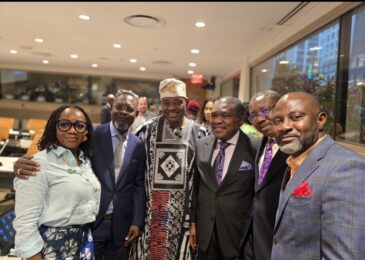
Chairman of SIFAX Group, Dr. Taiwo Afolabi, has called for greater investment in infrastructure, jobs and trade as part of global efforts to prevent conflicts and promote lasting peace.
Afolabi made the call in New York, United States, while speaking at the United Nations General Assembly High-Level Global Executive Roundtable on Diplomacy, Multilateralism and Conflict Resolution.
He said the international community should shift from mainly reacting to conflicts after they occur to tackling the economic and social conditions that can fuel instability.
According to him, peace and economic prosperity are closely linked, with investment creating opportunities that can strengthen societies and reduce tensions.
“Peace creates the environment for investment, investment creates opportunity, and opportunity strengthens the foundations of peace,” he said.
Afolabi said the world is facing multiple challenges, including geopolitical tensions, economic uncertainty, climate pressures, inequality and declining trust in institutions.
He argued that addressing these problems requires closer cooperation among governments, businesses and international organisations, with diplomacy, economic development and conflict prevention pursued together.
He said the link between peace and development was particularly important for Africa, where poor infrastructure, limited access to financing, trade barriers and inadequate economic opportunities continue to constrain growth.
“Africa’s peace-building agenda must be accompanied by an investment agenda. We need investment in transport infrastructure, ports, energy, technology, manufacturing, agriculture, healthcare, education and human capital,” he said.
The SIFAX chairman also called for stronger regional value chains and better connections among African economies, saying the success of the African Continental Free Trade Area (AfCFTA) would depend on more than agreements between governments.
He said countries must invest in infrastructure, efficient logistics, digital systems and financing while strengthening political cooperation.
“Trade and connectivity can create shared interests among nations. The success of AfCFTA depends not only on trade agreements but on infrastructure, efficient logistics, digital systems, financing and political cooperation,” he said.
Afolabi also highlighted the role of the private sector in strengthening economic ties between communities, businesses and countries.
Drawing from SIFAX Group’s operations in maritime, logistics, aviation, financial services, oil and gas and hospitality, he said infrastructure should be seen not only as a business opportunity but also as a tool for economic development and cooperation.
“A functioning logistics system can connect farmers to markets, manufacturers to consumers, businesses to international value chains and countries to one another,” he said.
He added that such economic connections could create common interests among countries and communities, encouraging cooperation and making infrastructure an important part of wider peace-building efforts.