Follow Us on Google


Though a sobering outing, it was not without the fanfare of social networking and high-profile gathering. There was a sea of heads and vehicular traffic that almost locked down the sleepy university town of Ndufu-Alike, in Ikwo LGA of Ebonyi State. There was also a battery of security personnel for the maintenance of law and order. Meanwhile, it was not a political rally. It was not a chieftaincy installation. Neither was it a convocation by the federal university in the area. The event was a culmination of the week-long funeral rites of HRH Eze (Hon.) Francis Igwe (Eze Agom-Ugbala II), the traditional ruler of the community whose gruesome murder by suspected kidnappers on March 1, 2026, sparked off national outrage and scandalised the security architecture of Ebonyi State. It exposed the low level of response to early conflict warning signals in poorly-secured communities. As such, the Governor of the state, Francis Nwifuru, was visibly saddened. He was not happy with the youths who lay siege on soft targets.
As a matter of fact, the fallen monarch was not thrown up by the traditional stool. He was a councillor in the good old days, between 1976 and 1979, when representation was strictly on merit, not for economic empowerment per se. He was also elected to represent Ikwo North Constituency in the old Anambra State House of Assembly, on the platform of Nigerian People’s Party (NPP). He faithfully served the first term from 1979 to 1983. His second term was, however, abruptly ended by the military putsch that sacked Nigeria’s Second Republic.
Other News
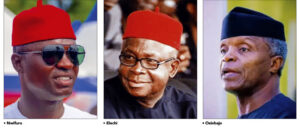
In his tribute, Martin Elechi, the former Governor of the state, who, incidentally, harboured the late Igwe in his private abode in Enugu when he served as a lawmaker, noted that the deceased’s enthusiasm for community service did not wane with the political setback, as he embraced another opportunity to serve his people. “It was at this time that the NORCAP Organization came into Nigeria, in Abakaliki area (Ikwo Local Government Area), to start agriculture in a scientific way. The project was known as NORCAP (Norwegian Church Agricultural Project). Hon. Igwe was among the first to align with the project, which then trained some of our young men in the business of modern agriculture. NORCAP, subsequently, introduced education based on scientific agriculture. That led to the establishment of NORCAP School at Ndufu-Alike Ikwo. This school was owned by Hon. Igwe, who constituted a board to guide and assist him in running the school. Our greatest need then was the acquisition of more land to expand the school and its agricultural projects…The purpose of establishing the school was highly achieved in that it grew and became famous in the community and beyond. It made the community proud,” Elechi wrote.
Come to think of it, the sad story of Igwe’s cold-blooded murder smacks of an ironic twist. That a man who deployed his foresight and influence to better the lot of his people would die by such dastardly treatment from misguided elements depicted the level of deterioration of values in our ancient communities. Consequently, Governor Nwifuru sombrely raised engaging issues for urgent policy and legal reflections. The confessional statements made by the suspects who are already facing trial in a court of law gave him serious concerns. Today, many youths are eager to hit the jackpot through fair or foul means. They are obsessed with the get-rich-quick syndrome driven by a sense of entitlement and instant gratification, and whoever stands in their way, wittingly or unwittingly, would be crushed. All that they want is success without learning the ropes.
Governor Nwifuru did not spare the church where the late monarch was abducted. He was hard on the members’ ‘I-don’t-care’ disposition, as emergency communication would have prompted an immediate tactical dispatch. He lampooned the lackadaisical security-consciousness along the community’s corridor, which made the captors to escape even after their vehicle had broken down and they had all the time to run inside the community to get a motor bike. The governor expressly noted a high level of connivance and complicity by the locals – given that the massive land where the school (Folk Technical College, Ikwo) was situated by the late monarch, had bred envy and prying eyes. The huge impact of human capital development, which the school had facilitated, didn’t matter to the assailants. And to that end, Governor Nwifuru announced that he had forwarded an executive bill to the State House of Assembly and pleaded with the legislators to pass the section that stipulates death penalty for kidnapping without options, insisting that he will not hesitate to publicly execute anyone found guilty by the law court, to serve as a deterrent.
Be that as it may, there were indications that the late monarch probably sensed the sinister plot. But the lack of expeditious attention to his request for increased security surveillance around his palace and around the church, which became tense as a result of the politics of pastoral posting, is a big lesson for everyone to take actionable intelligence seriously. Nonetheless, his first son and the immediate past Deputy Governor of the state, Dr. Eric Kelechi Igwe, whose network of friends and political associates, including former Vice President Yemi Osibanjo, came in their numbers, vowed to move on with the father’s legacy. The family has also undertaken to grant one-year tuition-free education for all the students of the college in honour of the late monarch’s fond memories.
But beyond the tough-talking threat of sending the kidnappers to the guillotine, the nation needs more than capital punishment to stamp out the heinous crime. SBM Intelligence had noted that with the “absence of a coordinated strategy that targets both the profitability of the crime and its socio-economic roots, Nigeria risks entrenching kidnapping not merely as a criminal industry but as a funding mechanism for the very groups that most threaten its stability.” Hence, the underlying drivers of kidnapping economy must be vehemently tackled by a strong policy instrument with inputs from all stakeholders, not by legislation only.