Follow Us on Google

Ismail Omipidan and Chima AmeachI
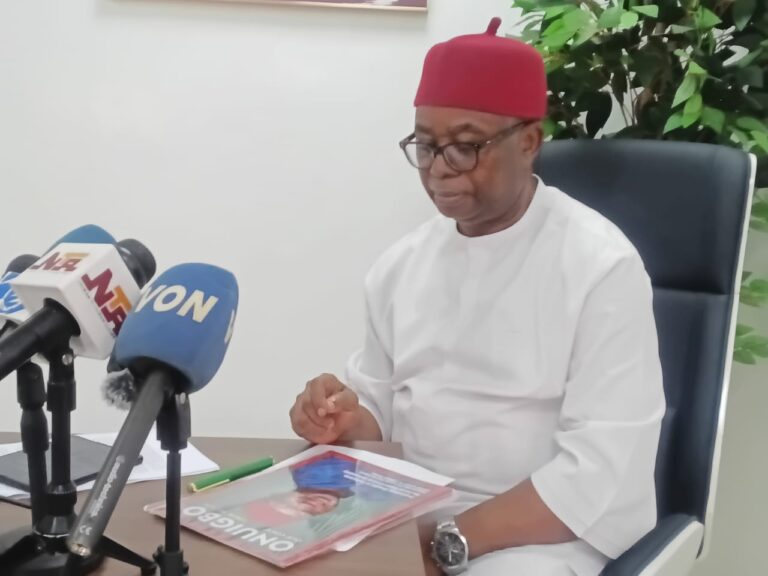
Alhaji Lateef Femi Okunnu, 86, is a former Federal Commissioner for Works and Housing, equivalent of a minister, in the General Yakubu Gowon’s administration, from 1966 to 1975.
He believes that for Nigeria to be great, it must return to the 12 states structure. This is even as he said that all the three major socio-cultural groups in Nigeria have no business in politics.
Okunnu also spoke on other topical issues like revenue allocation, cost of governance and the civil war among other issues. He spoke exclusively to Daily Sun.
To start with, you are 86 and from the little I have read about you, you were a federal commissioner which is equivalent to a minister in your early 30’s. How was it like at that time?
I was 86 in February; more precise 19th.I became a federal commissioner of Works and Housing at 34 in May 1967. The civil war was about to break out about that time and so it was at a much tensed period for the country. It was very difficult, the incursion of army from both sides were fierce. The Biafra side also had air attacks. The warfare was largely on the ground.
What were the things you met, what did you add?
When I was appointed Federal Commissioner for Works and Housing on May 27, 1967, I had before me about 6,000 miles of federal roads throughout the country. When I left on December 21, 1974, I had increased the mileage of federal highways in the country to almost 21,000, about three times what I met. At the time I left, most of the roads had just been reconstructed; some were under construction while other constructions were soon to begin. I am very proud to say that I opened up part of the country, also in terms of federal highways. I met two North-South major roads, that is, Lagos, Ibadan, Jebba, Kotangora, Kaduna, Zaria and Kano; and the second one, Port Harcourt, Enugu, Makurdi, Jos and Kaduna. I added Warri, Benin and Koton Karfe, which now goes to Abuja and to the North. The second one I added was Calabar and Yola to Maiduguri. I did the same thing with the West-East. One thing I can say is that I left the federal road network in the country in very good conditions. I feel very sad that years after I left the ministry, most of the roads I am talking about were neglected, let alone rehabilitated or reconstructed for 30, 40 years. Some of them, up till today, are still as I left them. That is unfortunate.
I left a few other things which still make me proud. There are landmarks, like office blocks and many others, as well as surveys. The Federal Mortgage Bank was part of my creation. I bought over the British government interest in the Nigerian Building Society, and the result is what you now have as the Federal Mortgage Bank to help in housing finance. I set the ball rolling on changing to the metric system. When I look back, I feel proud that I set up professional bodies like the Architects Registration Council (ARCON) to regulate the profession of architecture, and the Council for the Regulation of Engineering in Nigeria (COREN). Estate surveyors have their own registration council also. You can see the honour they did me by making me the first Fellow of the Councils, of the societies in the construction industry. But the sadness is that there is little or no follow-up over the years. Look the traffic congestion on the Apapa-Oshodi expressway, if the government is serious and responsible, we should not have those heavy trucks on our roads. There is a trailer park which was built during my time to take 600 to 800 vehicles. The last time I saw it, they were using it as Container Park. How did they clear the trailers the last time President Buhari visited? We must be discipline to enforce sanity on our road.
Talking about the civil war, at a function last year, you tried to tell us something about the role you played as a government official during the civil war. Since then, I decided anytime the opportunity comes, I will take you up on it. I think our readers would want to know what role you played?
The specific role I played were of two categories none of them has anything to do with my ministry of Works and Housing directly. One role I played was to be the leader of the federal delegation to peace talks. The other role I played was to be an envoy, Ambassador-at-Large, for General Gowon, visiting different countries most of them in Africa meeting with Heads of states, those were the major role I played and also assisting in the projection of Nigeria’s case and I was very involved in the peace talks.
If you can take the two functions or roles one by one, General Gowon was then the head of state but he could not reach out personally, he hardly travelled out of Nigeria, so he could not reach out to the other heads of states in Algeria, Libya, Egypt Addis –Abba, Kenya, Congo and the other Congo, that is Brazzaville, Uganda, Ghana, Senegal, Mali and several others. These were the countries I went out to with messages from the head of state about the conduct of the war and concerning peace in the country. The other role was to be the leader of the Federal Government’s delegation to peace talks. The first meeting I led was in Niger that was in May, 1968, precisely on the 8th.
General Gowon had been there with Ojukwu on the other side. Obafemi Awolowo was also there. I went over to prepare for the main peace talks at Addis Ababa. I was number two to Anthony Enahoro, the federal commissioner of information at the time. He was the leader of the delegation to Addis Ababa; we left Lagos on 3rd August 1968 the conference open on 5th August with Ojukwu leading his own delegation. He stayed on for a couple of days and after less than a week, Chief Anthony Enahoro abandoned me and I took over the leadership of the federal delegation.
What was the main gist of the talks?
The talks were largely about the future of the country. The immediate concern was about how relief materials could get to the encircled so called Biafra, it is encircled because there was no land or sea corridors only the air. And one the complaints being made at the time by the Biafra side was that they wanted access to relief materials, but the truth was that they wanted access for propaganda. We slugged it out on the table with Professor Njokwu, who was the leader of the Biafra delegation. Njokwu, a distinguished Nigerian, was the vice chancellor of the University of Lago, before the war. We battled it across the table for about four weeks and the talks ended not successfully, unfortunately in the third week of September.
The late emperor, the emperor of Ethiopia, played a role in trying to resolve the impasse. He presided over most of the talks. He was the leader of the OAU consultative committee, six of them, they were charged to help to achieve peace between Nigeria and the rebellious Biafra, and they did very well. The other members of the peace committee appointed by the OAU now AU included the president of Ghana, Liberia, wonderful man, the president of Congo, Mobutu Seseko, and I think Niger also, six of them were members of the consultative committee. But the emperor was the leader of the committee.
After Addis- Ababa, the third delegation that I led was to Monrovia, Liberia, the president also played active role, the leader of the Biafra delegation was Sir Leo Mbanefo, a distinguished judge and lawyer; he left King’s College about the year I was born. He led the other side and I led the Nigeria side. The president of Liberia brought us together to see if we could reach some agreement, but again unfortunately, we could not. I think that was in April 1969. Those were the major roles I played in terms of the war efforts and efforts at restoring peace in the country.
With the benefit of hindsight, would you the renewed agitation for Biafra in recent times is misplaced?
Very misplaced, when the war ended I had friends from the other side and we tried to rekindle the old friendship. The policy of Gowon was no victor, no vanquished. He followed it and then his policy of Rehabilitation, Resettlement and Reconstruction was pursued with a lot of sincerity. My ministry was involved in reconstruction and building of damaged bridges throughout the country. Over 33 bridges destroyed including Niger Bridge. And within three months, in March 1970, war ended in January, I was in Cameroon when the war ended, within three months we put on Bailey bridge for passage of people and goods which mean that we could achieve reintegration with East Central state. To us Biafra was East Central state after the creation of the 12 states structure in May 27 1967. Federal Commissioners assume office in May 1967. Gowon created 12 states from the existing four regions. Let me say this quickly about the 12 states structure, which I have been advocating should be restored in our effort to restructure the country. Part of the agitations that led to the civil war was the size of the North, that it was too large, not only in size but also in population…for true federalism to endure you need proper balancing and that was what Gowon did, following agitation for state creation. He created six states out of the Northern region in concurrence with the political leadership of the North. I was privileged to be a member of the ad hoc Constitutional conference in late 1966 after the second coup, which Gowon set up to bring all the regions together. Long story!
Tell us a little about the long story?
Well, I have put that in a pamphlet form. Anyway, in the conference, you had Sir Kashim Ibrahim; former governor of Northern Region, J.S Takar who led the civil war armed conflict that was crushed by the Nigeria Army leading the Tivs and the Idoma because they wanted to break away from the Northern region. We had agitations from what later became Kwara. The Borno people, the Kanuri said they were never conquered by the Fulani, so they wanted their own state also. Aminu Kano was the leader of radical politics in the northern region, especially in Kano. So Gowon had to meet with all these leaders, including those from other parts of the country. I represented Lagos Federal Territory.
So it was agreed ultimately that Benue-Plateau should be created as a state, Kwara as a state. There was a North Eastern State, now Borno, and Adamawa and so on. There was the North Central State-Kaduna, Katsina and the likes and there was the North western State- Sokoto and the likes, so six there, right, and then six in the South. We had the Western State- Osun, Ogun, Oyo and Ondo. so the Afenifere shouting for Oduduwa State lost the chance by allowing the Western State to be broken into pieces. We also had the Eastern State. They also lost their chance to have a state for the mostly speaking Igbo Nigerians. We had the Rivers State and the Mid-Western State. These 12 states were created with the agreement of the political leadership at the time. So if we had allowed the 12 states structure to endure, Nigeria as a country would grown beyond its present sorry state.
In today’s Nigeria, to get a federal appointment, and even at the state level, you must know one big man up there. How did your appointment come about?
I had a background of youth activism; I was Assistant Secretary 1957 to 58, General Secretary 58 to 59 and president of the Nigeria union in UK and Ireland, union of all Nigeria students. We had about 10,000 at the time, students and working class. And I took part in the pre-independence agitations. I was privileged to rally round the whole Nigeria union activists to form Nigeria Youth Congress. I didn’t choose myself; the suggestion came from friends in government. Twelve of us made the cabinet. East Central State could not be represented during the civil war. Rivers State had Graham Douglas, who later became the Attorney-General, before him we had Briggs active politician of Action Group in those days, we had Chief Anthony Enahoro, Chief Awolowo, who represented Western State and Aminu Kano, Kano State, Ali Monguno who died not too long ago, very nice politician, President Shehu Shagari joined us after Yahaya Gusau resigned. Let me also say this, there was no legislature at that time so we combined both the role of the legislature and that of the executive. It was a wonderful experience.
We have searched everywhere, the only position you held after serving in Gowon’s cabinet was Deputy National Legal Adviser of a party. With your pedigree, why did you choose to take the back seat in Nigeria’s political environment?
The main reason is that I don’t know how to steal; stealing was not part of the culture I imbibed as a young activist. I am not saying there are no honest politicians in Nigeria, there are different shades of people. But the honest ones are few; they have been overshadowed by the dishonest ones. There are people who up till today are still honest and that are still living and are in politics. But most of the people I see in politics even at that time have no love for the country. They love their pockets. No patriotism and zeal to serve the country.
So after serving for over seven years, I felt what else do I want to prove? God made it possible for me to serve the country when I was offered the opportunity.
Monguno your fellow cabinet member, in one of my exclusive interviews with him in 2003, revealed how he took a loan to by his first house. How did you acquire yours?
I was lucky before the civil war, within four years of my return to the country I built my first house.
How did it happen?
I made money from my legal practice. I joined the firm of Fani- Kayode and Showemimo to do my practise. At that time there was no question of partnership, so you had to work hard. Showemimo a nice man and a very good brain was on the seat, while Chief Fani-Kayode another nice brain was busy with politics of Western Region. In term of those who were up there in Nigeria in terms of legal practice, I reckon that Chief Fani-Kayode was up there.
I was able to earn sufficient money to build my house in Yaba, the house is still there.
Can you tell us the cost?
Five thousand and seven pounds and I lived in my house even as a federal commissioner. And I was in charge of housing then. Chief Awolowo was another person who did live in the Quarters.
Were you drawing any housing allowance for the purpose?
No allowance. Our salary per annum three thousand pounds, when we changed to naira, 72-73 or so, our salary became six thousand naira.
Before the commencement of this interview you said ethnicity was tearing the country apart. How do you think we can overcome it?
People exploit ethnicity for political power. Dr. Nnamdi Azikiwe, one of my heroes, was elected on the platform of a democratic party, NCNC alliance in Lagos, first Lagos member not on the platform of Igbo state union which was at its infancy at the time but as a Nigerian. Azikiwe was above ethnicity, the Yoruba elected him.
There were Igbo state union, Ibibio state union which concentrated on educating Ibibio students, through awarded of scholarship. Dr. Udo Udoma was awarded scholarship to stud to study law by the Ibibio state union that was the role state unions were playing at that time.
Chief Awolowo founded Egbe Omo Oduduwa in London in 1946, 47 or thereabout and established a branch in Nigeria in 1948. Again, in fairness to him, although he was strongly for regionalism, he didn’t use the Egbe Omo Oduduwa platform when he was in government. There was Action Group and there was Egbe Omo Oduduwa, a cultural group awarding scholarship. To me, ACF, Ohanaeze, Afenifere should all revert back to that role. They have no business in politics. No place for them in politics.
Some characters were speaking to the press sometime ago on behalf of Ohanaeze saying they want slots in the Lagos State cabinet. Rubbish! How many Lagos people are asking for cabinet slots in Imo, Abia, Enugu and the likes? You leave that to local politics and local politicians. They should join political parties and fight for a space.
How do we reduce cost of governance in Nigeria?
I know restructuring means different things to different people. But we can put on our thinking caps, if we want to restructure Nigeria, we must go back to the 12 states structure. It is difficult, but it is the sure way to go.
Is it feasible? You think it is possible?
I know the governors may not want to shed their powers that they have acquired, but that is my own preference, if we can sit down and think about Nigeria, its survival as a political force in Africa and in the world.
The revenue allocation too should be looked into. Gowon operated under the 1963 constitution. Revenue allocation, income from sales of cotton, groundnut, palm oil, palm kernel, tin from Jos, was distributed as state of origin, 50 percent, so Northern region, 50 percent from profit from cotton, groundnut, and tin. Western region had rubber and timber, Eastern region 50 percent from sale of palm oil and palm kernel. And in those days Nigeria was number and number three in the world’s production of those produce. So it was 50 percent derivation, while Federal Government earned only 20 percent. The remaining 30 percent was put in distributive pool, shared as to 40 percent to the North, 30 percent to Eastern region, 24 percent to Western region, and Mid-West was created, Western region retained 18 percent, while Mid-West had 6 percent from the distributive pool.
But today, state origin is 13 percent, while the Federal Government takes about 52 or 54 percent, which is where the problem is. The Federal Government is earning too much for doing little. The states don’t have sufficient money to run their affairs.
The governors too are being accused of mismanaging the money they get. What will you say about that?
That’s part of a national problem. But Nigerians are getting wiser and I am sure they can take the state governors to task on that. I hope the newly elected governors will concentrate on education, which is largely state matter especially primary education. They must also consider housing scheme for the lower class. They should also look at primary health too and sanitation. They can achieve all that by cutting down on the number of political aides they employ. How many Special Assistants does Trump have? But go and check that of our President and those of the governors, you will scream. That is where our money goes to, money that should go to housing, education and the likes. Our leaders must be sensible and reduce the cost of governance.
At 86, would you say you are fulfilled as a person?
Yes, I thank God for sparing my life till now. I still have my faculties intact, that is the blessing from Allah. I thank God for that.
Do you foresee a future for Nigeria?
I foresee a good future that is why people like me should not stop talking, to lecture, to teach these people of what Nigeria was in my own days of youth in the 40’s, 50’ and 60’s, to bring sense into their heads on what they need to do, have the love for the country. I am an advocate of compulsory teaching of civics in schools. I was lucky that the first student council in a secondary school in British West Africa, in French West Africa, is King’s College. In 1952, 53, I was privileged to have been elected by the students as the first secretary of the Students’ council in a secondary school. I advocate that also.
At 86, if you look back do you have any regret?
I have no regrets. I thank God for what Allah did for me.
Thanks very much, it’s nice talking to you.
The pleasure is mine.