Follow Us on Google
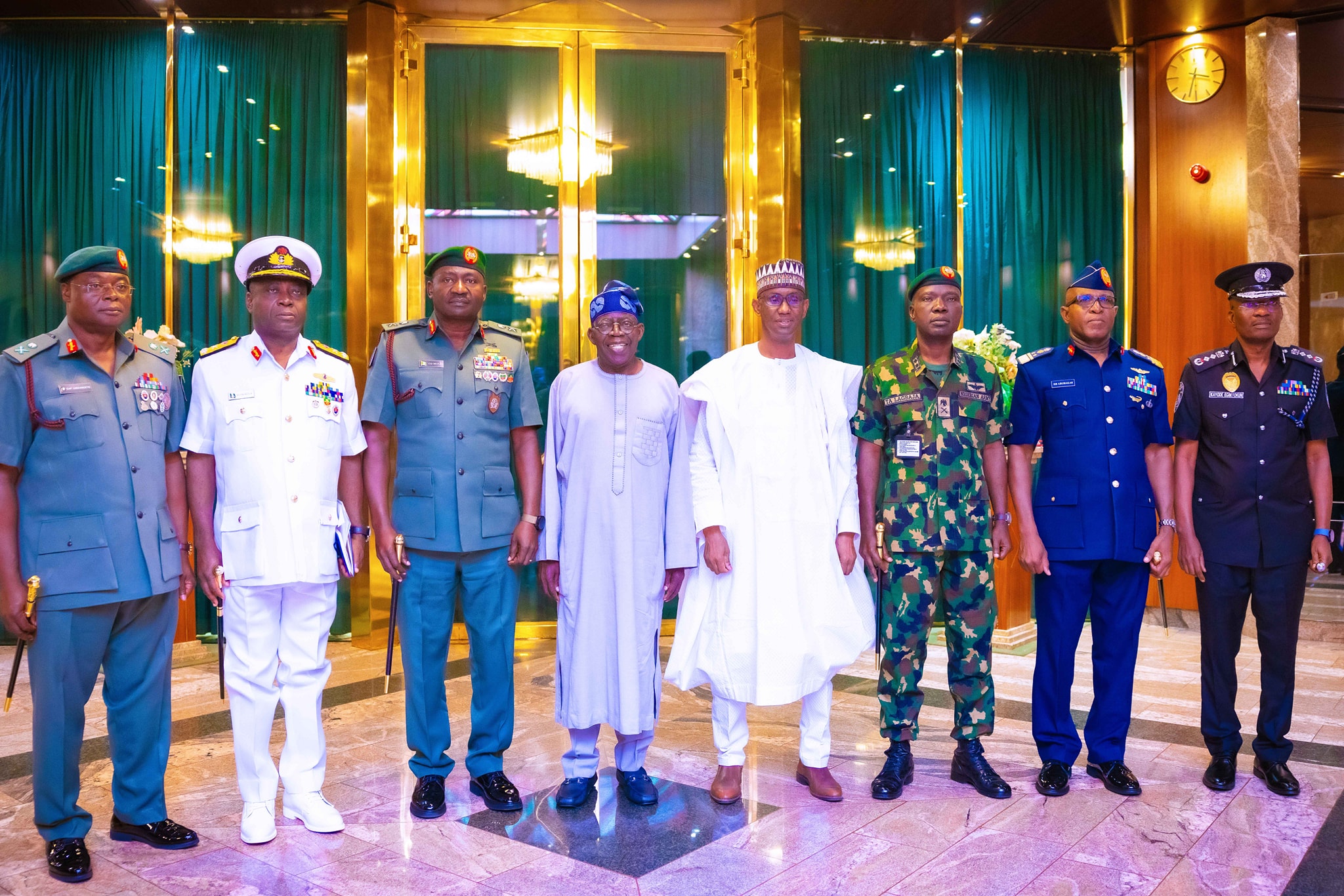
The Federal Government’s recent promise to address the shortage of military equipment and poor funding hindering the operational efficiency of the Nigerian military is heart-warming. President Bola Ahmed Tinubu, who spoke through Vice-President Kashim Shettima in Odogbo, Ibadan, during the grand finale of the celebration of 160th anniversary of the establishment of the Nigerian Army, noted that the Nigerian army remained one of the strongest pillars of hope for the citizens. While commending the Army and other security agencies for degrading Boko Haram terrorist sect, Tinubu added that the military’s commendable act had also been replicated in the war against bandits, secessionists and other criminal elements in the country.
The military may have performed well in the war against insurgency and banditry. But, there is room for improvement. Inadequate equipment and poor funding and motivation have particularly hindered the military in the prosecution of the war against insurgency, terrorism, banditry, kidnapping and other crimes across the country.
The immediate past President, Muhammadu Buhari, had promised on many occasions that his government would provide the equipment and logistics to make the military win the war against insurgency. This promise did not fully materialise. At some point in 2020, Buhari’s Minister of Information and Culture, Alhaji Lai Mohammed, lamented that foreign powers refused to supply sophisticated ammunition to Nigeria to help her prosecute the war against insurgency.
This situation was largely informed by the unpalatable experiences of some of these foreign powers. For instance, the United States (US) and Britain were invited to assist Nigeria in the counter-insurgency war in 2014. The US officials reportedly refrained from sharing vital intelligence with their Nigerian counterparts. There was fear of fifth columnists in the Nigerian military then as top officers were alleged to be sabotaging the war against insurgency. Some were alleged to have diverted the resources meant to fight Boko Haram.
This partly resulted in the high rate of insecurity in the country. In the 2020 global terrorism index released by the Institute for Economics and Peace (IEP), Nigeria emerged the third most terrorised country in the world for the sixth consecutive year. Only Afghanistan and Iraq were ahead of Nigeria. We improved a bit in the 2022 index as we ranked sixth globally. In different parts of the North, we have Boko Haram, Islamic State West Africa Province (ISWAP) terrorists and the Fulani herdsmen terrorising the citizens. They have killed hundreds of thousands of people and rendered millions of others homeless. In the South-East, there are unknown gunmen terrorising people and in the South-West, kidnappers and some other criminal elements hold sway.
Nigeria has no business being among the most terrorised countries in the world. For us to win the war against terrorism and banditry, the military needs to be equipped and funded adequately. It needs to maximize the resources at its disposal and should be ready to defend and secure the country at all times.
We should also go beyond equipping the military. Welfare of soldiers is very important as well. We must not tamper with their allowances and entitlements. The military high command should also deploy more men with superior firepower to the warfront. The military needs more training and retraining of its personnel for operational efficiency.
The government should extend the same gesture to the police and other security agencies. Perhaps, this is the right time to decentralize the police force. For effective policing, Nigeria needs at least four levels of policing—federal, state, local government and community. The current centralized policing, centred on one man, the Inspector-General of Police (IGP), is the reason the nation’s insecurity is proving difficult to tame.
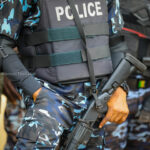
The police should be adequately equipped with sophisticated weapons such as armoured personnel carriers and high calibre rifles to help in the insurgency war. The ammunition should be jealously guarded. An audit report of the Auditor-General of the Federation in September 2021 indicated that about 178,459 different types of firearms and ammunition got missing from the Nigerian police armoury in 2019. The missing items included 88,078 AK47 rifles, 3,907 assorted rifles and pistols.
Some of these weapons are in the hands of bandits who use them to terrorise people. Over six million small arms are estimated to be in the hands of non-state actors in Nigeria. Government must find a way to stop this if we must win the war against terrorism.
We must also learn to maintain and service the equipment we already have. It is disturbing, for instance, that the country’s military aircraft crash frequently. Recently, a Nigerian Air Force FT-7NI trainer aircraft crashed in Makurdi, the Benue State capital. In 2021 alone, the Nigerian Air Force lost three aircraft and many officers to crashes. One of the crashes, which occurred on May 21, 2021, claimed the lives of the then Chief of Army Staff, Lt. General Attahiru Ibrahim, and 10 other officers. There is no doubt that the efficacy of a country’s air power determines its strength in modern warfare. The President should walk his talk by improving the superior firepower of our military.