Follow Us on Google
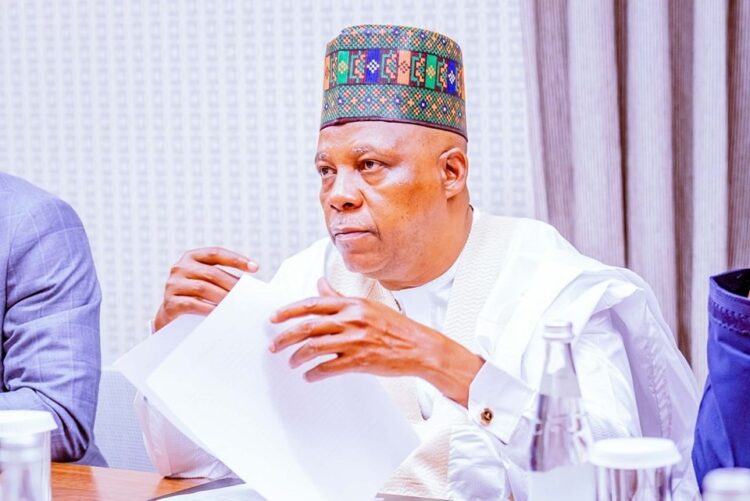
The recent revelation by Vice President Kashim Shettima that Nigeria needs N21 trillion to effectively address its housing deficit put at 28 million underscores the magnitude of the problem. The vice president, who disclosed this in Sokoto during the flag-off of the construction of a 500-unit housing estate for civil servants by the state government, lamented that despite efforts by governments across different levels to bridge the housing gap, it remains a huge challenge.
According to the Sokoto State government, the new housing estate located at Wamakko Local Government Area will cost about N7.3 billion to complete. When completed, it would be sold to civil servants on an owner-occupier basis. Therefore, the effort to make houses affordable by the Sokoto State governor, Ahmed Aliyu, is commendable.
We urge other state governors to emulate the worthy example of the Sokoto State governor. We believe that the state and local governments can contribute significantly towards meeting the housing needs of millions of Nigerians.
While government has put the housing deficit at 28 million houses, it is likely to be more, considering our increasing population estimated to be above 200 million. Also commendable is the effort of the Minister of Housing and Urban Development, Ahmed Dangiwa, to reposition the ministry for effective delivery of affordable homes to many Nigerians. While receiving members of the Nigeria Institute of Architects (NIA) in Abuja recently, the minister vowed to provide effective policies in the housing sector. We urge him to do so without delay.
According to him, “most of the housing policies are under review to ensure that they are in tandem with the Renewed Hope Agenda of President Bola Ahmed Tinubu’s administration in growing the economy and creating job opportunities for citizens.”
There is no doubt that the housing sector can grow the economy and create jobs for millions of Nigerians if the right policies are put in place to accelerate the pace of delivering mass and affordable housing for low-and-middle-income earners. It is sad that past plans to deliver mass housing by government did not succeed due to many factors. Apart from problems associated with land acquisition and the Land Use Act, the prohibitive cost of cement and other building materials impedes the provision of mass housing.
For the government to bridge the widening housing gap, there is need for a national housing policy that will target the building of mass housing estates in designated centres in all the 36 states and the Federal Capital Territory (FCT), Abuja. The government can do this in conjunction with private developers. Although the effort by individuals to provide housing is commendable, they do not have the resources to deliver mass housing that Nigerians need now and in future.
The government can copy the template used by the former governor of Lagos State, Alhaji Lateef Jakande, in delivering mass housing. His approach to mass housing remains the best model in the country. We call on the state governors to emulate the Jakande example.
There is the need to adequately fund the mortgage sector so that they can be in a position to grant loans to enable Nigerians build their own homes. Since the cost of building materials has risen astronomically, the government can intervene and reduce the cost of building materials or provide cheaper alternatives. Those in the building industry can introduce cheaper alternatives that will deliver mass housing to Nigerians.
Let the government address the challenge of acquiring land, which makes the delivery of mass housing difficult in many states. The rising cost of land is responsible for the rising cost of housing in most urban centres across the country. At the same time, government should plan new livable cities to decongest Lagos, Abuja and Port Harcourt.
The government’s mass housing should target the low-and middle-income earners. It should also target the poor and vulnerable Nigerians, those who may just need one room or two bed-room apartments. It is only through mass housing that the government can tackle the nation’s housing challenge.
We urge the federal government to replicate the FESTAC Housing model in other states. The planned recapitalisation of the Federal Mortgage Bank of Nigeria (FMBN) to the tune of N500 billion is laudable, but it is not enough to address the housing deficit.
Besides, the government should reform the FMBN, the Federal Housing Authority (FHA) and other agencies for effective services to Nigerians. Let the minister hit the ground running and provide affordable mass housing for Nigerians.