Follow Us on Google
• Stakeholders seek effective healthcare delivery
By Juliana Taiwo-Obalonye
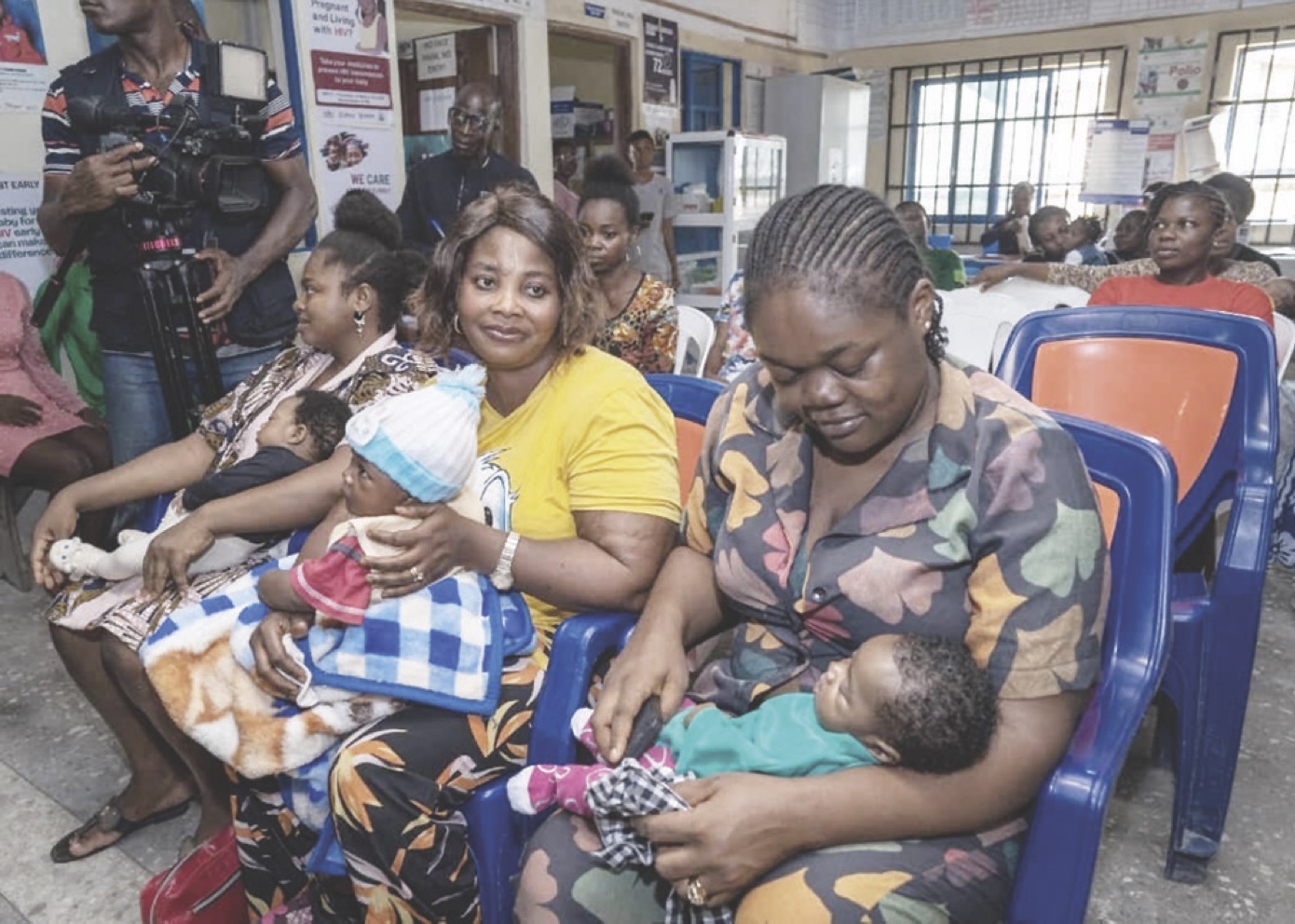
Ekana Samphill, a 32-year-old mother and private teacher with a diploma in public administration from the University of Calabar, recently shared her poignant story during a UNICEF-organized media dialogue in Calabar, Cross River State. Married to Samuel Samphill Ugwo, who holds a degree in sociology, the couple welcomed their first child on November 23, 2021, shortly after their wedding in June of the same year. They were unprepared for the challenges that would arise during Ekana’s second pregnancy. On September 3, 2024, Ekana experienced alarming symptoms, waking up to severe fluid drainage.

She was admitted to the teaching hospital in Calabar, where doctors monitored her condition for a week. Unfortunately, on September 11, she delivered preterm twins with critically low birth weights—0.8 kg and 0.7 kg. While one twin tragically did not survive, the other has shown remarkable resilience, now weighing 1.84 kg.

The financial burden of medical care has been overwhelming for the couple. Ekana revealed that she spent approximately N24,000 daily on oxygen alone, totaling around N209,000 for that necessity during her hospital stay. Additionally, she incurred weekly expenses of N12,500 for specialised NAN milk to support her surviving child’s growth.
Despite only being able to deposit N40,000 initially, the couple’s outstanding bill of N334,000 was recently cleared with the assistance of dedicated hospital staff of University of Calabar Teaching Hospital, who led the crowdfunding and Director-General of the Cross River State Primary, Dr. Vivien Mesembe Otu.
Throughout this ordeal, Ekana relied heavily on the goodwill of friends, church members, and kind-hearted hospital staff who have extended their support during this challenging time. However, she expressed a desire not to continue being a burden to others who are also facing their own struggles.
“I appreciate all the help we’ve received,” Ekana said. “But I would prefer if someone could teach me how to fish rather than just giving me fish. A stable job for my husband and I would allow us to take care of our children without relying on others.”
Ekana’s experience highlights the critical need for enhanced maternal and child healthcare support in Nigeria and underscores the emotional and financial toll such challenges can impose on families like hers.
Although Ekana’s previous medical bills have been cleared with the help of hospital staff, family, church members and the state director of primary healthcare, she is now confronted with additional treatment costs. Faced with the daunting challenges of caring for her surviving child, she made a heartfelt appeal for assistance from influential persons in Cross River State, in an exclusive interview with our correspondent. Ekana’s surviving child was recently diagnosed with hydrocephalus, a condition that requires urgent medical care. “I was recently contacted by the matron to come to the hospital because tests revealed that my daughter has fluid accumulating in her brain, resulting in an enlarged head. Having already lost one twin, I cannot bear the thought of losing her as well. We urgently need assistance to ensure she receives the appropriate medical care,” she stated.
In her appeal, Ekana specifically urged the wife of the governor of Cross River State, Enyoawab Otu, and the First Lady Oluremi Tinubu urging them to support her through the Renewed Hope Initiative. “I would greatly appreciate any assistance they can provide,” she said. “We are struggling to manage these ongoing medical expenses and would be grateful for any support that could help us navigate this difficult time.”
The treatment for hydrocephalus often involves surgical procedures to alleviate pressure on the brain, which can be costly and require follow-up care.
Onoh Esther Esemwenre, the Deputy Director of Nursing in charge of the Sick Baby Unit at the University of Calabar Teaching Hospital, speaking to journalists, during the tour led by UNICEF, reflected on the challenges faced by families with preterm infants during a critical period of care. She recounted the heartbreaking experience of Ekana whose second twin passed away just three weeks after birth, emphasising the emotional toll such losses take on families.
Esemwenre explained that it is often a miracle for babies born at extremely low birth weights to survive. “When babies are born at 38 weeks, they have a better chance of survival,” she noted. “However, for those born earlier, the journey is fraught with stress and financial demands.”
She stressed that even after initial stabilization, parents must understand that the journey is not over; they need to count the weeks until their child reaches full term at 40 weeks. She highlighted the importance of ongoing monitoring for complications such as Retinopathy of Prematurity (ROP), which affects the retina and can lead to blindness if not addressed promptly.
“Twin number two was born with a weight of just 0.7kg, and we had to inform the family that survival rates decrease significantly for such low birth weights,” Esemwenre added. She said the implications for development are profound, as many sensory organs may not be fully developed at birth.
Esemwenre’s insights underscore the critical need for comprehensive support systems for families navigating these challenging circumstances.
During the media dialogue held in Calabar, Director-General of the Cross River State Primary Health Care Development Agency, Dr. Vivien Mesembe Otu, commended UNICEF for its significant contributions to maternal and child health services in the state. She highlighted the provision of solar-powered refrigerators and lighting systems, which have improved vaccine storage and power supply at healthcare facilities.
She said: “We have solar energy that powers our cold chain equipment and ensures we deliver vaccines effectively.” However, she noted that not all healthcare facilities benefit from this crucial support.
Despite these advancements, Otu pointed out several ongoing challenges that hinder effective healthcare delivery. A major concern is the lack of adequate training for healthcare workers due to limited funding. “We need more resources to train our staff and expand our facilities to accommodate more patients,” she stressed. Additionally, there are critical shortages of essential hospital infrastructure, including delivery couches, patient beds and oxygen concentrators.
The dialogue also addressed persistent issues with vaccine supply. While key vaccines such as Penta, IPV, BCG, and measles are available, stockouts and delays continue to impede immunization efforts. “These issues limit our ability to meet the community’s immunization needs,” she explained.
To tackle the high maternal mortality rates in rural areas, Otu revealed ongoing efforts to collaborate with traditional birth attendants (TBAs). She underscored the importance of training TBAs to recognise danger signs during deliveries and refer patients to healthcare facilities.
“By working with them and providing incentives for referrals, we can reduce maternal and child mortality,” she asserted.
Otu called on UNICEF and other partners to help address these challenges by expanding solar energy solutions for cold storage facilities, reducing reliance on diesel generators. She also mentioned that the state government is committed to allocating land for the expansion of primary healthcare centers as part of an ongoing project aimed at revitalizing primary healthcare in Cross River.
With sustained support and strategic interventions from organizations like UNICEF, Dr. Otu believes that maternal and child health outcomes in Cross River State can significantly improve. “We are optimistic that with continued collaboration and resource allocation, we can make a meaningful difference in the lives of mothers and children across our state,” she concluded.
The media dialogue in Calabar was to address critical issues in maternal and child health. It followed visits to local primary healthcare centers (Ikot Offiong Ambai PHC, Atimbo East Akpabuyo local government area and Ekpo Abasi Primary Healthcare center, Calabar South Ward 2), Sick baby unit, University of Calabar Teaching Hospital and the inauguration of a new Pressure Swing Adsorption (PSA) oxygen plant, reinforcing UNICEF’s commitment to improving healthcare for vulnerable populations, particularly sick newborns and zero-dose children – those who have not received any vaccinations.
Nigeria grapples with severe public health challenges, notably high under-five mortality rates and inadequate access to essential vaccinations. Zero-dose children are at increased risk for preventable diseases due to their lack of immunization. The Sustainable Development Goals (SDGs), especially Goal 3, aim to ensure healthy lives and well-being for all, necessitating enhanced public health funding, better infrastructure, and community involvement.
UNICEF’s Health Manager, Martin Dohlsten, during a media dialogue in Calabar, said: “To meet the SDG 3.2 target by 2030, Nigeria must boost under-five mortality reduction from 1.8% to 16.5% annually.”
A key highlight of the dialogue was the visit to the newly established PSA oxygen plant in Calabar. This facility significantly improves the availability of medical oxygen, a vital resource for treating respiratory conditions in newborns and other vulnerable patients. Prior to its establishment, many healthcare facilities struggled with oxygen shortages, contributing to higher morbidity and mortality rates among infants.
During the dialogue, healthcare providers shared impactful testimonials about the oxygen plant’s role in transforming patient care. Dr. Mary Okon, a pediatrician, remarked: “The oxygen plant has been a game changer for us; we can now provide immediate care for infants with respiratory issues without worrying about supply shortages.”