Follow Us on Google
By Shola Anike
Across Nigeria, and much of Africa, the electricity crisis has become one of the defining challenges of daily life. Persistent power outages and the lack of reliable, sustainable electricity have weakened productivity, stalled economic growth, and placed an enormous burden on households and businesses alike. For young people in particular, especially the growing population working remotely or running digital businesses, unstable electricity has translated into lost income, missed opportunities, and, increasingly, migration in search of better infrastructure.
Businesses shut down prematurely due to the cost of running diesel generators. Homes struggle with food preservation, cooling, and safe living conditions in a hot climate. Poor sleep, health risks, and reduced quality of life have become routine consequences of unreliable power. The cumulative effect is immense: declining national productivity, rising unemployment, and the steady loss of skilled youth to countries with more dependable amenities.
Yet amid this challenge, a quiet energy transition is taking shape.
Across Nigeria, households, communities, and entrepreneurs are turning toward solar power as a necessity. At the forefront of this shift is Engr. Adewale Ejalonibu, whose work on affordable, community-based solar mini-grid systems is demonstrating how clean energy can become the backbone of Africa’s future.
Ejalonibu’s solar-grid model focuses on locally assembled, scalable photovoltaic systems designed specifically for underserved and off-grid communities. Unlike traditional grid expansion, which is costly and slow, these solar mini-grids are modular, affordable, and rapidly deployable. His work has already delivered reliable electricity to Nigerian households and communities, providing power for lighting, refrigeration, internet connectivity, and small businesses, often for the first time.
“What makes Adewale’s work different is that it is designed for the realities on the ground,” said one energy-policy observer. “It’s not just about innovation, it’s about affordability, scale, and real impact.”
The systems he has developed are capable of delivering consistent power output at a fraction of the cost of diesel generation, while avoiding fuel volatility and environmental harm. By pooling generation and distribution at the community level, the solar grids reduce per-household costs while delivering stable energy for homes, schools, clinics, and small enterprises.
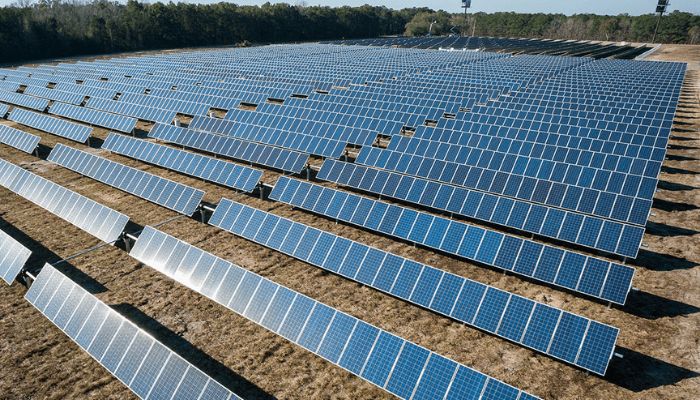
Solar power works by converting sunlight into electricity using photovoltaic panels. The generated energy is stored in batteries, allowing households to access electricity both day and night. In mini-grid configurations, multiple homes and businesses draw power from a shared solar array, managed through smart inverters and load-balancing systems that ensure efficiency and reliability. The result is clean, quiet, and predictable energy, exactly what Nigeria’s growing digital workforce needs.
For households, this means refrigerators that preserve food, fans and cooling systems that improve health and sleep, and lighting that extends productive hours into the evening. For young professionals working from home, developers, designers, freelancers, and entrepreneurs, it means uninterrupted internet access, functional equipment, and the ability to compete in a global digital economy without leaving the country.
The broader economic implications are just as significant. Reliable electricity improves business survival rates, boosts local commerce, reduces dependence on imported fuel, and strengthens national revenue. Perhaps most importantly, it creates a pathway for retaining talent. When young people can live, work, and build businesses at home, the pressure to migrate diminishes.
“Solar is not just an energy solution, it’s a social and economic stabilizer,” said a colleague at one of the project sites. “It keeps communities productive and gives young people a reason to stay and invest in their future here.”
As Africa continues to urbanize and digitize, the demand for decentralized, renewable energy will only grow. Solar mini-grids, like those being deployed by Adewale Ejalonibu—offer a practical, scalable response to one of the continent’s most urgent challenges.
In a region rich with sunlight but underserved by traditional infrastructure, the future of power may already be rising, one solar grid at a time.