Follow Us on Google
•Leaders demand tolerance, justice, national unity, reject politicisation of religion
From Romanus Ugwu, Abuja and Jude Dangwam, Jos
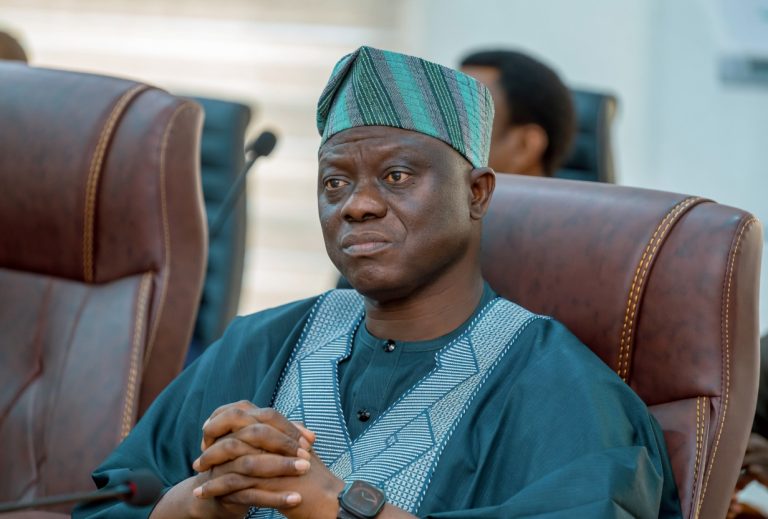
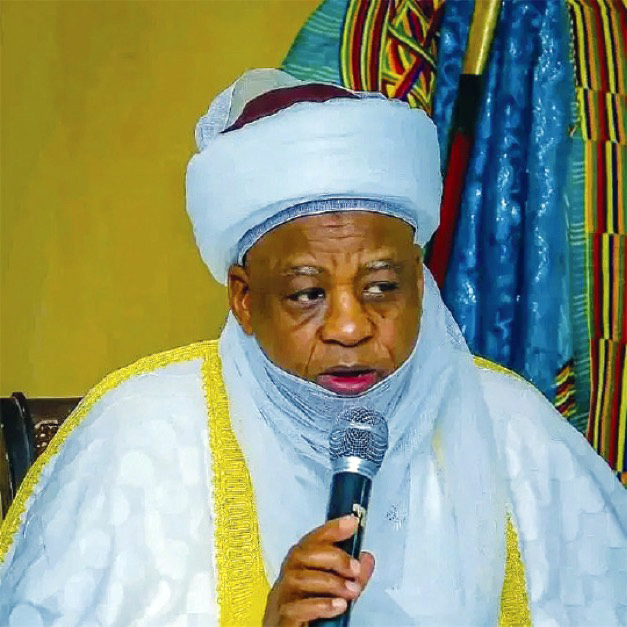
The National Chairman of the All Progressives Congress (APC), Professor Nentawe Yilwatda, Sultan of Sokoto Muhammad Sa’ad Abubakar and Christian scholar Rev. Dr Demas Sam Sarki have warned against the use of religion to divide Nigerians, as stakeholders of the African Democratic Congress (ADC) condemned recent comments attributed to Islamic cleric Sheikh Sani Yahaya Jingir.
The interventions came amid renewed debate over religious tolerance, the proposed Muslim-Muslim presidential ticket and the role of religious leaders in Nigeria’s political and social affairs ahead of the 2027 general election.
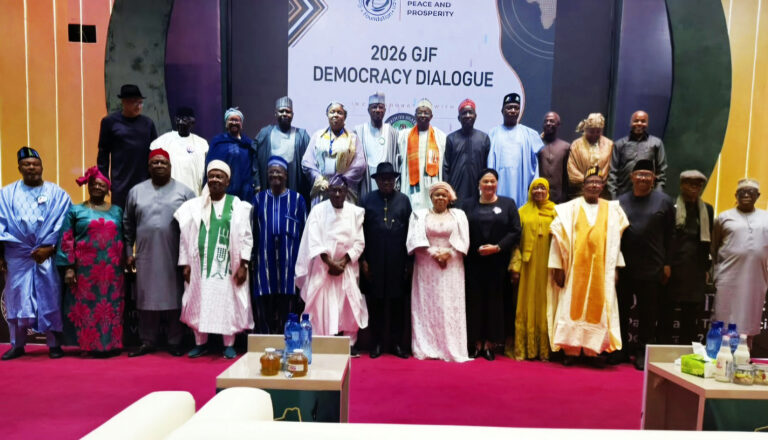
Yilwatda and the Sultan spoke at the opening of an international conference on “Diversity and Social Peace: A Partnership for a Promising Future”, organised by the Muslim World League in Abuja, while Sarki addressed the controversy in an open letter titled “Beyond Religious Politics: A Sober Call for Moral Leadership, Mutual Respect, Justice and National Unity.”
The conference brought together religious leaders, government officials, traditional rulers, diplomats, academics, civil society organisations and other stakeholders to discuss religious diversity, social cohesion, inter-religious relations and sustainable peace.
Yilwatda described diversity as a defining feature of Nigeria and urged citizens to transform the country’s different faiths, ethnicities, languages, cultures and traditions into sources of national strength rather than division.
He said Nigerians must look beyond religious and ethnic identities and recognise their shared humanity and common destiny.
The APC chairman, who spoke from his experiences growing up in Yobe State and witnessing communal conflicts in Plateau State, recalled the friendship between his late father, a pastor, and the Chief Imam of Nguru.
He said the relationship demonstrated that religious differences should not prevent friendship, mutual respect and peaceful coexistence.
“Religious difference does not have to produce human distance. Indeed, our differences should not prevent us from recognising what we share. We may worship differently, but we share the same humanity. We may speak different languages, but we share the same hopes for our children. We may come from different communities, but we share one country and one future,” Yilwatda said.
He warned that Nigeria’s diversity could become dangerous when citizens were encouraged to dehumanise people of other faiths or ethnic backgrounds.
Yilwatda identified terrorism, banditry, farmer-herder conflicts, communal violence, ethnic suspicion, religious intolerance, hate speech and the political manipulation of identity as threats to national cohesion.
He said terrorism could assume a religious identity, banditry could exploit ethnic narratives and politicians could weaponise identity for electoral purposes, but none of these should be allowed to define Nigeria.
“The real battle is for the soul of our nation. And that battle cannot be won by security measures alone,” he said.
According to him, lasting peace requires justice, education, responsible leadership, economic opportunity, dialogue and moral courage.
He called on religious leaders to use their influence to promote tolerance and reconciliation, urging churches and mosques to serve as centres of peace and platforms for teaching citizens how to live together despite their differences.
Yilwatda also urged political leaders to resist exploiting religious and ethnic sentiments for political gain, while calling on traditional rulers to strengthen reconciliation and dialogue.
He challenged academics and civil society organisations to educate a new generation to see Nigeria’s diversity as an asset rather than a threat.
The APC chairman proposed what he called a “Nigerian Covenant for Coexistence”, involving religious leaders, political leaders, traditional institutions, civil society organisations and citizens in a shared commitment to reject violence, hate speech, religious intolerance and the politicisation of identity.
He said Nigerians must protect places of worship, defend vulnerable communities and teach children that people who worship differently are not their enemies.
“Whenever any community is attacked, we should not first ask whether the victims belong to our ethnic or religious group, but whether they are human beings deserving of protection. The future of Nigeria cannot be secured by one faith defeating another, or one ethnic group prevailing over another. There is no victory in destroying the house we all call home.”
Yilwatda urged Nigerians to choose dialogue over confrontation, reconciliation over revenge, justice over vengeance and humanity over identity.
Responding to Yilwatda’s remarks, Sultan Muhammad Sa’ad Abubakar commended the APC chairman for what he described as a comprehensive intervention on Nigeria’s religious and social challenges.
The Sultan recalled that the Nigerian Inter-Religious Council (NIREC) was established by Christian and Muslim leaders as a platform for dialogue and interaction towards peaceful coexistence.
Sultan urged Nigerians to stop insulting and demonising one another, stressing that all human beings were created equal by God. “Nobody is better than another person.”
He identified the lack of honesty and trust among Nigerians as one of the major challenges confronting the country.
“We lack honesty and trust. We don’t trust ourselves, and that is where the problem is. Nobody is better than another person,” he said.
The Sultan said Yilwatda’s emphasis on humanity provided an important pathway towards addressing Nigeria’s religious and social differences.
At the same conference, Deputy President of the Senate, Senator Barau I. Jibrin, who represented President Bola Ahmed Tinubu, said the Federal Government was committed to working with governments and relevant stakeholders to strengthen security and promote peace in Nigeria and across the world.
Barau reaffirmed the administration’s commitment to preserving Nigeria’s unity despite its religious and ethnic diversity and urged participants to use the international platform to contribute to the global debate on peace and security.
He commended the Muslim World League for choosing Nigeria as the host of the conference and expressed confidence that its deliberations would produce practical ideas for advancing peace and security.
ADC condemns Jingir’s comments
Other News
Against the backdrop of the calls for tolerance at the Abuja conference, stakeholders of the ADC, under the auspices of the Grassroots Mobilisation Network (GMN), condemned comments attributed to Sheikh Sani Yahaya Jingir at a mass wedding ceremony in Kano State.
Jingir was reported to have declared Muslims superior to Christians, referred to Christians as infidels and said Nigeria was a Muslim country.
In a statement issued in Abuja by the GMN Secretary-General, Usman Bala Idris, the ADC stakeholders described the remarks as a “nasty religious comment” and urged Nigerians to reject what they described as Jingir’s comments and ideology.
The group also called on Nigerians to caution Jingir, saying religious leaders must refrain from reckless and inflammatory comments capable of affecting the peace and tranquillity of the country.
“Jingir’s view does not represent Islam and Muslims, but his personal interest,” the statement said.
The stakeholders said Islam was a religion of justice, fairness and protection of the rights of citizens, adding that it did not preach hatred or claim superiority over others.
The group also condemned the reported push by the APC for a Muslim-Muslim presidential ticket, describing a same-faith ticket as “anti-people, anti-unity and anti our divergent nature”.
It said Muslims and Christians in the North had coexisted for centuries and warned politicians against exploiting religion to divide Nigerians for political advantage.
“We must not allow politicians to exploit religion to divide us for political gains,” the statement said.
The group urged voters to prioritise competence and character over religious identity, saying what the North needed was good governance regardless of whether it was led by a Muslim or Christian.
“What is important to the North is good governance whether led by a Muslim or a Christian, provided it delivers justice, security, food and jobs for our people,” the statement said.
The GMN also called on the Nigerian Supreme Council for Islamic Affairs (NSCIA) and the Christian Association of Nigeria (CAN) to caution clerics against hate speech and divisive sermons.
Adding his voice to the controversy, Sarki, a scholar of comparative religion, called on Jingir to desist from divisive rhetoric and embrace moral leadership, mutual respect, justice and national unity.
In his open letter, Sarki said he was compelled to speak “out of a profound duty to safeguard peace, mutual respect, and national cohesion in Nigeria” following public statements attributed to Jingir during a gathering in Kano.
He said assertions allegedly labelling Nigerian Christians as “infidels”, claiming that the 2023 elections proved Nigeria belonged exclusively to Muslims, demanding a Muslim-Muslim ticket for the 2027 elections and suggesting that those who rejected such a ticket should leave the country represented “a dangerous departure from responsible religious stewardship”.
Sarki warned that public utterances by religious leaders carried significant weight and that derogatory statements about fellow citizens could undermine religious harmony.
Addressing the use of the term “infidel” or Kafir, he said comparative religious scholarship required clarity in distinguishing between Christians and other religious categories in Islamic jurisprudence.
He argued that Christians are recognised in the Qur’an as Ahl al-Kitab, or People of the Book, and cited Islamic traditions concerning the protection of Christian communities and freedom of conscience.
Sarki further maintained that classical Islamic scholarship distinguished between polytheistic groups that fought early Muslims and monotheistic Ahl al-Kitab, arguing that the use of religious terminology as political rhetoric could distort its theological meaning.
He cited Qur’anic provisions including Surah Al-Mumtahanah (60:8) on justice and kindness towards non-Muslims who do not wage war against Muslims; Surah Al-Baqarah (2:256) on freedom of conscience; Surah Al-Ankabut (29:46) on respectful dialogue with the People of the Book; and Surah Al-Hujurat (49:13) on human diversity and mutual understanding.
“When a religious scholar ignores these foundational principles to promote religious supremacy or political exclusion, it violates the core tenets of comparative theology and misrepresents the noble essence of faith,” he said.
Sarki also drew attention to the socio-economic challenges facing Northern Nigeria, noting that the region had experienced decades of ethno-religious conflicts despite Northern leaders occupying the country’s highest political offices for much of the post-independence period.
He identified poverty, insecurity, millions of out-of-school children and deteriorating infrastructure as major challenges confronting the region.
According to him, economic hardship affects Nigerians irrespective of religion, as “Christians and Muslims purchase food in the exact same inflated markets” and seek healthcare in the same underfunded hospitals.
He argued that religious or political supremacy would not reduce inflation, unemployment, hunger or insecurity.
The scholar urged Jingir and other religious leaders to act as unifying elders and statesmen rather than political partisans.
“Our primary responsibility as religious leaders, whether Sheikhs or Pastors, is not to act as political partisans or champion specific electoral tickets,” he said.
Sarki urged clerics to demand good governance, hold political leaders accountable and advocate justice and national reconciliation.
He called on religious leaders to reject divisive rhetoric and use their platforms to promote justice, unity, mutual respect and lasting peace across Nigeria.
“Peace is not a mere luxury; respect for other people’s religious beliefs is the essential key to peaceful coexistence in a pluralistic society,” he said.
The interventions by the APC chairman, the Sultan, the ADC stakeholders and the Christian scholar have brought renewed attention to the dangers of religious rhetoric in a politically charged environment, with calls for religious leaders and politicians to prioritise national unity, good governance and peaceful coexistence over sectarian interests.