Follow Us on Google
From Ndubuisi Orji, Abuja
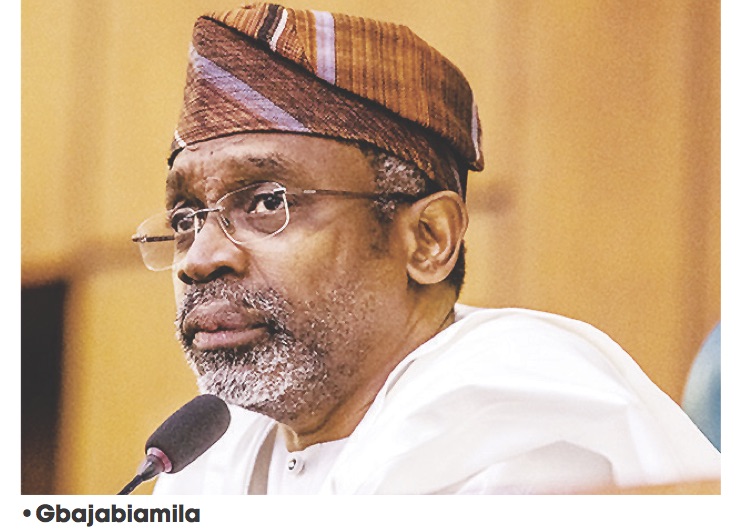
When Femi Gbajabiamila, emerged as speaker of the ninth House of Representatives, on June 11,2019, he promised that the Green chamber under his watch was going to be a House of reforms. He had assured that apart from “shaking the table”, various reforms would be introduced to reposition the institution of the legislature.
According to him, “ The 9th Assembly under my leadership is going to be a House of reforms or if you like a reform Assembly. The reforms will be dished out piecemeal and at intervals so as not to shock the system. Moving forward therefore my dear colleagues, it will not be business as usual and we will be shaking the table just a little.
“We will be introducing various reforms that will reposition this institution but please rest assured that they will be for the greater good. On our shoulders lie the responsibility of working together as a House to safeguard the future of our great country. The House must be reformed before the country can be reformed. We simply cannot and must not fail.”
In the pursuit of its reform agenda, they enunciated a legislative agenda and undertook several initiatives, embarked on probes, sponsored bills to address issues in the polity, passed several motions, as well as embarked on oversights through its various standing and ad-hoc committees.
Pundits say the House recorded milestones in the passage of critical legislations, including the Petroleum Industry Act ( PIA) and Electoral Act, which were intended to reform the country’s petroleum industry and electoral system. It also passed constitution alteration bills to among others, decongest the exclusive legislative list.
However, as the curtain falls on the ninth assembly, this week, analysts say the House did not fare well in the area of probes and pursuit of some key initiatives and legislations, which would have further strengthened the polity as well as the legislature to their logical conclusions. Besides, some promises made by Gbajabiamila, also remains largely unfulfilled. Some of the major issues, which the ninth House set out to do but could not complete include probes of alleged financial malfeasance, bills that were stalled amongst.
Regardless, however, there is the likelihood that with the expiration of the life span of the current assembly, many of the unfinished businesses will die a natural death.
Inconclusive probes
The 9th House, in the last four years embarked on several probes, in the discharge of its legislative agenda. While several of the probes were completed and report submitted to the parliament, some of the high profile probes were either aborted or abandoned midway into the exercises.
The major probes that were not concluded include:
Probe of alleged 22m barrel crude oil theft: On September 26, 2019, the House adopted a motion by member representing Aguata Federal Constituency of Anambra State, Chukwuma Umeoji, calling for a probe of alleged theft of 22 million barrels of crude oil between January to June, 2019.
Umeoji, in his motion, had decried the theft of crude oil in the country. He argued that if the entire value of crude oil stolen in a year is put together, it will amount to about N5trillion, which is enough to fund the national budget.
“The dimension of this theft is worrisome. It is worrisome that at a time, we are looking for money, people are suffering and we are thinking of increasing VAT and yet we are losing money. Let us do our part to support the President, “ Umeoji had stated.
Consequently, the House set up an ad-hoc committee headed by the deputy House leader, Peter Akpatason to undertake the investigation. Regardless, nothing concrete came out of the probe as it was abandoned midway.
The Chinese loans probe: The House Committee on Treaties and Protocol, headed by Ossai Nicholas Ossai, in 2020, embarked on a probe of the various loans obtained by the country from China.
The panel, at its inaugural investigative hearing had raised the alarm that most of the loans agreement between Nigeria and China were capable of jeopardising the territorial integrity of the country.
Events at the panel assumed a dramatic turn in subsequent hearing after a spat between Ossai and the then Minister of Transport, Chibuike Amaechi, who accused the committee chairman of pursuing a Peoples Democratic Party (PDP) agenda. Few days after the clash, the leadership through a letter by the House leader, Alhassan Ado-Doguwa, dated August 19, 2020,
directed all standing or ad-hoc Committees to suspend all investigative hearing pending the resumption of the House, from its annual vacation, in September of that year. That directive effectively marked the end of the Chinese Loan probe, as the panel never reconvened to continue the investigation.
Similarly, the probe of the alleged financial malfeasance by the former Interim Management Committee (IMC) of the Niger Delta Development Commission (NDDC), in May 2020 ended abruptly. Nevertheless, the House Committee on NDDC proceeded to submit its report.
The Committee had adjourned sine die
after the then acting Managing Director of the NDDC, Kemebradikumo Pondei collapsed while he was being grilled by the lawmakers. However, while the public was awaiting the resumption of the investigative hearing, the Committee’s report surfaced in the chamber.
Also, the the Power sector probe and Arms purchase probe, embarked upon by the House in 2020 and 2021, respectively, amongst other high profile investigations by the outgoing assembly were not concluded.
Constituency Town Hall meeting on out of school children
The House in March, 2020 at a special session dedicated to the challenge of “out of school children” in the country resolved to hold a Constituency Town Meeting in the 360 federal constituencies across the country on the issue. The Town Hall meeting was scheduled to hold in the last weekend of March, 2020.
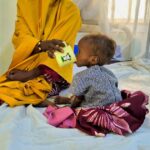
At the special session, Omowumi Ogunshola, had in a motion on the “need for the House to deliberate on the matter of the millions of out of school children in Nigeria and to consider lasting solutions”, had drawn the attention of the House to the United Nations Children’s Fund (UNICEF) report on out of school children in the country.
Ogunshola stated that, according to UNICEF, about 10.5 million of the country’s children aged 5-14 years are not in school. While only 61 percent of 6-11 year-olds regularly attend primary school and only 35.6 percent of children aged 36-59 months receive early childhood education.
Unfortunately, the COVID-19 pandemic became serious in the country before the scheduled date, thereby leading to the adjournment of the House. However, the programme was never mentioned after normalcy returned to the country.
COVID-19 interventions
Similarly, at the outbreak of the COVID-19 pandemic, the House enunciated some initiatives to ameriolate the plights of the citizens. The parliament before the suspension of plenary over the COVID-19 pandemic, on March 24 had rushed through the Emergency Economic Stimulus Bill. The bill sought “to ease the burden of importation and financial burden, thereby fostering easier access and reduction in the price,” as well as provide a new tax regime for corporate bodies, with rebates to encourage companies in the country to maintain their payroll status for the immediate term.
The bill, which was sponsored by the speaker, Femi Gbajabiamila was taken through first, second, committee consideration and third reading in less than two hours. But that was where it ended. Nothing was heard of the proposed legislation again.
Also, Gbajabiamila, in the midst of the first wave of the pandemic, in April 2020 during a meeting between the National Assembly leadership and the Minister of Finance, Budget and National Planning, Zainab Ahmad, the Director-General of the Budget Office of the Federation, Ben Akabueze, had promised that the House will enact a law to give two months free electricity to every household in the country, as part of efforts to mitigate the effects of the pandemic on Nigerians.
The speaker, in a statement, had noted that :”It is one thing that will touch every household. When you are saving people their electricity and the fact that they now have stable electricity for two months, you are also saving the monies that would go into the payment of those bills at least for two months.”
That initiative like the Economic Stimulus Bill, ended a mirage.
Pending bills
In the last four years, no fewer than 2209 bills were introduced in the Green chamber. However, only less than 500 of the bills were passed. Consequently, over 1700 of the bills entertained by the House in the ninth assembly are awaiting second reading, referred to committees, awaiting consideration at the Committee of the Whole or awaiting third reading. The implication is that many of the bills may die a natural death, with the expiration of the current assembly in a few days.
Prominent among the proposed legislation is the bill for the establishment of an Electoral Offences Commission.
Failed promises
In the last four years, the House, as well as the speaker made several promises. While some of the promises were fulfilled, some were not. Two of the unfulfilled promises stand out. They include the digitization of the operations of the House, including the introduction of electronic voting in the Green chamber and the promise to revisit women-oriented bills thrown out, during voting on constitution alteration bills last year.
Though the House procured computers for lawmakers, it has continued to rely on voice votes, which sometimes leaves decision on bills and motions at the discretion of the presiding officers, to decide which bill or motion scales through.
Also, in the aftermath of protests by women group over the rejection of five gender bills, the House with the speaker presiding had resolved to revisit three of the rejected bills. The women group had staged a massive protest at the major entrance of the National Assembly, in the Three Arms Zone.
After the House adopted a motion by chairman, Rules and Business, Hassan Fulata, to rescind its decision on the bills to expand the scope of citizenship by registration, affirmative action for women in political party administration and provision for criteria to be an indigene of a state in Nigeria, Gbajabiamila promised that the Green chamber will go extra miles to get the bills passed. However, the rejected bills were never reconsidered.