Follow Us on Google

“Nobel Prize, unfortunately, has become a sort of marketing thing. It has become a big thing to be nominated, to be considered, especially in the United States. Suddenly, all names are being bandied around and articles are being written. I believe that even the dignity is going out of the Nobel Prize because of the hustling which is done on the pages of newspapers, much to the distress of all the writers I know.“
He is greatness personified. At 92 on Monday this week, our sole Nobel laureate, Professor Wole Soyinka, has become the embodiment of everyone’s idea of a father, grandfather and great-grandfather.
I first met him in February 1983 when he was 49 and had just written Aké: The Years of Childhood, a memoir of his early years that had taken the literary world by storm. It was a period when the writer in vogue was Gabriel García Márquez, the Colombian Nobel laureate whose magical realism was inspiring writers across the world, from aspiring authors to established masters, all dreaming of one day becoming Nobel laureates themselves.
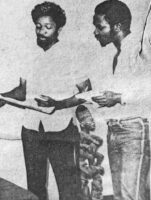
When I arrived for a rare face-to-face interview at the then University of Ife, now Obafemi Awolowo University, I noticed that Soyinka’s table was piled high with books. They were not his own books but those of García Márquez—One Hundred Years of Solitude, The Autumn of the Patriarch and Chronicle of a Death Foretold—all by the Colombian writer who had won the Nobel Prize for Literature in 1982 on the strength of what came to be known as magical realism.
In a simple definition I recently came across on YouTube, Ghanaian-Canadian literary scholar Ato Quayson of Stanford University describes magical realism as “a mode of writing that sets up a scrupulous equivalence between the fantastical and the real.”
During our conversation, Soyinka described García Márquez as “a fascinating novelist.” He told me he had admired the Colombian’s work long before the Nobel Prize came his way.
“Even in my inaugural lectures here two years ago,” Soyinka said, “I referred to his works because they were very little known here, and I used the opportunity to introduce them briefly.”
I then asked him why African writers had not been able to win the Nobel Prize for Literature.
“I don’t think we should even bother our heads with that,” he replied.
“Nobel Prize, unfortunately, has become a sort of marketing thing. It has become a big thing to be nominated, to be considered, especially in the United States. Suddenly, all names are being bandied around and articles are being written. I believe that even the dignity is going out of the Nobel Prize because of the hustling which is done on the pages of newspapers, much to the distress of all the writers I know.”
I asked whether he was aware that he himself had already been mentioned as a possible Nobel Prize candidate.
“I find it the most embarrassing issue,” he replied. “I just hope they leave me alone to do my writing. Quite frankly, I am not interested.”
Supposing he eventually won the Nobel Prize, I asked, how would he feel?
“If I win the Nobel,” he replied with a smile, “I’ll just think, ‘Ah… I’ve got the money to make a film at last.’”
Three years later, in 1986, Wole Soyinka became the first Black African to win the Nobel Prize for Literature.
Other News
As earlier mentioned, I met Soyinka at a time when Aké: The Years of Childhood had captured the imagination of readers around the world. The autobiographical work chronicles his first eleven years growing up in Aké, Abeokuta.
To the young Wole, Aké was a world inhabited by daemons and wood spirits—known in Yoruba as iwin. To this precocious African child, these spirits seemed every bit as real as the unforgettable figures who populated his early life: his parents, Hausa traders, missionaries, babalawos, teachers, colonial administrators, Hitler’s war—known locally as Ogun Hitila—and the famous Abeokuta Women’s Revolt. All were vividly recreated through the innocent eyes of a child.
Re-entering that childhood world, however, was far from easy.
“I first began it many years ago,” Soyinka explained, “and I just found I could not re-enter that world. So I suspended it for some years. I think I wrote a chapter or two about five or six years ago. Somehow it just dried up. I found I could not re-enter that world. So I locked it away. Then one day, I simply felt I was ready again.”
The success of Aké surprised even its author.
“I am pleasantly surprised it has given spontaneous pleasure to people all over the world,” he told me. “I wanted to capture a little piece of my life—not just my life—but an environment I found unique and special, even as a child.
“I wanted to do a kind of word painting of what things were like. I had no serious or grandiose intention while writing the book. I am simply surprised by the response it has received.”
Soyinka said Aké represented the most innocent period of his life—the age of innocence.
He revealed that if he ever decided to continue his autobiography beyond Aké, it would have to be “severely edited.”
He explained why.
“After the age of eleven, nearly every line I write, nearly every episode I describe, would have to be rethought because one is reaching adolescence, then maturity. Other people become involved in one’s life, and one has to be very, very careful.”
That naturally led to a discussion on biographies and autobiographies.
Soyinka did not mince words.
“They are generally untruthful documents because one must edit things out.
“I believe in my privacy. I don’t believe in that tradition of biographies which expose everything—the seamy side of intimate relationships and family life. They disgust me.
“And that applies even to books written by some of these great writers. I don’t think it is fair to other people with whom you have shared certain relationships. They do not have the opportunity to write their own side of the story.
“So, where biographies are concerned, there is a very big question mark in my mind.”