Follow Us on Google
• Legal battle begins in Lagos
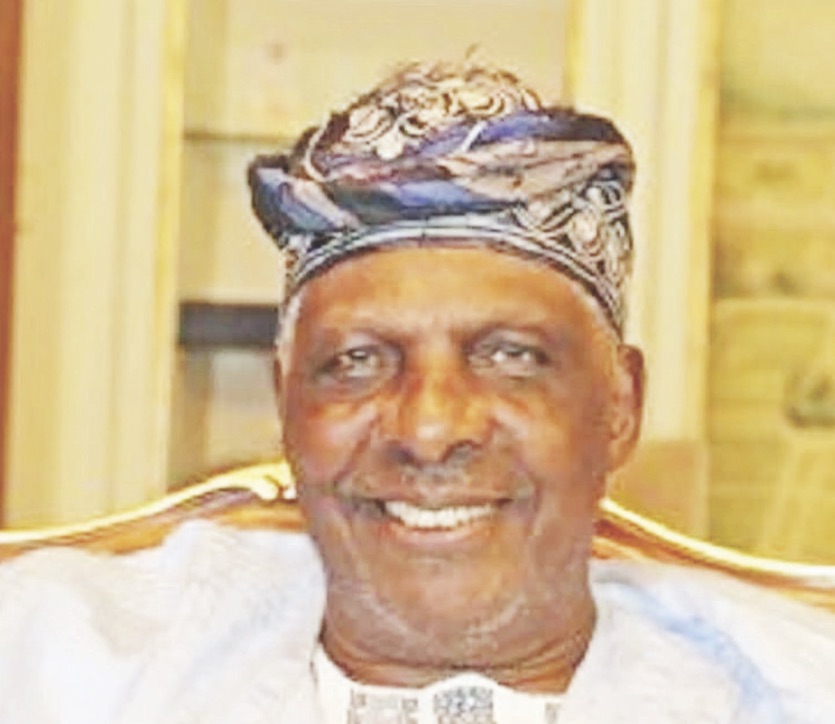
The battle over the estate of late billionaire industrialist and Parakoyi of Ibadan, Chief Labode Oladimeji Akindele, has developed into one of Nigeria’s most significant probate disputes, exposing deep family divisions, raising questions over the authenticity of a controversial Will and setting the stage for what could become a landmark judicial pronouncement on inheritance law.
More than six years after the renowned businessman died on June 29, 2020, the legal contest over his estate has moved beyond a family disagreement into a high-profile courtroom confrontation involving allegations of exclusion, disputed testamentary documents, questions over due execution and competing interpretations of the wishes of one of Nigeria’s most successful entrepreneurs.
The dispute is currently before Justice Tanimola Ajorin-Ajose of the Lagos State High Court in Suit No. LD/10/2020.
At the centre of the case is Mr. Oladipo Alade Akindele, who identifies himself as the seventh biological child and first son of the deceased.
Rather than merely challenging how the estate was shared, he is asking the court to declare the entire Will invalid, contending that it failed to comply with the provisions of the applicable Wills Law and should not form the legal basis for administering his father’s vast estate.
The claimant has sued several individuals connected with the estate, including Rev. Michael Stephen, Prof. Wale Tomori, Rev. Canon Prof. Kolawole Jaiyeoba, Mrs Oluwatoyin Isemede, Mrs Abiola Aderibigbe, Mrs Abiodun Duduyemi, Mrs. Ajoke Braithwaite, Mrs. Oluyemisi Oladapo, Mrs. Titilola Madedor, Mrs. Afolake Coker, Miss Ayodele Akindele, Mr. Mobolaji Akindele, Mrs. Mojisola Shonibare, Mrs. Roseline Akindele, Miss Samantha Stevenson, the Registrar of the Probate Registry of the Lagos State High Court and the Administrator-General of Lagos State.
The defendants include widows, children, relatives and long-time associates of the late businessman.
The Ibadan, Oyo State-born billionaire industrialist died at the aged of 88 in his residence in Lagos.
Chief Akindele was widely regarded as one of Nigeria’s foremost industrialists, with interests spanning maritime services, fishing, finance, real estate and international investments. Through companies including Fairgate Group Limited, Fairgate Estates Limited, Fairgate Investments Limited and Madandola Group, he built a sprawling business empire with investments within and outside Nigeria.
According to the claimant’s Statement of Claim, he was in Cape Town, South Africa, on business when he received news of his father’s death. He alleges that conflicting accounts later emerged regarding the circumstances surrounding the death, prompting him to request a post-mortem examination.
According to the court processes, he maintains that the request was ignored and that funeral arrangements proceeded without his involvement.
The claimant further alleges that his name was omitted from the obituary announcing the funeral ceremonies, a development he believes was part of a deliberate attempt to isolate him from family affairs following his father’s death.
He also told the court that he petitioned the police to investigate the circumstances surrounding the death after his request for an autopsy was allegedly not honoured.
Another major issue before the court concerns the reading of the disputed Will.
Although he is named as a beneficiary in the document, the claimant alleges that he was neither notified nor invited to the reading of the Will conducted at the Probate Registry of the Lagos State High Court on August 17, 2020.
Following the reading, he instructed his solicitors to obtain a Certified True Copy of the Will and subsequently carried out a search of the probate file.
According to the originating processes, several beneficiaries and proposed trustees attended the reading while he was excluded. He further alleges that about 20 certified copies of the Will were obtained after the reading but none was made available to him.
Perhaps the most contentious issue in the suit revolves around what has been described as the “Bode Akindele’s Family Protocol.”
The claimant argues that the Will repeatedly refers to a Deed of Declaration and Family Protocol, stating that it was attached as Schedule Two and was intended to regulate the governance of the family, its wealth and the trustees responsible for administering the estate.
However, he contends that when he obtained the Certified True Copy and later inspected the original Will lodged at the Probate Registry, no such document was attached.
According to him, the alleged protocol forms an essential component of the Will because several operative clauses depend on it.
Without that document, he argues, the Will is incomplete, legally defective and incapable of proper implementation.
He is therefore asking the court to declare that any family protocol produced after the execution of the Will cannot lawfully become part of the testamentary document.
The claimant also raises questions over the execution of the Will itself.
He alleges that the execution date appearing on the document was altered from August 5, 2015, to May 5, 2017, without proper authentication as required under the law governing Wills.
He further claims that the signatures appearing beside the alterations differ from those of the attesting witnesses and has indicated that expert evidence will be presented during trial to support those allegations.
The suit equally questions what the claimant describes as inconsistencies and drafting errors in the document, arguing that they are inconsistent with the meticulous business character for which the late industrialist was widely known.
He also contends that the disputed Will fails to adequately identify the deceased’s extensive assets.
According to the Statement of Claim, only a limited number of properties were listed despite the deceased’s substantial international investments.
The claimant specifically refers to commercial properties allegedly beneficially owned by the late businessman in London, Wembley, Leicester, Southampton, Camberley, Aylesbury and other parts of the United Kingdom, as well as a family residence in Spain known as “Nigerian House.”
He argues that such omissions are inconsistent with the business style of a man who managed a vast international property portfolio.
Among the reliefs sought, the claimant is asking the court to affirm that he is the biological son of the deceased and to declare that his exclusion from funeral arrangements violated his rights as a child of the late businessman.
He also seeks declarations that the purported Will is invalid for alleged non-compliance with the Wills Law, lack of due execution, absence of testamentary capacity and failure to include the Family Protocol allegedly referenced in the document.
In addition, he is asking the court to restrain the defendants from administering the estate under the disputed Will and to direct the Administrator-General of Lagos State to assume temporary administration of the estate pending the final determination of the suit.
The claimant is equally requesting a comprehensive account of all estate assets, income, expenditure and transactions undertaken since the death of Chief Akindele.
The defendants, however, have strongly denied the allegations.
In their Statement of Defence, the first to the 14th defendants challenged the claimant to prove every allegation contained in his pleadings.
While affirming that he is indeed a biological child and first son of the deceased, they insist there was never any attempt to deny his paternity.
Rather, they allege that Chief Akindele had, during his lifetime, disowned the claimant, a decision they say accounted for his exclusion from funeral arrangements and other family activities.
According to the defence, the claimant’s name had long been excluded from family publications and documents while the deceased was alive, and he was similarly excluded from family affairs.
The defendants maintain that the omission of his name from the obituary merely reflected the express wishes of the late businessman.
They further contend that portions of the disputed Will demonstrate the deceased’s intention to exclude the claimant from certain family benefits and matters.
The defence also rejects allegations that conflicting accounts surrounded the industrialist’s death or that any request for a post-mortem examination was ignored.
According to the defendants, had any formal request been made to the family, it would not have been disregarded.
On the controversial Family Protocol, the defendants acknowledge the existence of the document, describing it as the “Sir (Chief) Olabode Oladimeji Akindele Family Constitution.”
They state that the document, dated October 14, 2018, was duly executed by the deceased, several of his children and the seventh defendant between October and November 2018, although the claimant was not among the signatories.
The defendants also deny any plot to exclude the claimant from the administration of the estate.
They argue that Clause 2(3) of the Will clearly demonstrates that he was never intended to administer the estate either alone or jointly with others.
Addressing the allegation that the Family Constitution was not attached to the Will, the defendants contend that the document was undergoing review at the relevant time and had already been sufficiently incorporated and identified within the Will.
According to them, whether or not it was physically attached cannot invalidate the testament.
The defendants further explain that the claimant was not invited to the reading of the Will because the Probate Registry directed that only a limited number of persons should attend.
They state that no beneficiaries residing abroad were invited owing to the short notice given for the exercise.
They also maintain that there was no legal obligation requiring the claimant to be invited to the reading, although they admit that about 20 certified copies of the Will were subsequently obtained.
For now, however, the allegations, counter-allegations and denials remain matters for judicial determination.
Although trial commenced on July 3, 2026, the court has yet to receive substantial documentary and oral evidence on the disputed issues.
With billions of naira in assets, competing interpretations of the late industrialist’s final wishes and serious allegations challenging the very validity of the Will itself, the proceedings are expected to test important principles of Nigerian probate law while determining who ultimately controls one of the country’s most valuable private estates.
Justice Ajorin-Ajose has adjourned the matter until September 28, October 7 and October 8, 2026, for continuation of hearing.