Follow Us on Google
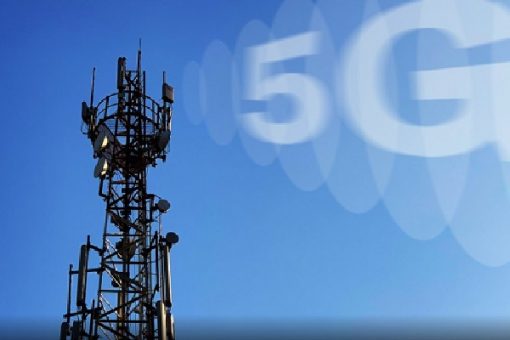
Nigeria’s telecommunications landscape is gradually shifting towards faster mobile technologies, with fifth-generation (5G) connections gaining ground while the use of older 2G and 3G networks continues to decline.
Latest industry statistics from the Nigerian Communications Commission (NCC) showed that 5G’s share of mobile connections increased from 3.27 per cent in July 2025 to 4.61 per cent in June 2026, representing a growth of about 41 per cent within the period.
The figures indicate a gradual migration by subscribers towards newer network technologies as operators expand their 5G infrastructure and more Nigerians adopt smartphones capable of accessing the technology.
The NCC data, however, shows that 5G still represents a relatively small portion of the country’s mobile connections, with 4G remaining the dominant technology.
In June 2026, 4G accounted for 54.31 per cent of mobile connections, compared with 51.22 per cent in July 2025.
Combined, 4G and 5G accounted for 58.92 per cent of Nigeria’s mobile connections in June, compared with 54.49 per cent in July 2025.
At the same time, older technologies continued to lose ground.
The share of 3G connections fell from 7.13 per cent in July 2025 to 4.86 per cent in June 2026, while 2G declined from 38.38 per cent to 36.22 per cent over the same period, according to the NCC.
The shift comes as Nigerians consume increasing volumes of mobile data, putting greater demand on telecommunications networks.
NCC industry statistics showed that Nigeria’s data consumption reached about 1.53 million terabytes in June 2026, highlighting the growing importance of high-capacity networks to the country’s digital economy.
The increasing demand for data is being driven by activities ranging from social media and video streaming to digital payments, remote work, online education, cloud services and other internet-based activities.
For telecommunications operators, the migration towards 4G and 5G could also provide greater network capacity as they seek to accommodate rising data traffic.
5G offers higher speeds, lower latency and greater capacity than previous generations of mobile technology, making it suitable for applications requiring large amounts of data and near-real-time connectivity.
Beyond consumer broadband, the technology is expected to support emerging applications in areas such as artificial intelligence, cloud computing, smart devices, industrial automation, healthcare and connected infrastructure.
However, the NCC figures also show that Nigeria remains a mixed-technology market, with more than four in every 10 mobile connections still operating on 2G or 3G networks in June.
This means the transition to newer technologies is likely to remain gradual, particularly as affordability, device availability, network coverage and the cost of data continue to influence consumers’ choices.
The continued decline in 2G and 3G usage could nevertheless strengthen the case for further investment in modern network infrastructure and spectrum as operators respond to changing patterns of connectivity.
With Nigeria’s mobile subscriber base remaining above 190 million and data consumption continuing to rise, the evolution of the country’s network technology is expected to remain a key part of its digital transformation.
The latest figures therefore point to a telecommunications market in transition: 5G is growing, 4G remains dominant, while 2G and 3G are gradually giving way to newer generations of mobile connectivity.