Follow Us on Google
By Chinenye Anuforo
No fewer than 57 per cent of technology products procured by government Ministries, Departments and Agencies (MDAs) and corporate organisations in Nigeria are refurbished products allegedly purchased and presented as brand new, founder of Zinox Group, Leo Stan Ekeh, has said.
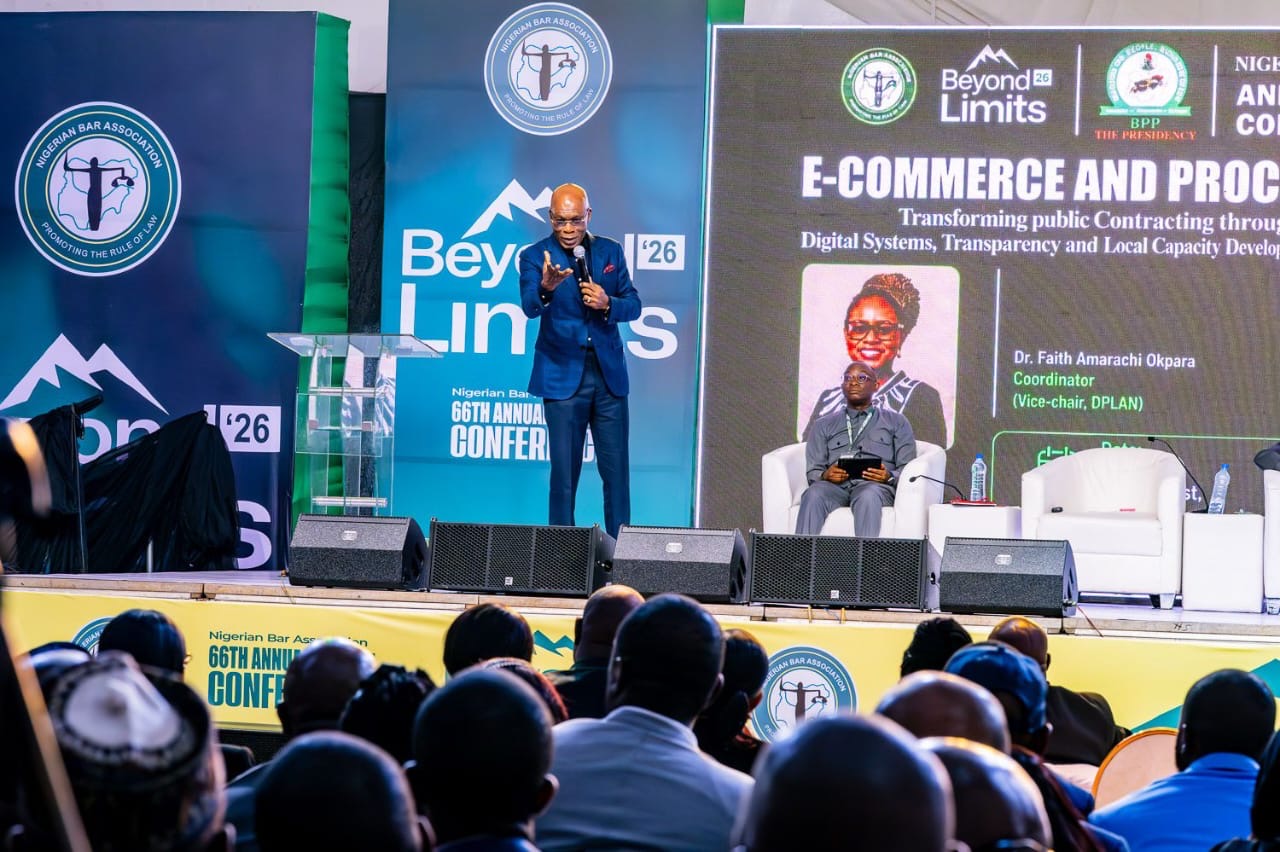
Ekeh, who made the disclosure at the 66th Annual General Conference of the Nigerian Bar Association (NBA), described the practice as fraudulent and called for appropriate sanctions against companies found culpable.
He spoke during a session titled, “E-Commerce and Procurement: Transforming Public Contracting through Digital Systems, Transparency and Local Capacity Development,” held under the theme, “Beyond Limits.”
According to the technology entrepreneur, the problem is partly linked to the failure of organisations to respect the genuine local partnership structures established by foreign Original Equipment Manufacturers (OEMs).
He warned that Nigeria’s continued preference for foreign technology brands, without proper verification of supply channels and product authenticity, could result in organisations paying premium prices for refurbished equipment presented as new.
Ekeh said the situation was particularly concerning given the amount of public funds committed to technology procurement and the critical role technology plays in government infrastructure and public services.
He advocated stronger implementation of the Nigeria First Policy, urging government agencies to give greater consideration to world-class indigenous technology companies and locally developed and certified solutions.
He, however, stressed that local preference should not come at the expense of quality, noting that Nigerian companies with the required capacity should be assessed on the basis of global standards, competence and value.
Ekeh, whose experience in the technology sector spans more than four decades, has partnered with global technology companies including HP, IBM, Dell, Cisco and Microsoft.
Through Zinox Technologies, he pioneered what he described as Nigeria’s first internationally certified computer manufacturing facility and has been involved in major technology deployments, including the country’s digital voter registration exercise and ICT infrastructure projects across Africa.
He said Nigeria’s technology procurement challenges went beyond preference for foreign brands, raising broader concerns about transparency, verification and value for money.
According to him, procurement systems must be strengthened to ensure that government and corporate organisations receive the products and services they actually paid for.
He also called for greater adoption of digital systems in public procurement, including e-procurement platforms, government cloud infrastructure, data protection safeguards and digital audit trails.
Such systems, he said, would improve transparency, traceability and accountability in government contracting.
Ekeh further argued that Nigeria could not achieve meaningful independence without technological independence, stressing the need to develop indigenous capacity while maintaining strong relationships with global technology companies.
The session also examined the changing role of lawyers in an increasingly digital procurement environment.
Ekeh said legal practitioners must develop stronger understanding of technology, regulation and compliance to effectively advise organisations and manage procurement-related risks and disputes.
The lead speaker at the session, Director-General of the Bureau of Public Procurement (BPP), Dr. Adebowale Adedokun, was joined by the Director-General/Chief Executive Officer of the National Information Technology Development Agency (NITDA), Kashifu Inuwa Abdullahi; Director-General of the Lagos State Public Procurement Agency, Fatai Idowu Onafowote; Director-General of the Kaduna State Public Procurement Authority, Engr. Sanusi Aminu Yero; and Andrew Osemedua Odom, SAN.
Dr. Faith Amarachi Okpara coordinated the session.
The speakers stressed the need for stronger procurement systems that promote transparency, accountability, local capacity and value for money.
For Nigeria to build a competitive digital economy, Ekeh said procurement decisions must increasingly be driven by authenticity, quality, innovation and value rather than simply the foreign origin of a product.
He said a transparent procurement culture would not only protect public resources but also create greater opportunities for Nigerian technology companies to grow, compete globally and contribute to the country’s digital transformation.