Follow Us on Google
By Adewale Sanyaolu
Nigeria’s drive to double crude oil production to three million barrels per day by 2030 is facing mounting headwinds, with industry stakeholders warning that without swift government intervention, the target may slip out of reach.
Operators are strongly calling for immediate import duty waivers on critical oil and gas equipment and faster port clearance to ease bottlenecks slowing project execution and inflating costs.
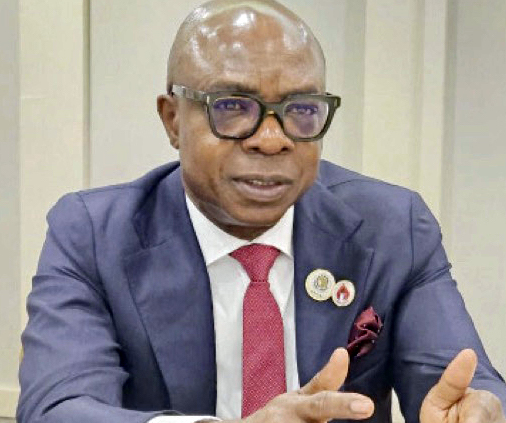
The call was amplified by the Chairman of the Petroleum Technology Association of Nigeria (PETAN), Wole Ogunsanya, on the sidelines of the Offshore Technology Conference held earlier in May in Houston.
According to him, the sector is in an emergency phase that demands urgent, targeted policy action.
He stressed that scaling production from the current 1.5 million barrels per day would require massive investment in infrastructure and equipment, particularly in the gas segment, adding that tax incentives would unlock fresh capital, speed up asset deployment, and strengthen Nigeria’s production capacity.
In this interview, Ogunsanya, maintained that while the agriculture and pharmaceutical sectors have benefitted from such waivers, the hen that lays the golden eggs which is the oil and gas industry must not be left behind.
He equally said Africa must urgently strengthen regional collaboration and local capacity development to secure its energy future amid shifting global economic and geopolitical realities.
Ogunsanya, who is also the Chief Executive Officer of Geoplex Drillteq Limited, highlighted the challenges faced by Nigerian and African participants at this year’s conference, particularly difficulties in securing United States visas, which he said significantly affected participation and exhibition activities.
He also spoke extensively on Africa’s energy security ambitions, the importance of regional cooperation, the growth of indigenous oil and gas capacity in Nigeria, and the increasing participation of PETAN member companies in major upstream projects.
Overview of OTC 2026 and future expectations
OTC 2026 was quite a watershed. We all know the challenges associated with travelling to the United States, and that greatly affected the number of our members and other Nigerian companies that could have attended this year’s conference to do what we normally do annually which is exhibit, showcase Nigeria’s capacity and engage technology owners, equipment manufacturers and investors.
We were significantly handicapped this year because of the challenges in procuring American visas. In fact, if you compare this year with previous editions, not just for Nigeria, you would notice that the exhibition halls were less crowded. The spaces between booths were wider and some sections were even covered off. In my estimation, attendance was barely half of what we recorded last year.
This challenge was not peculiar to Nigeria. It affected participants from many countries. Unfortunately, OTC, which remains the premier oil and gas conference globally, was seriously impacted by this situation in the United States.
However, we are pleased that PETAN and the Nigerian delegation still made the event interactive and engaging. From my perspective, there were more visitors around the Nigerian section during the last three days. We also appreciate Nigerians resident in the United States who turned out in large numbers to support us and ensure that the event remained successful despite the constraints we faced.
The theme
At PETAN, we spend a lot of time looking strategically at the future of the industry and trying to anticipate developments over the next five to ten years. So the theme for 2026 OTC: “Africa’s Energy Transformation: Scaling Investment, Technology, and Local Capacity for Sustainable Growth,” was carefully selected after extensive deliberation.
The reality today is that the world is changing rapidly and becoming increasingly regional in terms of economics, energy sourcing, requirements and distribution.
If you look at the United States, for instance, the country deliberately invested heavily in shale gas exploration and production years ago following the Middle East conflicts and the Iraq wars. America realised it needed energy security and opened up opportunities and technologies to harness shale gas resources.
Likewise, countries such as Brazil and Canada are focusing on securing their energy future. Europe is aggressively pursuing renewable energy for sustainability, while China is investing massively in renewable technology, batteries and electric vehicles.
For Africa, the implication is very clear. We must also prepare ourselves for energy security. Africa needs to understand that its future energy security will come largely from the natural resources that the continent already possesses.
While Africa may not yet dominate battery vehicle technology, we have abundant oil and gas resources. Oil and gas will remain relevant for decades because petrochemicals are still essential even for renewable technologies. The interiors of electric vehicles, for example, are made from petrochemical products. So it is impossible to completely separate renewables from oil and gas.
The key message is that Africa must collaborate more closely. We need stronger networking among African countries to guarantee energy security on the continent. Africa possesses more than 10 per cent of the world’s oil and gas reserves, with over 128 billion barrels of oil beneath African soil and enormous gas reserves spread across countries such as Nigeria, Algeria, Libya, Mozambique and Senegal.
The challenge is how to harness these resources effectively.
Energy poverty remains one of Africa’s greatest problems. People with access to energy can preserve food, process agricultural produce, store medicines and generally enjoy a better quality of life. There is a direct correlation between energy consumption per capita and life expectancy. Countries that consume more energy generally record longer life expectancy, while Africa still struggles with low energy consumption and shorter lifespans.
That is why Africa must not be left behind. One of the ways to avoid that is through collaboration and knowledge sharing, which is why PETAN championed the establishment of the African Local Content Roundtable and similar initiatives.
We are also pleased about the planned launch of the African Energy Bank in July 2026. However, beyond financing, the major issue is who will execute the work. Africa cannot continue outsourcing all aspects of energy development to expatriates. We have a population of over one billion people and we must create jobs for Africans.
This explains why PETAN continues to champion local content development. Nigeria’s local content policies, especially the Nigerian Oil and Gas Industry Content Development Act of 2010, have significantly strengthened indigenous capacity.
Today, Nigeria’s oil and gas service capacity is arguably five times greater than that of many other African countries combined. As a result, we have a responsibility to support other African nations.
Multinational companies have operated in Nigeria for more than 70 years and Nigerian engineers have learnt extensively from them. Companies such as Renaissance and several PETAN member firms emerged from that experience.
Other News
What took Nigeria 70 years to achieve can now be replicated much faster across Africa through collaboration. Instead of waiting decades, African countries can leverage Nigerian expertise to transfer knowledge within 10 to 15 years.
Indigenous companies participation in oil, gas projects
We all know it has been difficult over the years for new Final Investment Decisions (FIDs) to come on stream in Nigeria, but within the last two years we have started seeing several major projects advancing.
PETAN established a Business Strategy Committee specifically to monitor these opportunities and assess the level of participation by PETAN members in major projects.
We are encouraging all indigenous companies to actively bid for available contracts. While the committee is still compiling comprehensive statistics, I can confidently say that our members are already at the forefront of several key projects.
For instance, in the Bonga project, one of our members is involved in designing parts of the offshore infrastructure. In the Ubeta project, several PETAN members are participating and even the drilling rigs for some of the gas wells belong to PETAN member companies.
What this demonstrates is that Nigerian companies now possess the required capacity to compete globally. We can deliver services at the same standard as international firms and often at lower costs.
In fact, many of our members charge less for services in Nigeria than they would in countries such as Angola because operational costs are lower locally. At the same time, working in Nigeria allows us to employ more Nigerians and retain more value within the economy.
PETAN members are also participating in projects linked to Chevron, ExxonMobil and other operators. Across deepwater, swamp and onshore operations, our companies are actively competing and winning contracts based on merit and technical competence.
Our target is clear. Since PETAN accounts for a substantial proportion of Nigeria’s local oil and gas capacity, we want indigenous companies to secure at least 25 to 30 per cent of the total value of major industry projects.
Importantly, we are not asking for favours. Our members are competing through established tendering processes, demonstrating technical capabilities and meeting industry standards.
Need for import duty waivers
That is a very important issue. Every government identifies strategic sectors that require special attention. In some cases, governments even declare emergency measures in sectors considered critical to national development.
In Nigeria, sectors such as agriculture and healthcare already benefit from import duty waivers and incentives because the government understands the broader economic benefits involved.
The same approach should apply to critical oil and gas equipment. Some of our members have appealed to the government to grant import duty relief on specialised equipment needed for operations.
The argument is straightforward. While the government may lose some revenue from duties in the short term, the long-term economic benefits are much greater because increased oil and gas activities generate jobs, investments and higher national revenue.
I am aware that discussions are ongoing within government circles on how to improve the ease of doing business for the sector, particularly with respect to customs processes and equipment clearance. These are important reforms that can significantly reduce project costs and improve operational efficiency for indigenous companies.
The Special Adviser to the President on Energy on Oil and Gas), Mrs. Olu Verheijen, has been paying attention to the sector and several projects are ongoing, especially in the gas sector. There is room for import duty exemptions, particularly considering the urgency in the industry.
Nigeria is currently producing around 1.5 million barrels per day. If you remove condensates, production is between 1.4 million barrels per day. Meanwhile, the government’s target is to reach three million barrels per day by 2030, and even by next year we are expected to hit two million barrels per day.
This situation should be treated as an emergency. The equipment we are importing represents only a fraction of the production value that will eventually come from it.
For instance, if I purchase equipment worth one million dollars and I am required to pay 20 per cent import duty, that amounts to $200,000 dollars. That same amount could instead help me acquire additional equipment from the Original Equipment Manufacturer (OEM). I could tell the OEM I have one million dollars, give me three units of equipment and I will pay the balance later.
That duty relief would help expand equipment capacity within the country.
We are going to engage with the relevant government agencies and the Office of the Special Adviser to explore the possibility of obtaining relief on duties for genuine oil and gas equipment being imported to add value to production.
If an operator confirms that certain equipment is needed for projects such as Bonga North or other developments, and NNPC Limited verifies that the equipment will support additional oil or gas production, there should be a framework that allows such imports to enjoy concessions.
For example, if a company says the equipment will help produce an additional 100 million standard cubic feet of gas, there should be room for the government to support that effort.
Apart from duty relief, there should also be a special clearance process at the ports to avoid unnecessary delays in delivery.
However, speaking from the experience of PETAN members, we are not currently experiencing as much delay as before. I can say that, in many cases, equipment clearance has been completed within one or two weeks.
I believe the Nigeria Customs Service is aware of the importance of these projects and has been relatively supportive from PETAN’s point of view.
But for me, the key issue remains tax relief. The government should treat this in the same way it supports other strategic industries where there is urgency and national importance attached to bringing equipment and assets into the country.