Follow Us on Google
From Fred Ezeh, Abuja
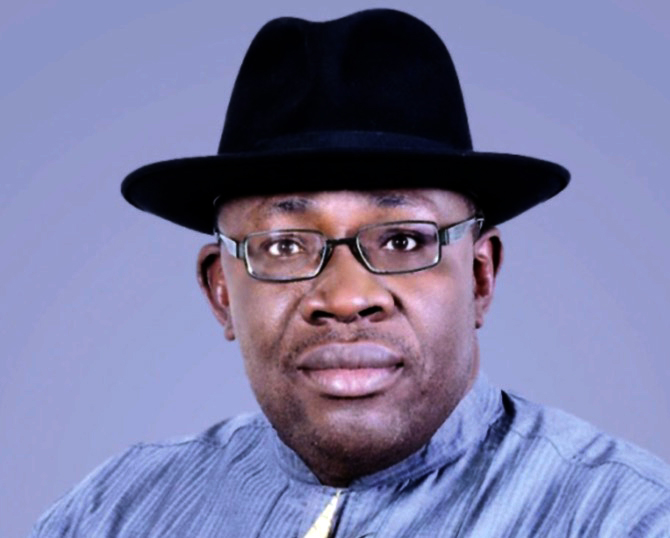
Senator Henry Seriake Dickson, former Governor of Bayelsa State and National Leader of the New Democratic Congress, has issued a blunt warning to Nigeria’s political establishment, accusing sections of the ruling class of what he calls class suicide through their refusal to commit to free, fair and credible elections. In a wide ranging conversation on Arise Television, Dickson addressed the 2027 elections, the party’s presidential ticket, internal democracy within the NDC, the recent security incident involving presidential candidate Peter Obi in Benue State, the party’s ongoing disputes with the Independent National Electoral Commission, and his recent Leadership Politician of the Year award.
Dickson did not mince words on any of these fronts. He accused elements within Nigeria’s political class of manipulating elections through soldiers, police, money and compromised officials, and warned that the country risks drifting toward a one party state unless political actors recommit to genuine multi-party democracy. He was equally forthright on the Benue incident, rejecting any suggestion that a distinction between a humanitarian visit and a political campaign should excuse a failure to protect a presidential candidate, and calling for a full investigation into the conduct of state security officials.
What is your reaction to the recent incident in Benue involving Peter Obi?
I was concerned when I first heard about it. The Commissioner of Police in the state has a duty to inform the governor, security details and other relevant authorities whenever a high profile visitor is coming into the state. Once the Commissioner of Police is notified, it becomes the responsibility of the state security apparatus to make the necessary arrangements. Peter Obi will be campaigning everywhere as our candidate. Governor Hyacinth Alia is my friend. I tried to reach him to say this is not how we should conduct politics. I will also be going there to campaign, and we will ensure that the governor is properly notified.
Obi said he was going to Benue for a humanitarian visit, rather than a political campaign. Does that distinction matter?
No. There is no need for that distinction. Even if Peter Obi were going to see a friend, attend a wedding or a burial, his security is a matter of state interest. Every Nigerian has freedom of movement under our Constitution. Where there is reasonable cause for increased protection, it is the duty of the security agencies and the governor, as chief security officer of the state, to take proactive measures. More so when the person is a presidential candidate and a high profile political figure. Humanitarian or political, that distinction should not be used as an excuse.
Some people have been arrested. What further action do you expect?
It is good that the Commissioner of Police has made arrests. But beyond that, we need a detailed investigation and prosecution. We also need to establish the extent of complicity of anybody in an official position, if the allegations are true. The Inspector General of Police, the Attorney General of the Federation and ultimately the President need to ensure that this matter is properly handled. We cannot allow young, angry and misguided people to see this as a precedent and conclude that if they mobilise thugs, carry machetes, guns or sticks, they can prevent opposition politicians from entering their communities. That could complicate the national security situation even before the election.
Are you worried that political intolerance could affect the 2027 elections?
Absolutely. The political mood has changed, unfortunately. When I was governor of Bayelsa, I hosted APC governors who came into the state for primaries to select candidates against me and my preferred candidates. Sometimes they requested accommodation and we provided it. I even allowed Timipre Sylva into Government House at a time when we were not on speaking terms. You must distinguish between your personal partisan interests and your public duties. That is the standard we should return to.
You have criticised the quality of leadership and what you call sycophancy. What worries you?
We should be concerned about standards, quality of leadership and values. There is also a pervading climate of sycophancy. Some people do things simply because they want to belong. They switch from one party to another, and what they say in the morning is different from what they say in the afternoon. People like us try to do what we believe is right and fair. We may be wrong because we are human, but we must have principles.
You have also changed parties.
Yes, I moved from the AD to the PDP, but I stayed in the PDP and fought for it to survive. As I have always said, my party left me.
You recently received the Leadership Politician of the Year 2026 award. What does it mean to you?
It is humbling. I am not somebody who goes after awards. I thank the leadership of Leadership Newspaper and everybody who took that decision. I believe the award should really be dedicated to Nigerians whose democracy we are fighting for, and to the members and leaders who trusted the vision of the NDC. We took a difficult road. We started a party during an election year, faced challenges with registration, went to court and eventually secured registration. We then conducted membership registration digitally and went through the requirements of the Electoral Act.
Other News
How prepared is the NDC for the 2027 elections?
We have been building our structures. It is not perfect, and I will be the first to admit that. We did not have enough time to test all our structures and systems because this party was built under enormous pressure. But we have two of the most charismatic politicians of their generation as our presidential candidate and running mate. We believe the ticket is strong, balanced and appealing to Nigerians. We also have candidates for every elective office across the country. That speaks to the work that has been done.
Your party has had disagreements with INEC over its logo. What is the situation now?
The Federal High Court gave judgment in our favour. INEC had removed our approved two finger salute logo after displaying it for about a month. Our National Executive Committee had adopted the logo in accordance with our constitution. We disagreed with INEC but did not resort to self help. We went to court. The certified true copy of the judgment has now been served on INEC, directing it to recognise our digital two finger salute logo. We expect INEC to upload it.
There have also been complaints about candidates’ names submitted to INEC.
There are issues in Anambra and a few other places, but they are being addressed. The electronic submission process has become more complicated. The party has the legal power to determine its candidates. INEC can observe primaries and keep records, but the ultimate responsibility to nominate candidates belongs to political parties. However, we are working well with INEC. Professor Joash Amupitan and his team need support. This is a huge logistical exercise, and nobody should expect one hundred per cent perfection.
How did the NDC manage its primaries within such a short period?
We did not have enough time. The mandatory direct primaries would have created chaos, because direct primaries are almost another general election. Because of our limited time, we relied on stakeholders in the states, notably chairmen, leaders, former governors, former ministers and others, to manage the process. I have told our candidates not to behave as if they defeated anybody. They were favoured by a process, and they should reach out to everybody. That is how internal democracy should work.
What are your expectations from INEC and the security agencies in 2027?
We expect INEC, the security agencies and the leadership of Nigeria to commit to democratic ideals and credible elections. Every vote will be fought for. Every vote will be contested. Ghana is doing it. Governments change through elections. Nigeria should also use democracy to uplift the country, not reduce it to a predetermined outcome. There are politicians whose entire careers have involved manipulation, using soldiers, police, money and sometimes INEC officials to write results and force people out. In Bayelsa, I have confronted such situations. We must stop it. The Nigerian political class is committing class suicide by refusing to commit to free, fair and credible elections and by failing to respect the independence of the judiciary.
You have said Nigeria must not become a one party state. Why?
We do not want Nigeria to become a one party state. Nigeria’s future lies in a multi party democracy. That is why we are fighting to broaden the democratic space. We want Nigerians to understand that democracy must not be controlled by money bags and billionaires using government resources. We are discussing a system where ordinary Nigerians can contribute small amounts, such as one thousand or two thousand naira, to support their party. Democracy should belong to the people.
Peter Obi and Rabiu Kwankwaso bring the Obidient and Kwankwasiyya movements into the NDC. How will you manage their different political identities?
I am not Obidient or Kwankwasiyya. I am NDC. Peter Obi and Rabiu Kwankwaso are our presidential candidate and running mate. They are not running as independents. Their supporters have their identities and are entitled to them, but the candidates are running on the NDC platform. We have decided our candidature. The next strategic battle is to win the election.
What about the G-100 and efforts to build a wider opposition coalition?
We are aware of what they are doing and, in principle, support the effort. We remain committed to working with everybody. But we are going into the election as NDC. We believe we have the strongest, most vibrant and balanced ticket. If other parties and candidates support us, that is welcome. Ultimately, our objective is to win the 2027 election for the Nigerian people.