Follow Us on Google

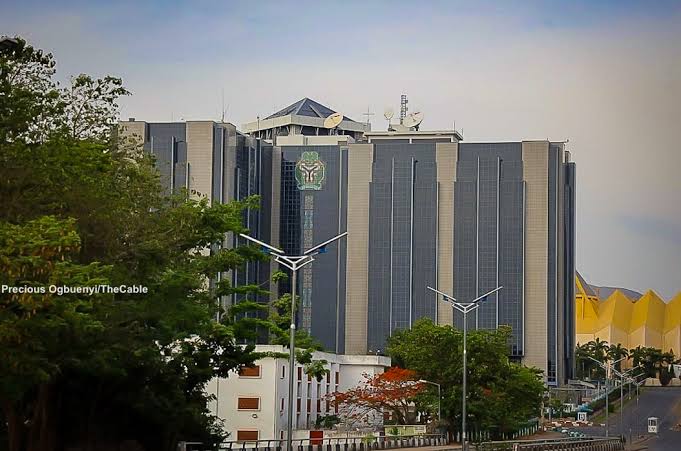
The expectation that the recent slash in interest rates by the Central Bank of Nigeria (CBN) will result in a corresponding reduction in prime lending rates has been dashed. Consequently, commercial banks in the country have raised average prime lending rates for top borrowers and other key sectors, including manufacturing and agricultural sectors, among others critical sectors that drive the Nigerian economy. For emphasis, prime lending rate is the benchmark interest rate that commercial banks charge their most creditworthy and lowest-risk corporate customers.
The CBN’s quarterly interest rates report for October showed that average prime lending rates charged by commercial banks in about eight sectors rose substantially. Besides manufacturing and agricultural sectors, others are education, health and forestry. Data from commercial banks’ lending rates profile indicate that the banks have defied expectations by raising their prime lending rates to between 30 per cent and 35.5 per cent. If this is not revised, it will stifle production and make borrowing unsustainable. It will also hamper industrialisation.
We recall that the CBN had in September delivered one of the biggest lending rate adjustments in years when it cut the benchmark interest rate to 23 per cent from its previous 26.5 per cent. This represents a massive 350 basis points reduction in lending rate. The decision at the 307th meeting of the Monetary Policy Committee (MPC) came against the backdrop of sustained inflation moderation and improved foreign exchange. The CBN Governor Olayemi Cardoso explained that the slash in interest rate was taken after a careful examination of trends in the global and domestic economic environments, and an evaluation of emerging risks in global market and their potential for monetary policy decisions.
It was anticipated that this would make lending to top creditworthy customers easier and act as a confidence boost for investors who have, in recent years, been on edge due to high borrowing costs. Data from the Nigerian Stock Exchange showed that foreign investors pulled N913.61 billion from NGX in nine months (January-September) 2026. A few months ago, Africa’s richest man Aliko Dangote, lamented that high interest rates charged by commercial banks, especially for top borrowers, was undermining development of the country in all sectors.
Other News
Ideally, prime lending rates that will accelerate development should not be above 15 per cent. Prime lending rate in Nigeria is the highest among other African countries. It is 7.19 per cent in Botswana (as of August 2026), Mauritius 9 per cent, Namibia 10 per cent, Kenya 14.4 per cent, Liberia 12.11 per cent, Angola 13.6 per cent, and Egypt 20.2 per cent (as of September 2026). Statistics from the Manufacturers’ Association of Nigeria (MAN) showed that manufacturers faced a 53 per cent increase in the average cost banks’ credit between 2020 and 2025.
This underscores the growing financial pressure on businesses seeking funds for production and expansion. The data also showed that Nigerian manufacturers paid an average prime lending rate of 32.2 per cent on borrowed funds in 2025 compared with 21 per cent in 2020. The difference represents 11.2 per cent in the 5-year period. Altogether, borrowing costs for top corporate customers, including some Small and Medium Enterprises (SMEs) remain substantially high in the last six years.
This highlights the long-term rise in the cost of financing production in the country. There is little improvement despite recent interest rates cut by the apex bank. It is necessary that the CBN should enjoin commercial banks to slash lending rates for top borrowers in the overall best interest of the economy. We agree with the organised private sector (OPS) that lending rate above 30 per cent can alter the economics of new investment in industry expansion and other production lines and equipment upgrade. The high lending rate, especially to big businesses, is already repelling foreign investors.
The high lending rates are telling on manufacturers’ output. According to the latest CBN quarterly report published in February, 2026, manufacturers in the country sharply reduced their exposure to bank loans in the first nine months of 2026, cutting total credit from banks by N1.44 trillion amid tight monetary policy measures by the CBN. The apex bank’s data on commercial banks’ sectoral distribution of credit showed that lending to the manufacturing sector stood at N8.53 trillion as of December 2024, leaving outstanding credit at N7 trillion by September 2025. The figures for 2026 may show a worst case scenario. In all, the elevated cost of interest rate will significantly constrain the operating business environment if the CBN fails to rein in the banks to drastically cut the benchmark lending rates.