Follow Us on Google
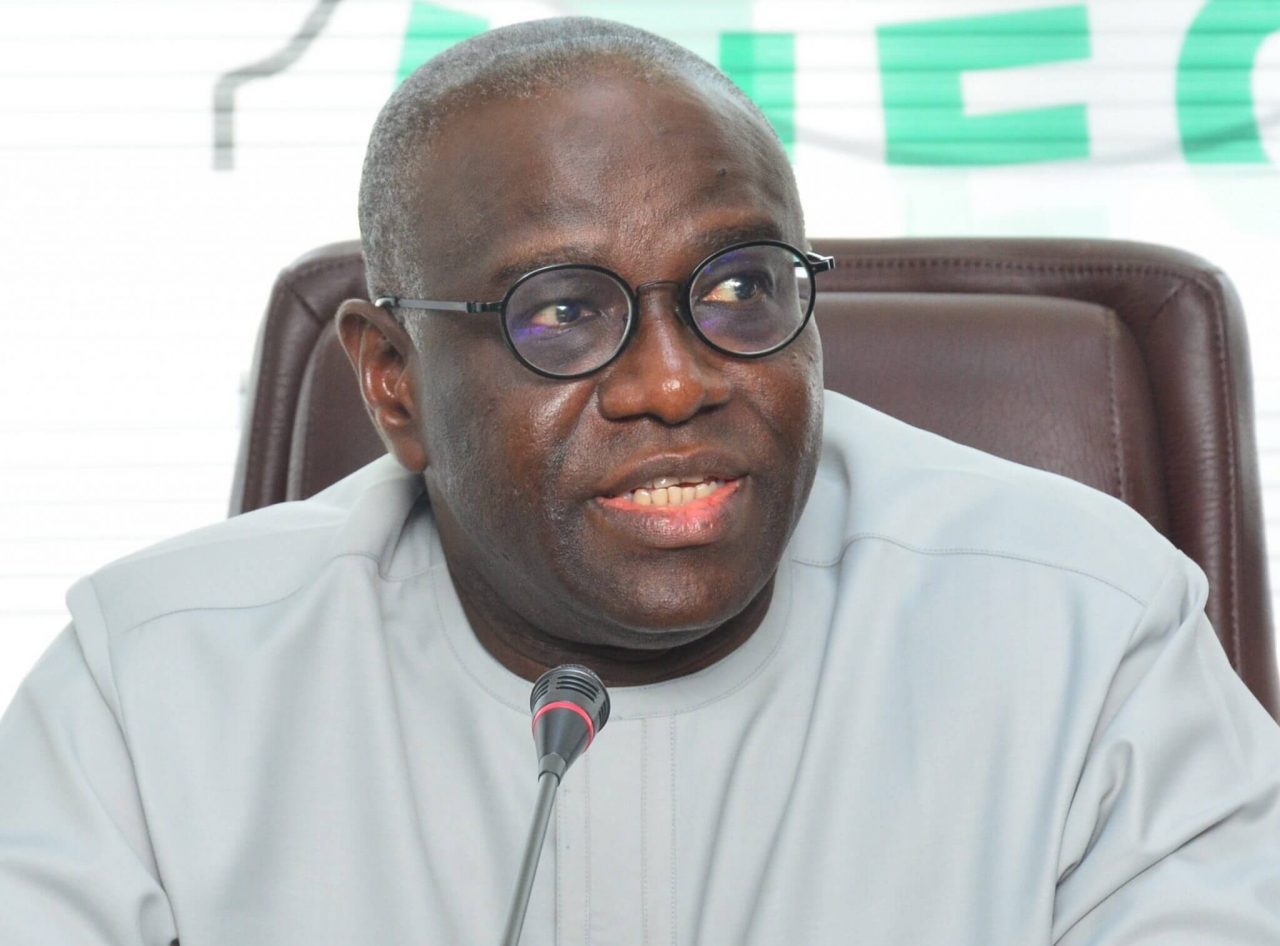
Ibeanu faults use of AI in election results management without clear framework, demands transparency
__________________________________________________________________
From Juliana Taiwo-Obalonye, Abuja
A former National Commissioner of the Independent National Electoral Commission (INEC), Prof Okechukwu Ibeanu, has warned that the commission risks undermining public confidence in the 2027 general elections by deploying artificial intelligence in results management before establishing a clear regulatory framework.
Ibeanu said INEC should first put in place rules governing the acquisition, deployment and oversight of artificial intelligence before applying the technology to sensitive aspects of election administration.
He expressed concern that the commission was already deploying AI in its electronic results management process while still developing the framework meant to guide its use.
Ibeanu, speaking at a plenary session on “Governing AI in Nigeria’s 2027 Elections: Safeguards, Accountability and Elections Integrity”, at the AI and Democracy Forum, organised by Yiaga Africa in partnership with the Independent National Electoral Commission (INEC), Microsoft, TikTok, the Centre for Journalism Innovation and Development (CJID), Dataphyte, the MacArthur Foundation, the International Foundation for Electoral Systems (IFES), the German Agency for International Cooperation (GIZ) and other partners, said the commission needed to address fundamental questions about transparency, accountability and public oversight before expanding its use of the technology.
According to him, the powers of INEC to regulate the electoral process make it possible for the commission to introduce guidelines on AI ahead of the 2027 elections, contrary to suggestions that there might be insufficient time.
“I don’t agree that it is late. It is possible for INEC to make a set of regulations, however preliminary they may be, to make sure that some of these things are brought under control,” he said.
The former commissioner said Section 151 of the Electoral Act empowered INEC to make regulations, guidelines and manuals for the administration of the law, while Section 160 of the Constitution provided for the commission’s autonomy in regulating its internal affairs.
He disclosed that INEC had developed a two-year roadmap for AI adoption and that governance was already identified as a key component of the plan.
Ibeanu, who said he was involved in the creation of the commission’s AI division in 2025, urged the current leadership to implement the roadmap and communicate its plans more clearly to Nigerians.
“One of the main issues in that roadmap was the whole question of governance of AI. And one of the things that INEC itself said it was going to do was to create a committee that will oversee this,” he said, adding that the committee included civil society representation.
He called on the commission to explain how AI would be used in election administration, the rules governing its deployment and the mechanisms available to independently verify its operations.
Ibeanu expressed particular concern over the use of AI in processing election results, an area he described as one of the most sensitive aspects of electoral administration.
He referred to the electronic EC8A results form, which, according to him, was designed to use AI to extract figures from physical EC8A result sheets.
Ibeanu said the public needed clarity on how the electronic form would operate alongside the physical results sheet, what would happen if discrepancies emerged and the legal basis for the electronic process.
“It is not even clear exactly how this is going to work. If there are contradictions, for example, between the EC8A and the electronic EC8A, what will happen?” he asked.
He also questioned the processes through which extracted figures would be transmitted, verified and managed, insisting that the commission should explain the system’s back-end operations.
The former commissioner warned against introducing technology into a high-risk area of election management without first establishing the safeguards needed to protect electoral integrity.
“The danger is to find external suppliers and hand over these things to them. And that will be very, very risky for managing elections,” he said.
Ibeanu urged INEC to strengthen its internal technical capacity and ensure that its procurement and deployment of AI were guided by clearly defined institutional rules.
He also called for regulations governing political parties’ use of AI during campaigns, including requirements for labelling AI-generated campaign materials and sanctions for non-compliance.
He warned that the 2027 elections could witness what he described as an “algorithmic war”, as political actors increasingly turn to technology to collect, analyse and interpret election results independently.
Also speaking, the Director of Programmes at Yiaga Africa, Cynthia Mbamalu, called for the immediate publication of INEC’s AI governance framework to enable stakeholders to examine the proposed safeguards and contribute to the process.
Mbamalu said Nigerians needed to understand how results would be captured, transmitted, verified and collated, particularly with the planned use of the electronic EC8A form.
She said the commission should publish a comprehensive results management protocol explaining the process from polling units to the final collation stage.
According to her, the protocol should identify who would verify results, the criteria for flagging anomalies and the procedures for resolving discrepancies.
“We want from INEC a protocol on results management that clearly states the process from the polling units,” she said.
She added that the commission should disclose what happens behind the scenes when results are processed and explain the roles of the personnel responsible for verification.
Mbamalu also called for independent audits of INEC’s systems by civil society organisations, political parties, the media and other qualified stakeholders before the elections.
Other News
She said the commission’s planned stress tests should go beyond voter accreditation to include the uploading and transmission of election results.
The Yiaga Africa director cited concerns over cyber threats to electoral infrastructure, noting that Nigeria’s electoral systems had previously been identified among potential targets of cyberattacks.
She urged the government to prioritise election security in any national AI governance legislation, while ensuring that regulation did not become a tool for restricting freedom of expression, suppressing dissent or stifling innovation.
Mbamalu said technology companies should also be involved in efforts to protect electoral integrity, particularly in addressing AI-generated misinformation and other threats beyond INEC’s direct control.
Chief AI Adviser at the International Foundation for Electoral Systems (IFES), Lisa Poggiali, said effective AI governance required collaboration between election administrators, technology experts and those with experience in public policy and institutional oversight.
She noted that, although there was broad agreement on principles such as transparency, inclusion, accessibility, integrity and respect for human rights, the challenge was translating them into practical decisions on technology procurement and deployment.
Poggiali warned that vendors could make claims about the reliability and accuracy of their AI systems that election administrators might struggle to independently assess.
She called for transparency in procurement, independent audits of AI models and clearly documented procedures for handling anomalies detected by automated systems.
According to her, election officials must retain human oversight over decisions generated by AI, with identifiable personnel responsible for reviewing anomalies and documenting the actions taken.
She also cautioned against assuming that every AI model would produce identical results, explaining that differences in training data and algorithms could lead to different interpretations of the same information.
Poggiali said the public should be able to understand how models were developed, what data informed their outputs and how decisions were reached.
She further urged election management bodies to work collectively through regional platforms to demand stronger commitments from technology companies, rather than approaching them individually.
“AI is not something that we should be trying to deploy in every single aspect of the election,” she said, stressing that election administrators should first identify the problem they wanted to solve and determine whether AI was the appropriate solution.
She added that some technologically advanced election management bodies had chosen not to use AI in certain areas because of concerns about public trust.
Another panellist, Sami Suleiman of Paradigm Initiative, highlighted the risks posed by AI-generated disinformation, manipulated election results, deepfakes and gaps in social media content moderation.
He warned that the circulation of old videos of attacks presented as current incidents could frighten voters and discourage them from turning out to vote.
Suleiman also identified the dismissal of genuine evidence as AI-generated, inadequate moderation of African languages and arbitrary enforcement of regulations as emerging threats to electoral integrity.
He advocated a risk-based, human-centred approach to AI governance, including independent electoral oversight, rapid-response mechanisms, independent audits, enforcement procedures and avenues for appeal.
He said many AI systems deployed in Africa were developed using data that might not adequately represent local populations, raising concerns about potential discrimination and unreliable outcomes.
The debate also revisited concerns over the delayed electronic transmission of results during the 2023 general elections, when Nigerians waited for extended periods for updates from INEC’s results viewing portal.
Responding to questions about delays in uploading results, Ibeanu said the commission needed to communicate promptly with the public whenever technical problems or other circumstances disrupted the process.
He explained that delays could arise from several factors, including difficult terrain, transportation challenges and the time required to bring physical result sheets from remote polling units to collation centres.
However, he stressed that such explanations should not diminish the importance of timely information and transparency.
“The underlying point is that at every point in the process, information to the public will be key, and that is what transparency is about,” he said.
He added that transparency should begin before election day, with the commission providing information about the technologies it intends to deploy and how they will operate.
Mbamalu similarly urged political parties to engage INEC on the technical and administrative aspects of the election, rather than waiting until problems emerged.
She said the commission should ensure that results delayed by network connectivity problems were uploaded once connectivity became available.
Participants at the session also asked INEC to disclose the identities of the developers of its AI systems, the processes used to train the algorithms and the measures in place to verify their reliability.
The panellists said such disclosures would help address public suspicion about the use of AI to manipulate election outcomes.
The discussion formed part of the AI and Democracy Forum, which brought together electoral officials, technology experts, civil society organisations, journalists and other stakeholders to examine how artificial intelligence could affect Nigeria’s 2027 elections.