Follow Us on Google

From Stanley Uzoaru, Owerri
The Igbo Presidency Project (IPP) is intensifying its campaign for a president of Igbo extraction in the 2027 general elections, framing the push as a national call for fairness, balance, and reconciliation, rather than ethnic entitlement.
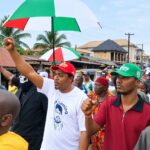
National Coordinator of the IPP, Chinedu Nsofor, speaking to journalists in Owerri, the Imo State capital, said the group plans to mobilise 10 volunteers per polling unit nationwide to canvass support ahead of 2027. He argued that backing an Igbo president would help redress what he described as “longstanding imbalance and marginalisation of the Southeast region”.
The group anchored its case in Nigeria’s political history, pointing to what it referred to as repeated Igbo sacrifices for national unity. “In 1957, when Britain offered self-government to Nigeria’s regions on condition that two of the three accept, Dr. Nnamdi Azikiwe, leader of the Eastern Region, declined to form a coalition with the West that would have left the North behind. Azikiwe’s choice preserved a united Nigeria at a pivotal moment”.
“After the 1959 elections, Azikiwe again chose national accommodation over personal ambition. Offered a path to become Prime Minister through an alliance with the Action Group, he, instead, entered a coalition with the Northern People’s Congress that left him in the largely ceremonial role of President.
Nsofor noted that despite these sacrifices, the Igbo endured severe hardship following the mid-1960s crises and civil war. “Many returned after the war to find careers disrupted, properties seized under the abandoned properties policy, and bank accounts reduced to £20 (twenty pounds) compensation, regardless of previous savings.
Other News
Beyond politics, the IPP highlighted Igbo contributions to Nigeria’s economy. From commerce and entrepreneurship to education and professional service, it said Igbo communities have built markets, industries, and institutions across the country.
“Their presence in virtually every Nigerian city reflects a culture of enterprise and national integration,” the group stated.
Nsofor said the Igbo Presidency Project is “fundamentally about correcting that imbalance.” He said it seeks to deepen national unity by ensuring every major component of the federation “feels a genuine sense of belonging at the highest level of governance”. The group maintained that the campaign would be pursued through “peaceful, constitutional, and democratic means”.
It contended that a South East presidency would not be merely symbolic, adding that the region offers administrative experience, entrepreneurial energy, and intellectual capital relevant to Nigeria’s challenges, including economic instability, infrastructure deficits, insecurity, and weakened institutions.
“The realisation of the Igbo Presidency Project would represent a powerful act of national healing,” the group argued. “It would signal that Nigeria has matured enough to move beyond historical grievances and embrace genuine federal balance.”