Follow Us on Google
•Economic experts demand fiscal discipline, full execution of new budget
•Govt must tackle irregular power supply, insecurity, inflation, high cost of governance •Stakeholders want more support for manufacturers, MSMEs
From Adanna Nnamani (Abuja); Scholastica Hir (Makurdi); Merit Ibe (Lagos)
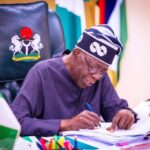
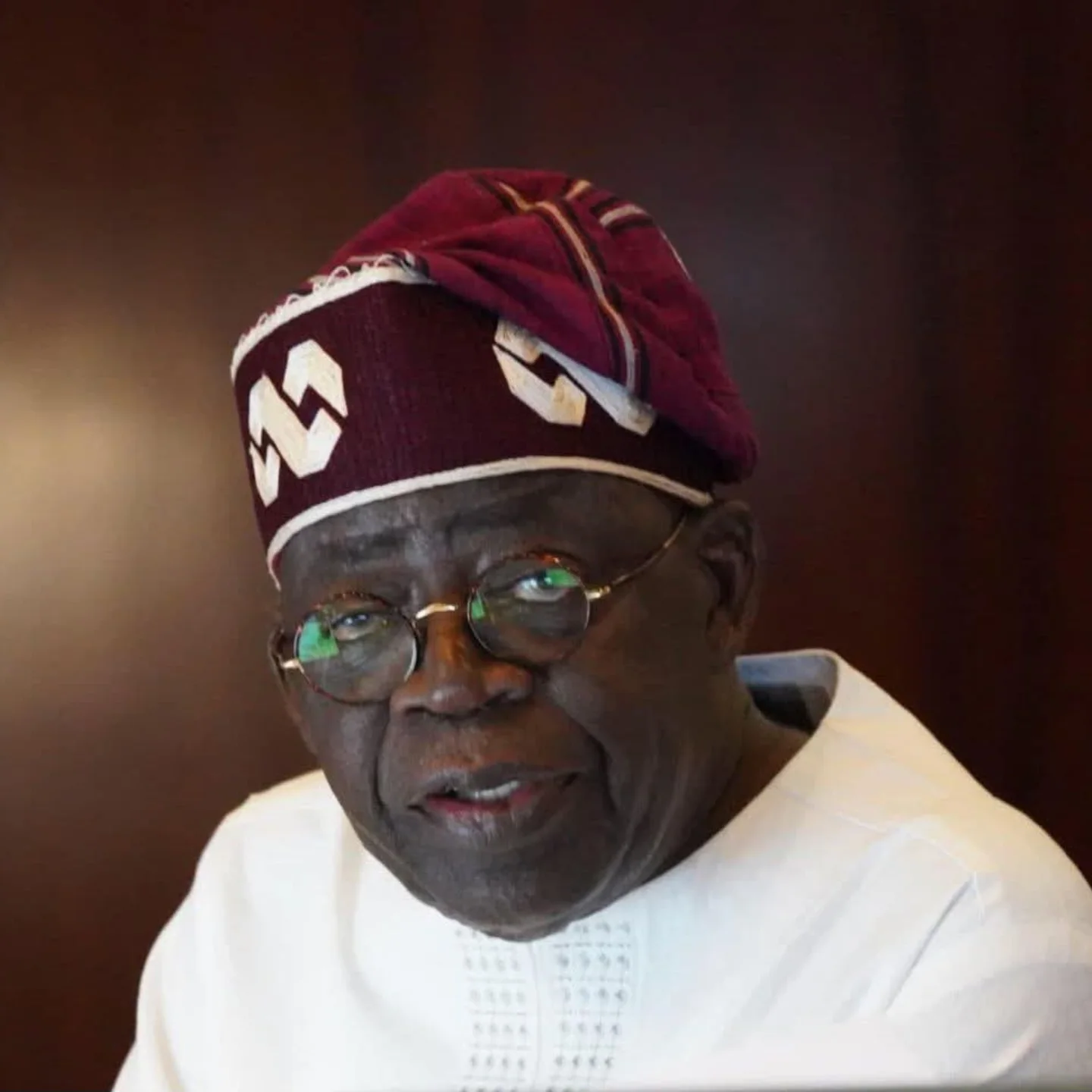
Economic experts have urged President BolaTinubu to enforce strict fiscal discipline, fix the power sector and intensify security efforts if Nigeria is to reduce inflation and ease hardship in the New Year.
They warned that without discipline in budgeting and implementation, economic plans for 2026 may fail to translate into real relief for Nigerians.
There are also strong voices for the establishment of State Police to tackle insecurity in the country as well as improvement in electricity supply among others. Nigerians are equally worried about the high cost of governance which the president ought to have cut down with the implementation of the Steve Oronsaye Report, just as they are concerned about economic policies that will guarantee the survival of small businesses, high taxes, and inconsistent policies.
Economy good on paper, but not reflected in lives of Nigerians
Former Director-General of the Abuja Chamber of Commerce and Industry (ACCI), Dr. Chijioke Ekechukwu, said fiscal discipline must be the foundation of government policy in the New Year.
According to him, once a budget is approved, the government must strictly operate within it and avoid unplanned expenditures that worsen deficits.
He said: “The first thing this government will have to do in the New Year is to have fiscal discipline. Fiscal discipline means that if you say your budget is a certain amount of money, then you have to stick to that budget and not exceed it. You do not create any other revenue or any other expenditure outside your budget. What we see now is that expenditures come from one end to another without anybody recording or monitoring the level of expenditure taking place.
“If we have a deficit, we agree that there are social sides to this deficit and that we have to borrow to cover it. However, we should not exceed the approved amount of borrowing meant to cover such deficits. And so, all that we need to achieve in the New Year is fiscal discipline.
“If you do not stick to whatever plans you have for your fiscal and monetary policies, then we are just wasting our time. “Talking about inflation, the way to monitor and control inflation is to look at all the drivers of inflation and then ensure that we take them head-on, one after the other. If it is insecurity, let us continue to fight insecurity so that people can return to their farms and produce more.
“If we are talking about high exchange rates, yes, it is stable now, but we have to do everything possible to bring the exchange rate down and still keep it stable. Many of the factors responsible for the high cost of production, high cost of existence and high cost of living include high electricity costs and high petroleum product prices. We therefore have to do everything to ensure that petroleum product prices gradually come down.
“Once these prices continue to come down, we will obviously have a lower pricing structure for all items and services. That is how to deal with the inflationary trend we are seeing.”
Ekechukwu further warned that public confidence in the economy has eroded and called on the government to restore hope through transparency, discipline and integrity in fiscal management.
Also speaking, Economic and Development Expert, Dr. Aliyu Ilias, said the government must ensure full and timely implementation of the 2026 budget, particularly capital expenditure.
He noted that while recurrent spending and debt servicing receive priority from the start of the year, capital projects are often delayed, creating inflationary pressure when rushed towards the end of the year. Ilias urged the government to protect recent gains in the foreign exchange market and increase local production to strengthen Nigeria’s balance of trade, especially with the expected impact of Dangote Refinery. He also called for stronger support for small and medium-scale businesses, noting that high energy costs remain a major threat to their survival.
On cost of living, Ilias said the government must scale up access to Compressed Natural Gas (CNG) nationwide to reduce transportation costs, which continue to keep food prices high despite claims of easing inflation.
“I think the first thing the government must do is to work on the 2026 budget and make sure that it is implemented.
“Capital expenditure should be given the same priority as recurrent spending. When capital projects are delayed and rushed between October and December, it injects excess money into the economy and fuels inflation. “Number two, the gain of the macro-economy, we must not lose it, especially at the foreign exchange. And we must try to do much more production. It is good news that Dangote will be giving us balance of trade, balance of payment, but we must also do more to actually help that.
“Then government must also look at small businesses. I think there must be much more concentration for them in the budget, whereby MSME is being encouraged, there should be loan for them to actually do business.
“The economy looks good on paper, but it has not reflected in the lives of Nigerians. Until it does, inflation reduction remains cosmetic,” he said.
Meanwhile, Executive Chairman of the Foundation for Economic Research and Training (FERT), Prof Akpan Ekpo, identified power supply as the most critical factor holding back economic growth.
Nigeria, he said, cannot grow on a generator-dependent economy. He noted that a one per cent increase in power supply could raise GDP by as much as four per cent, stressing that improved electricity would drive industrial growth and job creation.
“Power must be fixed; industries need at least 20 hours of electricity daily. This band A, B, C arrangement is not working,” Ekpo said. The economist also described insecurity as a major threat to development, warning that no economy can grow without peace and stability.
Citing World Bank data, Ekpo said about two-thirds of Nigerians are currently living in multidimensional poverty, adding that only sustained investment in power, security and human capital can reverse the trend. “If we fix power and security, and then invest in quality education and healthcare, we will begin to see real progress,” he said.
Security, state police, high cost of governance should be top priority
The President General of Mzough U Tiv (MUT) Worldwide, Chief Iorbee Ihagh, urged President Tinubu to tackle insecurity headlong. He also called for the immediate creation of a state police as well as restructuring of the country.
Iorbee, who also expressed concern that the cost of governance has remained high, said it was necessary to cut down the size of civil service, as many are being paid for doing nothing. He said: “In 2026, President Tinubu must improve security across the country
As I’ve always said, the president is doing very well in most areas except in security. “The insecurity in the country is too much. People are being killed on a daily basis, and he’s not doing much. Even herdsmen are killing, and he’s not doing much. “And he knows the people that brought them. He knows those responsible for the killings.
“So for me, the number one problem is insecurity. Like I said before America can go to war for just one single soul. “The government exists primarily for the protection of lives and property, which he is not doing. “The issue of the Fulani being sent to stay in other states, no, let them go back to their states. My own people of Benue State, we are basically farmers.
“We farm to feed Nigerians. And for the past 16 years, we have been displaced from our homes and when they were campaigning, they said as soon as they came in, they would send the herdsmen back to their places. But they have come to take over our land, established their Islamic thing. Then, later on, they will ask for Emir and they will claim that Nigeria belongs to them. That’s what they’ve been saying. “In 2026, the killing of Christians should stop and let them go back to their ancestral homes. Let him take these people back to their ancestral homes so that my Benue people will go back to their ancestral homes and continue to feed Nigerians. “I am an IDP, too. When my wife died, I couldn’t bury her where I buried my father, my mother, my brothers and sisters. And I was in pain.
“In Benue State, I’m the chairman of the three socio-cultural organisations, Mzough U Tiv, Ochetoha K’Idoma and Ominyi Igede. He should make sure that he sends the Fulani herdsmen back to their states so that our people can go back home. We’ve been living in IDP camps. And if you go to where they’re living, you see two, three-year-old kids, women of 90 years, old men of 100 years, without proper care. “I want the president to establish State Police immediately because the Nigeria Police are causing us a lot of problems. I’ve also been agitated for that because when there is a problem in the state, the state Governor is not in charge of the police, they are not under the governor. But the governor is the chief security officer of the state.
“On Steve Oransaye report, I have also been calling for restructuring, In fact when the colonial masters came, they said after 100 years we are free. Nigeria needs restructuring and Tinubu should do this in 2026. “Again, the cost of governance in Nigeria is too high. Some people are being paid for doing nothing. People receive monies they didn’t work for because the civil service is also politicised. All these should be addressed as we go into 2026.”
Manufacturers seek support, stable policies for small business owners
Economic experts and industry stakeholders have renewed calls for stronger support for micro, small and medium enterprises (MSMEs) as well as manufacturers, stressing that policy consistency and a predictable business environment are critical for sustainable growth in 2026. They noted that an improved business climate would depend on reduced taxation, better infrastructure, affordable energy, easier access to finance and stronger security nationwide. The operators argue that frequent policy reversals in recent years have heightened uncertainty, discouraged investment and increased operating costs for businesses. Stakeholders urged the government to sustain ongoing reforms while improving communication and engaging key stakeholders before introducing new policies.
Gertrude Akhimien, Chairman, National Association of Small Scale Industrialists (NASSI), Lagos chapter, called for bold and coordinated action, including the creation of a Ministerial Task Force on Manufacturing Renewal with a one-year mandate starting in 2026.
Akhimien advocated the publication of Nigeria’s first National MSMEs financing landscape to clearly outline lenders, grants and credit guarantees, making funding more accessible to manufacturers and distributors. She also proposed the development of six pilot industrial parks; one in each geopolitical zone, with ready-to-use facilities and reliable utilities for MSMEs.
Other recommendations included a unified digital one-stop portal for business permits, land access and utilities with clear timelines, as well as targeted energy relief for major manufacturing clusters such as agro-processing, plastics and textiles through government-supported solar power solutions.
Sales and marketing expert, Dapo Omojola, emphasised that policy stability and predictability matter more to businesses than frequent reforms. He described uncertainty as the biggest threat to investment and noted that affordable, reliable electricity remains the fastest way to revive manufacturing.
Omojola also called for patient, affordable capital aligned with real business cycles, arguing that many intervention funds fail to deliver impact. He added that consistent government patronage of locally made goods, alongside prompt payments, would provide more sustainable support than subsidies.
“Uncertainty is the real enemy of investment.Affordable, reliable electricity is the fastest way to revive manufacturing. Without it, margins disappear and competitiveness dies.
“MSMEs need patient, affordable capital designed around real business cycles, not intervention funds that work better in theory than in practice.When government buys local and pays on time, it supports manufacturers more effectively than subsidies ever could.”
He further highlighted the need for efficient ports and lower logistics costs, stressing that it should not be cheaper to import finished goods than to transport raw materials within Nigeria.
Similarly, Imokhai Ehimigbai of the Manufacturers Association of Nigeria Export Group (MANEG) urged the government to reduce taxes on manufactured goods and urgently address infrastructure gaps. He referenced remarks by industrialist Aliko Dangote, who noted that cement produced in Nigeria is sometimes cheaper outside the country due to lower taxes.
Ehimigbai also identified insecurity as a major constraint to manufacturing growth, warning that without improved security, investment and expansion plans would remain under threat.
Overall, stakeholders agreed that stable policies, lower operating costs, improved infrastructure and enhanced security are essential to positioning Nigeria’s MSMEs and manufacturing sector for sustainable growth in 2026.