Follow Us on Google
From Romanus Ugwu, Abuja
The All Progressives Congress (APC) may not have encountered a very serious crisis in the outgone political season, but it was actually the most visible and hyperactive among the 19 legally registered political parties in Nigeria, for both the wrong and right reasons.
The ruling party, understandably, was in the limelight throughout the political year. If it were not exercising an overwhelming influence in flaunting its status symbol as the ruling party, to defend and justify the implementation of the administration’s programmes through the presidency or managing their attendant positive and negative effects on Nigerians, then it was busy dispelling the allegations of its manipulative tendencies to desperately consolidate and retain powers beyond the 2027 presidential election. It dominated and occupied the media and socio-political spaces throughout the year 2025.
On the negative flipside, according to many pundits, in an attempt targeted at brightening the possibilities of making the 2027 presidential election a stroll in the park, there was a persistent allegation that the APC was the unseen hand behind the leadership crises destabilising almost all the opposition political parties.
For many observers, the APC’s deliberate plan to allegedly plant the seed of discord and fuel amber of disunity in the opposition parties to lure several state governors and other high political figures into the ruling party, worked out successfully and even did more to keep the party in the front burner throughout the year under review.
The domineering visibility of the APC and its government even extended to the favourable and unfavourable management of the country’s economy, which resulted in some Nigerians showering encomiums while many others gnashed their teeth.
Apparently, many Nigerians will, in retrospect, remember the activities of the APC in 2025 with mixed feelings. While some would argue that APC was an unfriendly ruling party which inflicted their lives with an unbearable pain with its economic and administrative policies and programmes, many others would describe the party as the best thing to have happened to Nigeria.
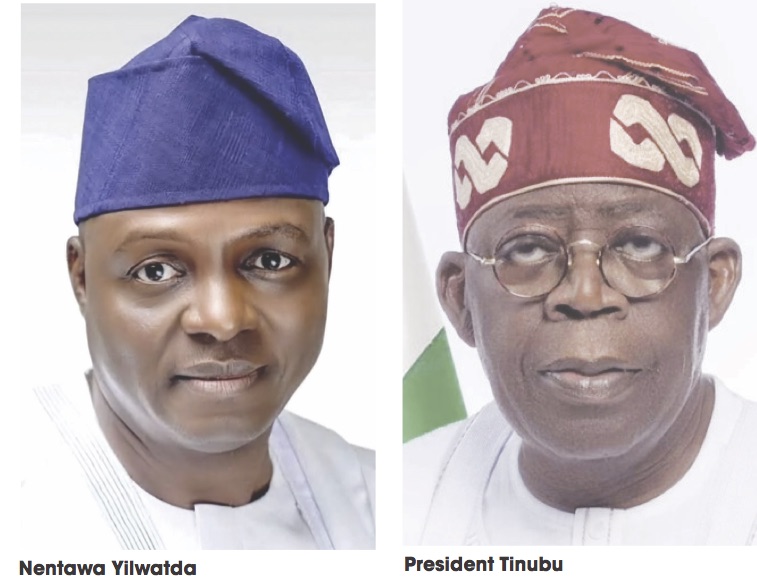
Interestingly, there were some internal rumblings in the ruling party’s fold, which even resulted in the unexpected sack of its erstwhile National Chairman, Dr Abdullahi Umar Ganduje last year. He was immediately replaced with the Deputy National Chairman, (North), Hon. Ali Bukar Dalori, who acted briefly before the incumbent, Prof Nentawe Goshwe Yilwatda, was appointed. The area no one can however discredit the APC in the year under review, was in the management of its internal leadership crisis.
In reality, the ruling party, in whichever perspective, scored a commendable and remarkable credit in managing the contending internal rifts within its fold to the point of nipping it in the bud, either through pacification, coercion, intimidation, or threats, before it could escalate to an unmanageable extent throughout the 2025 political year.
And revealing the secret behind its efforts to ensure the indivisibility of the party members, the party’s National Secretary, Senator Ajibola Basiru, hinged it on the activeness and functionality of its internal democratic structures.
Reviewing the political year in a chat with the Daily Sun, Senator Basiru said: “In 2025, the APC consolidated its status as Nigeria’s governing party. The year was marked by an orderly leadership transition from Dr. Abdullahi Ganduje who resigned due to ill-health to Prof. Nentawe Yilwatda.
“The seamless transition demonstrates the continuity of purpose, institutional and political capacity, and strengthened the confidence among party members and stakeholders nationwide,” he claimed.
The party’s chief scribe in revealing the secret for the successful outing of the ruling party last year, explained that: “Notably, the party’s internal democratic structures were active and functional throughout the year. All major organs of the APC operated as envisaged by the party’s Constitution.
“The National Caucus met twice; the National Executive Committee (NEC) was convened three times, and the National Working Committee (NWC) met consistently throughout the year. The ward, local government, state and zonal levels were not left out, as the party intensified its mobilisation of members to position the party to respond to national and political developments,” Senator Basiru added.
But, regardless of whatever impression anybody may hold about the APC, the 2025 political year was clearly a win-win situation for the ruling party in several ways.
One outstanding area in which the ruling party performed very well was in the seamless transition of leadership. For instance, only very few party members saw the exit of Dr Ganduje coming, especially after presiding over the National Caucus and NEC, the first of its kind to be held at the Aso Rock Presidential Villa.
Although the powers that be cited ill-health as the reason for his exit, the abruptness of the incident actually fuelled speculations that there was more to it. The fact that the change of guard was presented with such a facade that it was due to the pressure from influential stakeholders within the party, and the absence of dissenting voices from party members to oppose his exit confirmed that superior powers were behind his exit.
Regardless of the endorsement that Yilwatda’s appointment may have received across the party’s stakeholders, his lack of experience in holding such a high-profile political position, which seems to have been reserved for former state governors, has remained the complaint trailing it.
Yilwatda may have served as the Minister of Humanitarian for over one year, but he is certainly not in the political class and clout of former governors like Chief Bisi Akande, Chief John Odegie-Oyegun, Comrade Adams Oshiomhole, Abdullahi Adamu, and Umar Ganduje, his predecessors, who oversaw the ruling party at one point or another.
As a neophyte, his lack of grip in presiding over the party so far has equally betrayed his inexperience, resulting in observers concluding that his emergence symbolised both continuity and the recalibration of the party.
For most political watchers, Yilwatda’s firm alignment with the party’s establishment and the Tinubu presidency could be the reliable magic wand to stabilise the party and project a reform-minded image ahead of the 2027 elections.
Head or tail, the APC, so far, may have surpassed several expectations in performing overwhelmingly, much better than the opposition parties in both the off-cycle governorship and constituency by-elections across the country.
In all the by-elections and off-cycle governorship elections conducted in 2025, the APC swept 12 constituencies, leaving the opposition parties to record victories in only four constituencies, just as it won one out of the two governorship polls conducted in Edo and Anambra states in the year under review.
The ruling party did not stop there as it proved to have discovered a potential magic formula to, more importantly, attract chieftains and key political figures from the opposition parties into the ruling party.
And for the avoidance of doubt, if there was an aspect of outstanding successes the APC actually recorded in 2025, it is the gale of defections and surge of high-profile political figures into the ruling party. This certainly stood out as the most defining feature of the party’s trajectory last year.
At the last count, seven state governors, most notably Sheriff Oborevwori, Delta, Umo Eno Akwa Ibom, Douye Diri, Bayelsa, Peter Mbah, Enugu, Agbu Kefas, Taraba, Siminalayi Fubara, Rivers, and Caleb Mutfwang of Plateau, seamlessly defected to the ruling party.
And beyond their defections sending shockwaves into the spines of the opposition camp and confirming the APC as the country’s dominant political force, the feat was even more visibly hurting to the opposition at both chambers of the National Assembly, where the ruling party not only gained an overwhelming majority but also reduced the opposition legislators to an insignificant voice.
Nonetheless, apart from the myriads of reasons the defecting politicians usually adduce to justify their influx into the ruling party, pundits seem to be in tandem with the impression that greater percentage of them may have been propelled largely by either personal political ambitions or to allegedly evade anti-corruption agencies.
In fact, the defection, at the tail end of last year, had incidentally taken a dramatic turn when it was deployed as a portent instrument of warfare in Rivers State, where the governor’s defection emboldened him to deploy it as a winning strategy in the recent renewed hostility against his godfather, the Minister of the Federal Capital Territory (FCT), Nyesom Wike.
But the party’s national scribe, Basiru, noted that the defections were a result of growing acceptance of the ruling party, dismissing any alleged use of intimidation or the deployment of any instrumentality of coercion to attract new members.
He explained that, “The party embarked on vigorous and calculated initiatives to expand its membership and to reinforce its status as a pan-Nigerian party with broad national appeal. Millions of Nigerians increasingly identified with the APC as their party of choice.
“This growing acceptance was reflected in the defection of sitting governors (Delta, Akwa Ibom, Enugu, Bayelsa, Taraba, Rivers, and Plateau states), former governors, current and former ministers, members of the National and State Assemblies, who, along with them, have embraced the ideology of the APC with their supporters and political structures.
“At the end of the year, the party was in firm control of 28 states and has a commanding majority at both chambers of the National Assembly, which shows its dominance across the federation,” Senator Basiru told Daily Sun.
He equally seized the opportunity to enumerate other achievements the party recorded in the 2025 political year, explaining that the party also “had a robust working relationship with elected and appointed political office holders. With the President providing leadership and direction, the party maintained regular interactions with the Vice President, the National Assembly leadership, ministers, and heads of government agencies.
“It organised a National Summit with participants drawn from all levels of the party’s leadership and support groups. The Summit provided a platform for critical reflection and constructive engagement, acknowledging the enormous progress made so far in the execution of the party’s social contract with Nigerians, and reiterated the APC’s pledge to fulfill the key pillars of the Renewed Hope Agenda.
“Importantly, the party commenced processes for the nationwide e-registration exercise as part of its broader commitment to modernising party operations on an inclusive, verifiable membership base. The rationale behind the e-registration initiative is to establish a credible, verifiable, and technology-driven database of members nationwide, laying the foundation for transparency, data-driven planning, and deeper grassroots participation,” he explained.
However, the recent developments in the party, particularly the threatening implosion due to the rancour from certain gladiators over who should assume the party leadership position in the state, between the defected governors and founding members of the party, have confirmed that the ruling party is not infallible after all.
Only recently, the confrontation and war of words between the party’s chief scribe, Basiru, and the FCT Minister, Wike, over the status of the defected Rivers governor, Fubara, has not only established the crack in the ruling party but also proved that APC is not immune to internal crisis.
The veracity of the allegations of bribery levied against the party’s national leadership over the N600 billion largesse, and the demand for the immediate resignation of the minister, in the crossfire between Wike and Basiru recently, has been interpreted as the beginning of perhaps the downfall and crumbling of an empire called the ruling party.
The unanswered question will be how the presidency and the national leadership intend to manage the threatening situation ahead of next year’s presidential election and approach the poll seamlessly as a united family.
Coming at the time and season of endorsement of President Tinubu as the party’s preferred candidate for the 2027 presidential election, which was another defining moment for the APC in 2025, the impending implosion may certainly not only rubbish the overwhelming vote of confidence in the president but also destabilise the ruling party.
With warnings of possible implosion already coming from the party’s stakeholders, Nigerians are watching with keen interest and bated breath to see how the ruling party wriggles out of the precarious situation threatening to consume it from the beginning of the 2026 political year.