Follow Us on Google

Chinwendu Obienyi
The year 2019 witnessed the Nigerian capital market swiveling through the upstart and downside of transaction proceedings as well as activities that truncated or stretched the performance of the market.
At the close of 2019, the market recorded its second consecutive year of decline and the fifth year of negative returns in six years.
The market had seen a rally in indices with market capitalisation rising by N2.1 trillion and its All Share Index (ASI) by 13.2 per cent at the start of January 2018. However, a reversal in performance saw investors losing about N3.9 trillion in that year.
At the start of 2019, specifically, January 2, the market capitalisation which opened trading at N11.72 trillion, closed the year at N12.96 trillion, while the ASI opened at 31,430.5 points, closed at 26,842.07 points. Year-to-date returns of -14.6 per cent when compared with -17.8 per cent in 2018 is commendable and will be attributed to the unabsorbed boost from the listing of two leading telecommunication companies- MTN Nigeria Communications Plc and Airtel Africa Plc.
Based on market values, both the ASI and market capitalisation are correlated indices and without new listing or delisting, usually move simultaneously in the same direction. But the ASI is weighted, and as such adjusted for effect of new listing while the market capitalisation is a straight-line summation of share prices and issued shares. Thus, where the ASI and market capitalisation differ, the ASI is widely regarded as the true representation of the market condition as reflected in the year-to-date returns of -14.6 per cent.
The market further saw profit taking toll on the equities market in February as the 11th-hour general election delay significantly weighed on investors’ appetite for bellwethers. It was expected that upon the announcement of the winner of the 2019 Presidential elections, things would have taken a different shape, but that was not to be as the bears continued to dominate the market even after President Muhammadu Buhari was declared winner.
A look at the country’s indices indicates that there has been growth for the economy since recession exit in 2017. For example, Nigeria’s Gross Domestic Product (GDP) has continued to record some marginal growth. In the third quarter, it grew by 2.28 per cent (year-on-year), in real terms when compared to the third quarter of 2018 which recorded a growth of 1.81 per cent. The real GDP growth rate observed in the third quarter of 2019 indicate an increase of 0.47 per cent points. When juxtaposed against the 2019 second quarter return growth rate of 2.12 per cent, the Q3 2019 outcome represented an increase of 0.17 per cent points, indicating that on a quarter-on-quarter basis, real GDP grew by 9.23 per cent. Hence, the growth rate in Q3 2019 represented the second highest quarterly rate recorded since 2016.
In value, the aggregate GDP in the third quarter of 2019 stood at N37,806,924.41 million in nominal terms, a performance the National Bureau of Statistics (NBS) said, “is higher compared to the aggregate of N33,368,049.14 million recorded in the third quarter of 2018, representing a year on year nominal growth rate of 13.30 per cent.” Despite the positive growth, the margin was however lower relative to the rates recorded in the third quarter of 2018 by –0.28 per cent points and the rates recorded in the preceding quarter by –0.71 per cent points. One would have expected that all these figures would translate to the performance of the market but sadly it did not have a ripple effect on the bourse as sentiments has remained mixed.
There have been losses in many sectors outweighing the average loss by the common index. The NSE 30 Index, which tracks the 30 most capitalised stocks at the NSE, indicated average year-to-date return of -19.94 per cent. The NSE Consumer Goods Index, which tracks the consumer goods manufacturing sector, posted the worst return of -26.42 per cent. The NSE Oil and Gas Index followed with -22.59 points, NSE Banking Index carried a return of -10.53 per cent, NSE Industrial Goods Index was down by 13.63 per cent while the NSE Insurance Index, showed the strongest resistance with a return of -5.79 per cent.
The listing of MTN Nigeria Communications and Airtel Africa Plc as well as the Initial Public Offering of Airtel Africa were major positive highlights for the year. MTN Nigeria Communications displaced Dangote Cement to emerge the most capitalised quoted company, underlining the possible impact listing of major companies in key sectors of the economy will have on the market. Skyway Aviation Handling Company (SAHCO) was also admitted to the main board of the NSE after a successful, though under-subscribed, IPO.
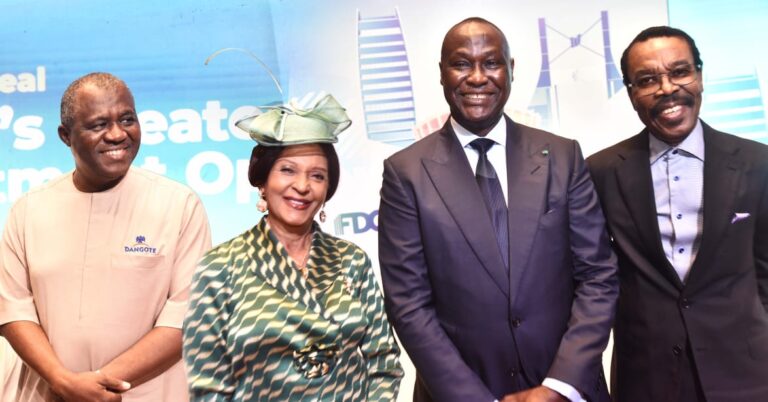
The market further saw the merger of two quoted banks – Access Bank Plc and Diamond Bank Plc, to transform the post-merger Access Bank to Africa’s largest retail bank. The divestiture of Mr. Femi Otedola from Forte Oil and the sale of Dangote Flour Mills by Alhaji Aliko Dangote were major transactions in the mergers and acquisition space.
Seven companies were delisted in the year including four companies that opted to voluntarily delist their shares and reverted to private entities. Diamond Bank was delisted due to the merger with Access Bank. Skye Bank and Fortis Microfinance Bank were delisted by authorities at the Exchange. Skye Bank was taken over by the Central Bank of Nigeria (CBN). Great Nigeria Insurance, First Aluminium Nigeria, Newrest ASL Nigeria and Dangote Flour Mills opted for voluntary delisting with AG Leventis and Greif Nigeria Plc waiting in the wings.
Analysts who spoke to Daily Sun explained that political risks, insecurity concerns as well as macroeconomic uncertainties were major factors that adversely impacted the capital market.
According to them, the intense political activities in the run-up and aftermath of the 2019 general elections further fuelled macroeconomic concerns as investors waited on the sideline for clear macroeconomic direction.
With foreign portfolio investors accounting for nearly half of transactions at the Nigerian stock market, the tense global economic outlook, trade disagreements among major economies, decline in crude oil price and attractive yields in less-risky economies further compounded the Nigerian market situation. Chief Executive Officer, Decof Investments, Igbrude Moses, said the capital market did not have a better outing in 2019 due to the build-up to the general elections, insecurity and instability resulting to dull performance of some companies quoted on the floor of the Nigerian Stock Exchange(NSE) while adding that some firms have remained under-valued.
Moses said, “For instance, there are companies trading below N10, that is not the real value of UAC-Prop, PZ Cussons, FBN Holdings, insurance companies are even trading below par, this goes to show that the economy has been bad and has affected the capital market. Another factor is also the issue of delisting of some companies and when you engage the management of some of these companies, they are saying that the policies of the government is working against their growth because import duties are high, multiple taxation and other form of instabilities has affected the capital market because the market is a barometer used to measure the economy and for now the truth still remains that we have a weak economy”.
According to him, the Federal Government in partnership with market stakeholders have to bring out policies that will benefit both foreign and domestic investors.
“This is because formulated policies are not just meant to favour international investors but domestic investors and so these policies are meant to encourage people to come into the capital market. But how many percentage of Nigerians are buying shares especially the traders? This is because vast of them do not understand how the market works. Secondly, policies should be formulated in such a way that it will encourage the company in areas of tax incentives, insecurity as well as other issues should be tackled. For example, some consumer goods companies performed badly and this was due to the congestion at the port as well as bad roads, these should be tackled.
The enabling environment in terms of power infrastructure is a factor the government must look at, for branch of a bank is like a local government that provides its own security as well as power in form of diesel engines that run everyday for themselves but yet we pay all these taxes to the federal government and we are still not getting anything for the taxes we are paying. Finally, the NSE and SEC should find a way of assisting companies that are in trouble especially in the area of companies delisting, because if all the companies delist, then what will be left for the capital market? Thus, there should be synchronisation between these two regulators”, he noted.
For his part, Head, Research, FSL Securities, Victor Chiazor, admitted that though the index has dipped in recent months, the market has not done too badly.
“We have had some wins in the market in regards to listing of MTNN and Airtel Africa- major plus for the market and what the market needs now is just a form of catalyst for it to bounce back so i would not say that it was an entirely bad year for the capital market and once we see a rally, we expect increased participation from both foreign and domestic investors.
With what we have seen so far, the government is doing all it can to improve the market but the problem i see is that there are too many negative news that is bringing down the sentiments of investors because positive news sell the market faster. In the last ten years, the market has lost six times and so when the market sends the news that it is losing more than it should be winning, it sends the wrong signals and so the market needs to do more of positive returns”, he explained.