Follow Us on Google
• Says citizens should push for common currency
By Christy Anyanwu, London
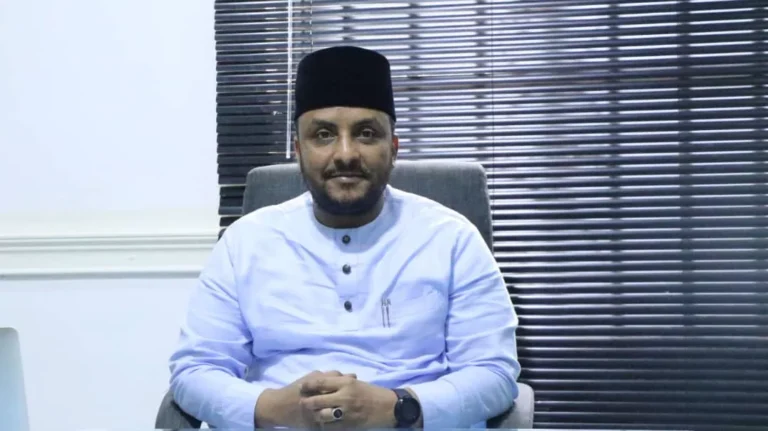
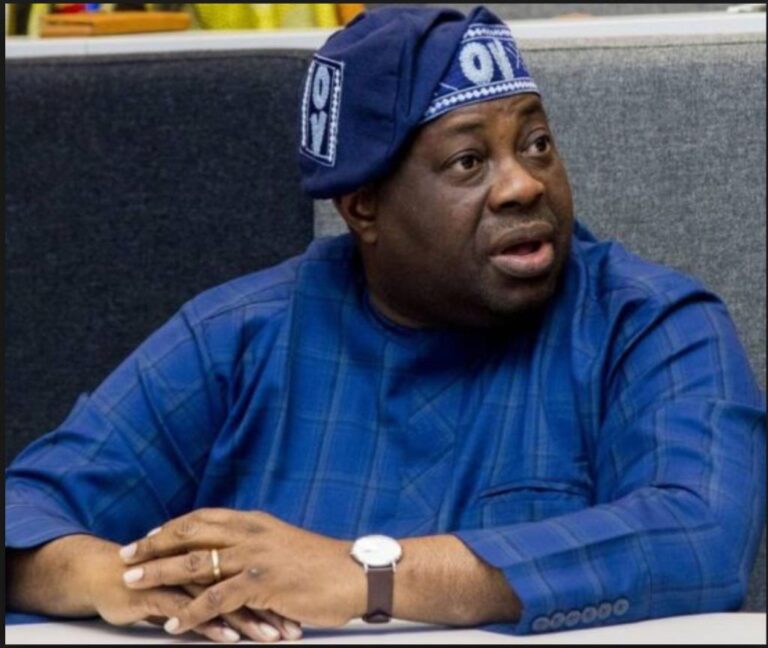
Kofi Ali Abdul-Yekin is the founder and chairman of the ECOWAS Citizens Democratic Right Advocacy (ECOWAS CDRA). An author, activist and newspaper columnist, he has written extensively on topics such as corruption, politics, and social issues in Ghana and West Africa. Abdul-Yekin has been vocal about the need for accountability and transparency in governance, and has advocated the rights of marginalized communities.
In this interview, he dissects the issues affecting the ECOWAS sub-region, japa syndrome and lots more.
You instituted litigation against the ECOWAS Commission. What exactly is the crux of the matter?
I am seeking justice because everyone in West Africa is a victim of injustice as things are now. The hearing has taken place but we are awaiting the outcome. I sued the ECOWAS on the basis that the action taken by the coup plotters amounted to treasonable felony. As a supranational organisation, ECOWAS placed sanctions on some countries and suspended them from ECOWAS. So, asking the same people to come with a withdrawal letter from the ECOWAS on behalf of citizens of the state, I think it is not right. The issue is the state. The leadership of the state didn’t state whether the person should be a civilian or a military officer. But we believe a democratic ECOWAS must be serious about what she meant. And therefore, we are in court to seek interpretation of that treaty.
As a rights advocate, would you say ECOWAS member states have impacted on the rights of citizens of the sub-regional body?
If we go by the 1975 ECOWAS Treaty, I would say yes. Based on the vision of the 1975 ECOWAS Treaty regarding the free movement of people for 90 days, capital and goods and the states working together, I want to say that ECOWAS has come a long way. ECOWAS has done very well but as to whether the ECOWAS citizens of today can boast of benefitting from the ECOWAS, my answer is no.
There is a serious apathy against the ECOWAS because the reform of 1993 has not been made to work. Because of that, ECOWAS is operating with the 1975 Treaty rather than the 1993 Treaty which has already been formalized. This is where we are. So, to the best of my knowledge, if the ECOWAS is impacting and working in the life of ECOWAS citizens, then where people supported the military against the ECOWAS shouldn’t have been the case when the military officers took over.
Lots of people believe that ECOWAS needs to be reformed urgently. What is your take on this?
Of course, everyone knows that there is need for reform. There’s no doubt about that. That is why the 1993 Treaty was put in place. The question is the implementation of the reform. Because when we are talking about a reform, then we don’t know the reform has already taken place. What we need to know is how far this reform has been implemented. Now, what is the reform? Before 1993 ECOWAS, the ECOWAS of 1975 was only an ECOWAS of Heads of State, desk leaders, 15 presidents and the secretariat. That is what we have. It’s just a copycat of the European Economic Community (EEC). So, the two are the same. The European Economic Community and the ECOWAS are the same. But the EEC was transformed in 1992 from the EEC to the European Union (EU), because at that time, like what we are struggling with in ECOWAS today, it was only working for some of the member states, and a lot of the member states were victims. Today, we have the same problem in ECOWAS, and because of that, the EEC started becoming unpopular, and it weakened the whole entity as a union against external forces, where they could move to the state of having common currency, common army, common foreign policy, and so on. Industrialization was the dream of the EEC.
The European Union reform just added some institutions. After the Maastricht Treaty that transformed the EEC to the European Union, ECOWAS also had a 1993 reform. And in that reform, we had the Authority of Heads of State that had been there originally. We have the secretariat that was changed to the commission, and we renamed the General Secretary who is the leader of the secretariat as President of the Commission and his commissioners. Just like the European Union, we added two other institutions, which are the ECOWAS Court of Justice, because we intended to have legislative law in addition to our treaties, convention, charter, and protocol.
We also, like the European Union, wanted to have our legislative laws. So we created the ECOWAS Parliament so that people can approach the Court based on legislations, charter, treaty and convention.
We succeeded in dividing the whole of West Africa into 120 seats all over West Africa. By doing so, we are trying to redefine, give a new meaning to the Berlin Conference. Today, I don’t know whether to call ourselves victims or beneficiaries, but our destiny is being determined by what we didn’t create. Nigeria was not created by Nigerians. Ghana was not created by Ghanaians. Benin and Togo were not created by their people. We all inherited it. That came with our past. To overcome this problem, where some are stronger than others, we decided to cut the whole region, the whole of ECOWAS, into 120 seats.
In other words, we would have 120 parliamentary seats. Initially, we agreed that temporarily, the members of the parliament will be coming from the parliament of the countries, but they are going to be advisory bodies, not legislative bodies. And because they don’t get their mandate directly from the people, their preferred position is that it’s going to be by the people voting for the members of their parliament directly, like all the elections we are having.
Imagine when you have a place like ECOWAS democracy is about parliament and about legislation. It’s also about people, not about the state, not about the country, it’s about the people. So, if you cut the whole of West Africa into 120 seats, where there is a higher population, concentration of people, like Nigeria, you put 35 seats there. It means Nigeria will be cut into 35 places. Ghana area, you cut it into what we call eight constituencies, five constituencies, and that will reflect the whole of West Africa. It means that when these people are sitting down to talk, they will be talking on the part of their constituency, not on behalf of their country. So, someone from a constituency within Nigeria will not be going to the level of the ECOWAS to talk about Nigeria. He’s going to talk about the ECOWAS. He’s only answerable to the ECOWAS and to his constituency. Therefore, the Nigerian government cannot remove such a person from the ECOWAS Parliament.
It’s just a constituency, and that constituency, wherever it’s located, whether inside Nigeria or outside Nigeria, that is our position. With this investment, common foreign policy will start evolving, ECOWAS will start working, and everybody will start smiling.
After 50 years since the founding of ECOWAS, what would you say are the achievements of the regional body?
Again, I want to emphasize that it is very wrong to start talking of ECOWAS of 50 years ago. Actually, you can’t talk about ECOWAS, which was formed 50 years ago in 1975. In 1993, there was a reform, so the ECOWAS of 1975 is actually different from ECOWAS of 1993. So, which ECOWAS are we talking about? If we want to talk about ECOWAS of 1993, which is different from ECOWAS of 1975, then we will know what is wrong and be able to address it. So, this idea of celebrating ECOWAS at 50, when actually the ECOWAS we are dealing with now is the ECOWAS of 1993, is a problem, because that was when the parliament was added.
West Africa is gradually sliding into the dark era of military rule. What does this trend point to?
It’s very simple. ECOWAS is not working. ECOWAS is weak. The military are like bandits. They are like armed robbers. When they take over, you just have to go and remove them. In the United States of America, people have guns, but they will never dare because they know what will come after them from the centre.
So, if the ECOWAS had established its own military force in accordance with the ECOWAS Charter of 1993 which allows it to employ soldiers directly, then the story would be different. ECOWAS can have property in any part of West Africa. ECOWAS can also raise money the way she desires to do so. As ECOWAS can print her own currency, then it should be in a position to fight a war. So the question of whether the military is coming in because of the high state of insecurity, the democracy in the country or the colonies defined by the Berlin Conference of 1884, we are not doing anything better than what we were doing when the colonial master was there. So we have no one to blame but ourselves. If we want a reformed ECOWAS to deal with the issue of insecurity, as I talk now, in Gambia, you have ECOWAS soldiers there. In Sierra Leone, we have ECOWAS soldiers there. We have ECOWAS soldiers in Guinea-Bissau and we have ECOWAS soldiers there. ECOWAS soldiers are in all these places to prevent this same coup. But democracy as we are approaching it now, without democracy at the level of the ECOWAS, that will bring prosperity. If democracy is about making laws, and the ECOWAS laws are missing, but you have the laws of the member states.
Other News
Therefore, because all the member states have got their constitution, and they also have their legislative bodies, ECOWAS doesn’t have one. So the problem is very clear. As long as the countries are those that have got the legislative institutions that make legislative law, just like the European Union as a body has a legislative institution and makes legislative law, as member states do the same, then ECOWAS becomes weaker.
ECOWAS is weaker than even Gambia. So you need countries like Nigeria, Ghana, Senegal and others should contribute soldiers. ECOWAS cannot do anything on her own. So it brings us back to square one. So that the military is coming back is just an indication, and it’s proof that we can’t continue with ECOWAS the way it is.
The reason is that the military came in under the guise that there are terrorists and that’s why they took over. What was ECOWAS doing when the terrorists were here? We have ECOWAS citizens who are tax-payers. We pay tax to ECOWAS. So if we are paying tax to ECOWAS, there’s every reason for ECOWAS to be able to go in and solve the problem of ECOWAS citizens. But if ECOWAS is weak, without legislation, ECOWAS commissioners and the president of the commission will not be able to work. If they can’t work, then what is the purpose? This is the problem. The military rulers are more than proving that, and they are just the proof that ECOWAS is very, very weak. Not weak, but very, very vulnerable.
That’s why when Niger was being attacked, it was Nigeria. And the attack on Niger, Niger was fighting with France. And it looked like ECOWAS was going to do the dirty work of France because of the two, one is talking about democracy. The other one is talking about, France believes in democracy, and therefore wants a democratically elected president that allows them to stay in the country and be mining uranium without paying anything to continue. And that seems to be exactly what ECOWAS was also going there to defend.
Where was ECOWAS, when the Nigerians were signing a contract that violates the rights of the citizens of ECOWAS? And these are all written in the 1993 ECOWAS Treaty that every policy and decision of member states of ECOWAS must go through the ECOWAS, so that it will be harmonized, that we can control things collectively, rather than allowing small countries that are vulnerable to make commitments that compromise the security and the rights of citizens. So the military coming in with ECOWAS is weak. It’s like armed robbers coming to rob a bank. You go into the bank and remove them. Yes, if they know their crime will be reversed, they will go back.
But if they know nobody will come, ECOWAS cannot come, then the coup plotters will get away with it. If we continue, we are going to have wars. But the day we start the election of the members of the ECOWAS parliament that is the day the military officers will run away from where they are seated.
The idea of a single currency in the region is one that ECOWAS is yet to make headway about. What is the major obstacle against the idea and what does the region stand to gain from it?
Well, the benefit of ECOWAS common currency is something we need right now, because we all trade in dollars. So what we are doing is that we are using third-party medium of exchange to trade among ourselves. And it’s very costly because we need to work hard to get that dollar. And here we are. The common currency, which would be the currency that the ordinary man would be using to do his transaction, would be the currency that would be for everything in West Africa. You can’t think beyond that. It’s a wonderful life. The Europeans have proven that it can be actualized. But there’s one obstacle. The obstacle is very simple, if you know how money works. Money is an instrument. It’s a legal tender created by legislation. So what is holding us back from having this common currency is the ECOWAS legislation. Because, you see, when the constituency 120, for now, they sit down they’ll be looking at which constituency is struggling with the currency, which part is not working. Because you can’t have a common currency, and one part will be importing foreign goods, and the others will be sitting down with papers. That will not work. You need to industrialize. And you need this legislative law to industrialize. That is the challenge of the ECOWAS.
But I do not see the challenge as that of ECOWAS. I see the challenge as that of you, the ordinary people on the street, and the rest of us. This currency can never be possible because of the institution. If you study your history, you will see that when all the West African countries were gaining independence and the legislative arms came in at the same time. It was with the legislation that they were able to create institutions and then to change their currency. Because they were independent, and no more under control. It’s the same thing.
So we need the ECOWAS Legislative Arm to set up the institution, unless you want to create a common currency and hand over the control of the currency to IMF, which is not in our interest, or to the European Union. We want to control our currency. Remember, there’s a connection between your currency, your economy, and your laws. So if your laws are not at the level of ECOWAS, then your economy cannot be one that is like the European Union. If your economy is not one, then how can you have a common currency? So, the solution to that problem is very clear. The idea now is to stop focusing on fooling and misleading ourselves until we get tired about the common currency. We need to do first is to elect the members of the ECOWAS Parliament.
The United States has proven a common legislation in their democracy, the Europeans have proven it. So, what are we waiting for?
What is your take on the trend of ECOWAS citizens leaving droves to find means of livelihood abroad? We call it japa in Nigerian parlance.
This is all about finding a safe haven. This makes sense, especially when you live in a state of insecurity. Migration across the world is often about moving from where you feel insecure to where you are secure.
There are two places that most people who are comfortable run to: the United States of America or Europe. One common thing about these two places is that, despite having different ideologies – one being extremely capitalist and the other having a mixture of capitalism and welfare system (socialism) – the law works in both places. Because the law works, you have a level of security that allows you to maximize your potential and take advantage of job opportunities. Employers are ready to employ, people are working and paying their taxes, and you feel you’re getting value for what you’re giving.
This is why people are leaving West Africa. The more insecurity there is, the more people will leave. When migrating, some people bring their babies, while others migrate alone, hoping to bring their spouses later. Some parents even put money together to send their children abroad, never to return. The reason is insecurity, and as long as it persists, people will continue to leave.
Of course, migration is a global phenomenon. People from the US migrate to Britain and other parts of Europe, and vice versa. Some people even go to Australia. However, the challenge is that many people from West Africa are moving voluntarily in very harsh conditions. You see people moving in numbers across the Mediterranean, with 80-90% of them being from West Africa. This is a silent war, with many young people wondering when they will get the opportunity to leave.
When a person goes to school, graduates, or comes of age, the ideal thing is for them to get gainful employment. Without a job, you can’t have an income, make decisions, or have value as an individual. Everyone wants to earn a living, feel secure, and have a sense of hope. Not everyone wants to be a millionaire or show off their wealth. Most people just want to work, earn a living, and live with dignity.
The problem is that our countries have reached their peak, and we need ECOWAS to take the leadership position. The kind of ECOWAS we want requires involving the people and their representatives in the decision-making process. We have 120 members of parliament who are supposed to be the legislators, but the question is who is fooling whom?
At this point, it’s clear that we need to wake up and create an environment that is conducive. An environment of dignity is one of law, specifically man-made laws or legislative laws. We need to put our hands together and change our destiny. We can’t sit back and expect someone else to solve our problems for us. We must take action, provide, lead, and make our problems personal.
Your right to vote for members of your ECOWAS parliament is long overdue. We need to get it done or risk remaining slaves for a very long time. The world is changing, and we need to adapt. The Chinese, Indians, and Brazilians are coming, and it’s all a game of size and economic scale. We need ECOWAS to move us to that level, and we need the necessary legislation to make it happen.