Follow Us on Google
By Bimbola Oyesola, [email protected]
The International Labour Organization and World Health Organization’s joint research has revealed that 15% of working-age adults live with a mental disorder.
The two bodies submitted that mental health concerns among the working population are alarmingly high. According to joint ILO-WHO research, globally, depression and anxiety cost the global economy nearly one trillion USD every year, mostly due to lost productivity.
To protect people who are affected by a mental health condition, National frameworks for Occupational Safety and Health (OSH) require coordinated efforts, focussing on all four pillars of the Decent Work Agenda, says the ILO.
“They are part of a broader framework: any approach addressing health and societal well-being, has a positive impact.”
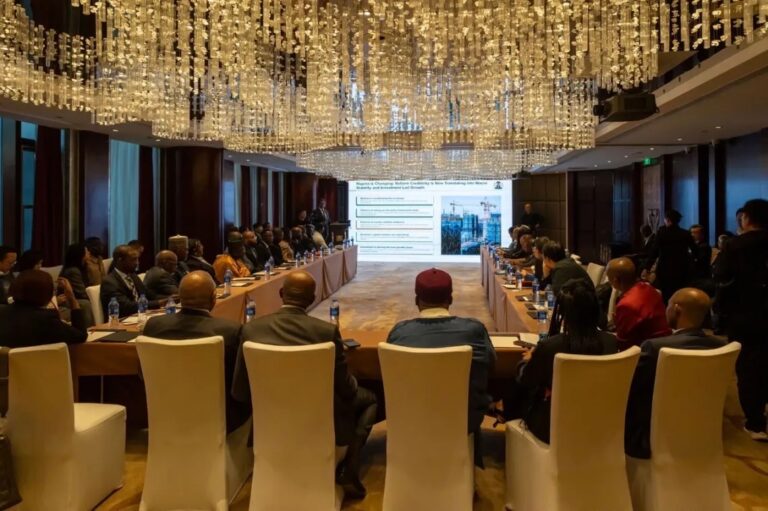
However, the ILO recently discusses ways to tackle mental health issues at work at a High-level conference on mental health and work organized by the Belgian Presidency of the Council of the EU.
The ILO discussed how mental health at work can be fostered and briefed participants about the latest developments in this area.
“The world of work is changing at a considerable pace, and new forms of work have exacerbated psychosocial risks and mental health in several ways,” said Joaquim Pintado Nunes, Chief of the ILO branch responsible for labour administration, labour inspection and occupational safety and health, in his keynote address to the Conference .
He described some of the pressures in today’s working environment.
Job insecurity affects mental health, and as many workplaces have become virtual, workers can feel more isolated. “Easy access to IT has compelled many of us to respond to e-mails around the clock, even though we have a right to disconnect,” he said. In addition, factors such as the effects of climate change, misinformation and discrimination are also affecting both workplaces and workers raising the levels of stress and anxiety.
The right to a safe and healthy working environment has been added to the Fundamental Principles and Rights at Work , and the Occupational Safety and Health Convention (No. 155) , and the Promotional Framework for Occupational Safety and Health Convention (No. 187) are now Fundamental Conventions.
Whilst there has been an increase in the ratification of these two Conventions by EU Member States in recent months, only 12 EU Member States have ratified both. Mr Pintado Nunes called on the EU Member States that have not yet ratified these standards, to do so.
The ILO recently adopted a Global Strategy on Occupational Safety and Health , which has a strong focus on mental health, and a plan of action for the period 2024–30. The Strategy aims to assist and encourage ILO constituents to take action to: reinforce national OSH frameworks; mainstream and improve policy coordination on OSH and other policy areas, including environmental policy, the broader health agenda and education); enhance workplace OSH management systems.
The ILO is working with its constituents to support the prevention of mental health risks, protect and promote mental health at work, and support those with mental health conditions so that they can participate in or re-enter the labour market.
“We stand ready to work with the EU to make mental health at work a reality,” he concluded.