Follow Us on Google
The Universal Basic Education Commission (UBEC) recently announced that about 10 million Nigerian children are shut out of Early Childhood Care, Development and Education (ECCDE). It also warned that the gap was deepening the country’s learning crisis.
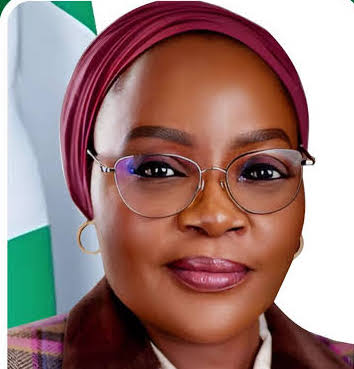
The Executive Secretary of UBEC, Dr. Aisha Garba, stated this in Abuja, at a three-day capacity-building workshop for state actors on the utilisation of the ECCDE minimum standards, implementation guidelines and UNICEF parental and community engagements documents. She also said that 70 per cent of Nigerian 10-year-olds could not read and understand a simple text.
Represented by UBEC Deputy Executive Secretary (Technical), Rasaq Olajuwon Akinyemi, the UBEC boss disclosed that only 35.6 per cent of Nigerian children aged 36 to 59 months currently attend any form of early childhood education, thus leaving millions without the foundation needed for successful learning later in life.
According to the 2021 Multiple Indicator Cluster Survey, about 46 per cent of children aged 24 to 59 months were developmentally off-track, underscoring the scale of the challenge facing Nigerian’s youngest population. The survey also revealed that only 35.6 per cent of Nigerian children aged 36 to 59 months attend any form of early childhood education. This leaves roughly 10 million Nigerian children outside ECCDE.
The survey also shows that out of the 5.9 million children who enter primary school each year, only about 2.4 million make it to the end of junior secondary school. The rest drop out.
We loathe the startling figures of Nigerian children shut out of early childhood education and urge the government to ensure that this record is reversed. No Nigerian child should be made to miss out early childhood education. We say this because early childhood education is a foundation which learning in other levels is based.
Other News
A child that does not benefit from this critical foundation will find it difficult to bridge the gap in other levels. This will also exacerbate the learning crisis in our educational system. To prevent this calamity, the federal, state and local governments must ensure that education at pre-primary, primary and basic level is free and compulsory throughout the country. Poverty can no longer be an excuse for any Nigerian child to miss out of early childhood education.
Indeed, pre-primary, primary and secondary school education should be free and compulsory in the country. No Nigerian child should miss out on early childhood education in a 21st century world.
It is sad that children in rural areas and in some northern states reportedly miss out in early childhood education. For instance, children in remote villages have no access to public early learning facilities. Most importantly, state and local governments treat early childhood education as an afterthought. Public policy ignores the young children because governments spend money where they see immediate political visibility like secondary school blocks, rather than investing in early childhood development, which yields the highest economic returns later in life.
State governments must stop treating early learning as optional. They should prioritise early childhood education. Every public primary school must include an early childhood section with trained teachers and safe play areas. The Universal Basic Education Commission must enforce strict rules for accessing matching grants. States should be required to allocate specific portions of their education funds directly to early childhood programmes. There is the need to engage communities and parents directly. Many parents do not know how much early play and storytelling matter in the education of their children. We need public awareness campaigns using local languages and traditional leaders to guide families on home-based learning. Early childhood programmes must link directly with primary healthcare, including routine immunisation, deworming, and nutritional support.
Nigeria cannot achieve prosperity or even national security if millions of Nigerian children miss the benefits of early childhood education. All tiers of government must work in concert to salvage the situation and ensure that all Nigerian children enjoy early childhood education. No Nigerian child should be left out of the ECCDE.
In the same vein, parents and guardians should also be sensitised on the importance of early childhood education. The campaign must also be taken to churches and mosques. Religious organisations can also set up centres for ensuring early childhood education. Educating children at an early age should not be left to the government alone. Corporate entities should also be involved. Society stands to benefit when the child is educated at an early age. In the same way, the society suffers when children’s early childhood education is neglected.