Follow Us on Google

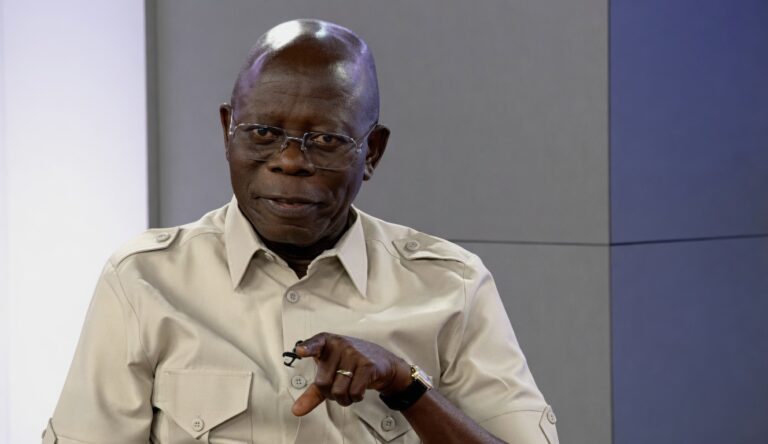
Director of the Abuja School of Social and Political Thoughts, Dr Sam Amadi, has described the Federal Government’s ₦60-per-litre petrol discount as a face-saving move, warning that it is unlikely to ease Nigerians’ rising transport costs and economic hardship.
Amadi said the 30-day intervention appeared designed to contain growing public anger over the cost of living, particularly in Northern Nigeria, rather than provide lasting relief.
The Federal Government announced that Nigerian National Petroleum Company Limited (NNPCL) retail stations would sell petrol at cost price for 30 days by foregoing their profit margin, with public transport operators given priority.
Finance Minister and Coordinating Minister of the Economy, Taiwo Oyedele, said the measure was not a return to fuel subsidy but a temporary discount intended to cushion the impact of global oil price increases.
However, speaking on Arise News on Friday, Amadi argued that the intervention came too late and would have little effect on the financial pressure facing households and businesses.
“First, I think it’s a face-saving strategy. Again, the government has been too late, too little,” he said, adding that the government’s rejection of subsidy as a policy tool had been misguided.
Amadi blamed the current cost-of-living crisis partly on the manner in which the administration removed petrol subsidy, alongside electricity subsidy reductions and the floating of the naira. He also said opposition criticism had increased the political pressure on the government.
He described the ₦60 discount as a weak response to a growing political challenge, arguing that the limited reduction would not necessarily translate into cheaper fares for commuters.
“Will transport costs change tomorrow? I predict they will not change,” he said, warning that some fares could even rise despite the intervention.
The policy analyst also raised concerns about the arrangement’s implications for the Petroleum Industry Act (PIA), arguing that the government could use targeted support and tackle inefficiencies in production, transportation and logistics to improve affordability.
Amadi suggested that the government was balancing the potential political benefits of the discount against its financial cost, especially with the 2027 general elections approaching. He maintained, however, that the measure was unlikely to deliver meaningful economic relief to Nigerians.