Follow Us on Google
By Kingsley Alumona
A mentor empowers a person to see a possible future, and believe it can be obtained. –Shawn Hitchcock
In mid-April of 2018, during a panel appearance with world leaders at the Commonwealth Business Forum in London, former President Muhammadu Buhari criticised Nigerian youth as ‘lazy’. Perhaps, Buhari was not speaking literally but metaphorically when he made that statement, given the majority of Nigerian youth’s attitude to nuance attributes of patriotism such as mentorship, sacrifices, volunteering, selfless service and personal leadership.
Sad enough, it is not only those in key political positions and corporate offices that perceive Nigerian youth as ‘lazy’ even with their educational qualifications and the vibrant energy they are endowed with. At local and grassroots levels, this disdain for active youth participation in vital aspects of leadership and business is apparent. It is one thing to have an education, energy, and skills; knowing how to effectively combine and channel these endowments into productive and sustainable endeavours is another.
This is one of the main reasons leadership and strategic communication coach, J. Loren Norris, admonishes that “If you cannot see where you are going, ask someone who has been there before.”
Jean Rhodes, a professor of Psychology at the University of Massachusetts and the founding editor of the Chronicle of Evidence-Based Mentoring, offers insights into how mentorship can help the individual and society. In her book ‘Older and Wiser: New Ideas for Youth Mentoring in the 21st Century’, Rhodes stresses that youth mentoring is among the most popular forms of volunteering in the world and that youth mentoring programmes must change to become truly effective.
One of the sobering conclusions in the book is that most mentoring programmes do not focus on what young people need because they are poorly suited and rely overwhelmingly on volunteers, who rarely have the training necessary to teach these skills to young people. The book frowns on the fact that some organisations typically prioritise building emotional bonds between mentors and mentees instead of emphasising the development of specific social, emotional, and intellectual skills.
Mentors and effective mentorship programmes are in short supply in Nigeria. There is no doubt that for the youth to be productive and for the country to develop there is an urgent need to institutionalise sustainable youth-orientated mentorship programmes across the country. Irrespective of the negative label Nigerian youth wear around their neck, there are a few of them seeking the right places to acquire mentorship skills. This is the first positive move for this small group of youths.
While government and cooperate organisations may not have the time and resources to venture into massive and intensive mentorship programmes for the citizens, the internet and social media are awash with intentional leaders and mentors that have dedicated their skills and time to teaching and mentoring young Nigerians.
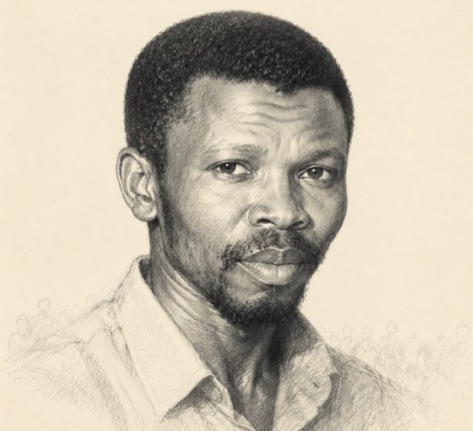
Dr Charles Awuzie, the South African-based Nigerian thought leader and techpreneur, is one such person. In recent years, he has been leveraging his mentorship platform, the Charles Awuzie Mentorship Programme (CAMP), to mentor thousands of people – especially, young people and youths − in Nigeria and Africa on technology and entrepreneurship, health and longevity, and relationship and intentional living.
Recently, Awuzie announced through his verified Facebook page that this year’s edition of the CAMP programme − tagged the Evolve Conferences with the theme ‘Where Dreams Evolve into Reality’ − would be held in partnership with Zeton Integrated Services in late September in Abuja. He noted that his singular mission for the conference is to empower African visionaries, ignite minds, shape visions, accelerate innovations and redefine possibilities through real-world mentorship connections with esteemed industry leaders.
Awuzie revealed that the best speakers and mentors in strategic industries would grace the conference to impact the lives and future of Nigerian youths with the sole aim of driving national growth and sustainable development. He stressed that practical and critical mentorship is what young people and youths need to salvage the sad narratives associated with their future and that of the country.
Speaking of critical mentorship, Torie Weiston-Serdan, an American scholar and youth mentoring expert, writes that critical mentoring places youth at the centre of the process, challenging norms of adult and institutional authority and notions of saviourism to create collaborative partnerships with youth and communities that recognise there are multiple sources of expertise and knowledge.
In her book ‘Critical Mentoring: A Practical Guide’, Weiston-Serdan describes how collaborative mentoring works in practice in terms of dispositions and structures, and addresses the implications of rethinking the purposes and delivery of mentoring services − both for mentors themselves and the organisations for which they work.
On mentorship and organisations, Awuzie was once asked what his life secret was and his response was “Sound mentorship and the influence of the successful people I fellow.” He added that, because people knowingly or unknowingly become who they fellow, his mentorship platforms are dedicated to inspiring communities and shaping national narratives for good.
On another occasion, he emphasised that there is a level of authority one cannot attain in their career until they become a student to a mentor. He drove this point home when he said, “Even in my family if you ask me for help, I ask you if you have been mentored by me or any real mentor out there. If you have not been mentored, whatever is done for you will neither benefit you nor society.”
Awuzie has severally, through is platforms, affirmed his stance that mentorship is the province of intentional people. He has also severally lamented that in Africa, people seek a mentor when they are broke but run away from mentorship when they make money.
In light of this, however, he emphasised that smart people know that they need mentorship the most when they become successful. He buttressed this fact by adding that “This is why Bill Gates would not let go of Warren Buffett − his sanity depends on him. Dangote holds tightly to Bill Gates. And Otedola would not let go of Dangote.”
A lot of things have to be learnt from people like Awuzie if Nigerian youth desire quality mentorship and leadership to distinguish themselves among their peers from other clans. Also, a lot of institutions and platforms need to be established to help young people and the youth to reach their maximum potential and contribute meaningfully to national development.
I would conclude this reflection with a quote from one of Charles Awuzie’s mentees, Kel Armstrong Amobi, also popularly known as KAA. KAA opined that no matter how big one is, they should get a harsh mentor who is committed to grooming them to become a formidable force. On the other hand, he warned: “And if you are a mentee who feels too arrogant and too big to listen, you are an enemy unto yourself.”
God bless the Federal Republic of Nigeria.
•Alumona is a social commenter based in Ibadan