Follow Us on Google
By Apeh Bernard Levi Ojonugwa
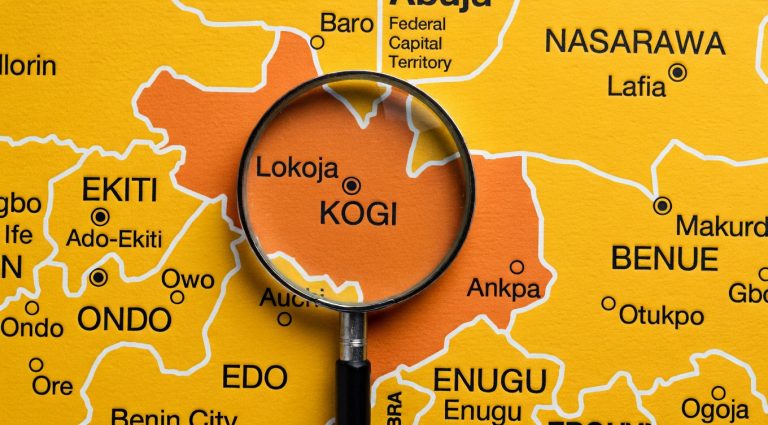
In Kogi State, we call ourselves the “Confluence State” — where the Niger and Benue meet.
But there is another confluence happening in our communities that we can no longer ignore: the meeting point of a massive youth population and a rising wave of crime.
Nigeria’s youth make up about 46 per cent of the population. In Kogi, that translates into energy, ideas, and the potential to drive agriculture, trade, mining, and innovation.
Yet today, too many of our young people are idle. And where there is idleness, there is frustration. Where there is frustration, crime finds fertile ground.
The question is no longer whether youth unemployment leads to crime. The evidence is everywhere — cultism in our campuses, armed robbery on our highways, kidnapping-for-ransom, and cyber fraud. The real question is: why are our youth empowerment programmes not stopping it?
Successive governments at Federal and State levels have launched empowerment schemes. In Kogi, the 2016 skill acquisition programme aligned with SDG 8 offered free training in tailoring, hairdressing, barbing, and aluminium fabrication, with seed grants afterward. On paper, it was a good start.
But a recent survey of 352 residents across Kogi’s 21 LGAs tells a different story. Respondents disagreed across the board that programmes are adequately available, well-funded, widely known, or regularly updated. The sectional mean of 1.77, far below the 2.50 benchmark, confirms what many young people already feel: these interventions are too few, too late, and too disconnected from real life.
This is not unique to Kogi. Studies on SURE-P at the national level reached similar conclusions — big budgets, little impact. But Kogi’s geography makes the stakes higher. As a border State linking northern and southern Nigeria, with major highways passing through, our security challenges spill over. When a young man in Lokoja, Olamaboro, Ankpa, or Kabba cannot find legitimate work, the road to crime is short and attractive.
From the data and from conversations on the ground, five gaps keep showing up.
First is Availability. Many communities have never seen a government training center. Programmes exist in press releases, not in villages.
Second is Funding. Budgets are small, and what is allocated rarely gets to beneficiaries in full. There are no tools, no start-up capital, no follow-up.
Third is Awareness. Most youths don’t know these programmes exist. Information does not travel beyond government offices and party circles.
Fourth is Relevance. Training is often generic. A young person in a farming LGA is taught the same trade as someone in an urban market town, with no link to local demand.
Fifth is Sustainability. Training ends, and that is it. No mentorship, no credit, no market access. Graduates are left to “figure it out.”
As scholars like Ademola and Obaro have argued, unemployment alone does not create criminals. It is unemployment combined with hopelessness; the feeling that the system has nothing for you.
Other News
Anderson put it bluntly: when government fails in its socio-economic responsibilities, some youths go underground as a form of revenge against the system. We cannot afford that revenge in Kogi State.
The same survey asked: what would make these programmes effective? The response was clear, with a sectional mean of 3.73. People agreed on five strategies.
First, tailor programmes to local economic opportunities. Kogi is not one economy. Dekina and Bassa have agricultural potential. Ajaokuta and Osara have industrial history. Idah and Lokoja are trade hubs. Okene has commerce and mining linkages. An empowerment programme that ignores these differences will fail. We need LGA-specific plans. Teach agro-processing where there are farms. Teach logistics and transport services along the highways. Teach solid minerals value-addition where deposits exist.
Secondly, bring in the organized private sector. Government cannot do this alone. Businesses know what skills are needed and where the markets are. Humphrey’s study showed that empowerment works better with tax incentives, stable power, and market access. Dike’s work in Anambra also stressed post-training grants and loans. In Kogi, we should mandate that every major company — from cement to agriculture to telecoms — adopt and mentor youth clusters. Let them co-design curricula and offer apprenticeships.
Thirdly, provide continuous training and mentorship. One-off training does not build a business. Fikirini’s research on micro-credit showed that youth programmes succeed when paired with mentorship and flexible guidelines. We need a system where beneficiaries are followed for 2-3 years after training. Monthly check-ins. Business clinics. Peer networks.
Fourthly, increase funding and transparency. This is non-negotiable. Kogi State must increase budgetary allocation to youth development and publish how the money is spent. A public dashboard showing number of beneficiaries, trades, LGAs, and disbursements will build trust. Okaba and Girigiri both found that access to credit reduces both poverty and crime. But credit must be affordable and trackable.
Fifthly, activate community leaders and youth liaisons. Awareness is important but working with community leaders scored higher in the survey. The solution is local. Every LGA should designate community leaders and youth liaison officers. Their job: publicize opportunities, identify local economic niches, and feed information back to the state. Chiefs, pastors, imams, market women, and youth council leaders already have the trust. Use it.
This is not just about security. It is about economics. The Human Capital Theory by Schultz and Becker reminds us that investment in skills is investment in productivity. When you train a young person and give them tools, you are not “giving handouts.” You are creating a taxpayer, an employer, and a community stabilizer.
Kogi cannot industrialize without skilled youth. We cannot attract investors if our highways are unsafe. We cannot achieve food security if young farmers have no access to training and credit. Crime reduction is a by-product of development. Empowerment is the bridge.
So, what should happen next? Here is a practical roadmap that is realistic and urgent. Within 90 days, conduct an audit of all past and current youth programmes in the 21 LGAs. What worked? What didn’t? Map local economic opportunities per LGA. Pass a Kogi Youth Empowerment Accountability Law that mandates quarterly public reports on budget, beneficiaries, and outcomes. Establish functional skill centers in each LGA, co-managed with the private sector and traditional institutions. Each hub must specialize based on local economy. Create a ₦2 billion revolving Youth Enterprise Fund with single-digit interest loans. Partner with banks and fintechs for disbursement and tie it to mentorship. Finally, appoint youth liaison officers in every LGA and work with traditional rulers to identify beneficiaries fairly, not based on politics.
Kogi’s youth are not the problem. They are the solution waiting to be unlocked. We have spent years treating empowerment as an event — a training, a cheque, a photo op. It must become a system. A system that is local, funded, transparent, and accountable.
The data is clear. The strategies are known. The cost of inaction is already being paid in blood on our roads and fear in our towns.
Finally, let me say this for posterity that if we can tailor all our programmes to our local realities, bring in businesses, fund them properly, mentor beneficiaries, and use our community structures to spread the word, we will see two things: more businesses opening and fewer youths picking up guns. That is the real measure of success. Not how many programmes we announce, but how many young people in Kogi wake up with a job, a skill, and a reason to believe.
The confluence of our rivers should also be a confluence of opportunity. Let’s make it so.
Apeh Bernard Levi Ojonugwa is a PhD Student of Criminology and Community Security Studies, Nasarawa State University, Keffi.