Follow Us on Google
By Emma Agu
When guests and organisers converge on the International Conference Centre (ICC) in Bauchi for the 5th edition of the Goodluck Jonathan Foundation (GJF) Dialogue Series, it will mark a significant moment — not only for the dialogue itself but also for the evolving history of Bauchi State.
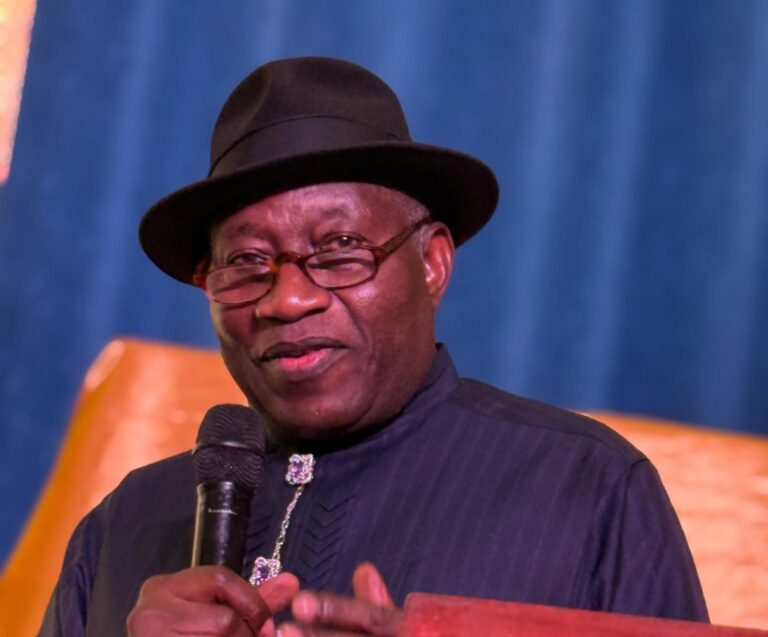
Founded by former President Goodluck Jonathan on leaving office in 2015, the GJF is an independent non-governmental organisation for the advancement of peace and prosperity on the African continent. The organisation prides itself as being “dedicated to peace and reconciliation, advancing democratic governance, advocating for inclusive governance and economic development, promoting citizens rights, and continental and national integration”.
The dialogue which comes across as an intellectual feast has been one of the platforms through which the GJF seeks to prosecute its ambitious vision. Previous lectures/themes include: “Why Democracies Die” by Bishop Hassan Matthew Kukah (Catholic Bishop of Sokoto Diocese), in Accra Ghana (2025); Functional Education, Effective Leadership as Panacea to Africa’s Growth and Development” by Professor Olubayi Olubayi (Education Officer at Maarifa Education) in Benin City (2024) and Peace, Security, Democratic Governance, and Development Challenges in Africa by Professor Patrick Lumumba (Pan African Human Rights Lawyer and Scholar from Kemya) in Yenagoa, Bayelsa State, Nigeria (2023).
Apart from the distinguished keynote speakers, the dialogue has consistently attracted eminent personalities from the continent, among them serving and former presidents, scholars, technocrats and bureaucrats as well as politicians. The 2026 dialogue is following that tradition of high net worth human resource subscription. Professor Karuti Kanyinga, a research professor at the Institute of Development Studies (IDS), University of Nairobi, is expected to deliver the keynote address themed: Beyond Elections: “Can Political Parties and the Judiciary Save African Democracy?”
That is the trillion naira question (we no longer talk in millions or billions in Nigeria) that the array of egg heads will seek to unravel in Bauchi, Nigeria’s pearl of tourism and home of the country’s first Prime Minister, the legendary “golden voice of Africa”, the late Sir Abubakar Tafawa Balewa.
As is obvious from the above, this year’s dialogue will mark the first time the event will be held in northern Nigeria. Thus, in a curious twist, it may appear unusual that a nationalist like Jonathan — widely acknowledged for placing national unity above sectional interests — would have confined the early editions of his foundation’s flagship event to his South South geopolitical zone. But that is not Jonathan and certainly does not define him.
Now, the dialogue has come to the North. And the theme of this year’s edition, “Beyond Elections: Can Political Parties and the Judiciary Save African Democracy?” could not have been more auspicious. Coming on the eve of the highly anticipated 2027 general elections, the dialogue resonates with the mood of a continent watching Nigeria closely. In spite of the country’s present existential anxieties and the bickering of politicians, few would dispute the old saying: when Nigeria sneezes, Africa catches cold.
So, why Bauchi? Why has the GJF chosen Bauchi — and not Kaduna, the political capital of the North, or Kano, with its massive population and vibrant political culture — as the first northern host of this important dialogue? Kano alone has a population larger than some five African countries combined and is home to Africa’s richest man, Aliko Dangote, and Abdul Samad Rabiu, Nigeria’s second richest. Surely, such a state would provide fertile ground for a governance dialogue.
Let’s not go too far. The GJF, through its Communications Officer, Mr. Wealth Dickson Ominabo, has explained that the dialogue is being held in Bauchi in honour of the late Sir Abubakar Tafawa Balewa, Nigeria’s first and only Prime Minister. It is a well deserved honour. Beyond his historical stature, Balewa embodied servant leadership — a quality in painfully short supply among today’s leaders.
Consider two examples. There is that famous photograph of Balewa with his children, enjoying a simple father sons outing in Bauchi during one of his vacations. Two things stand out: he did not fly abroad for leisure, and he used his vacation to nurture his children. What a father.
Other News
But beyond this historical justification lies the unmistakable evolution of Bauchi State in recent years into a foremost destination. Anyone visiting the state capital after a few years away cannot miss the sweeping urban renewal under Governor Bala Mohammed. The icing on the cake is the Bauchi International Conference Centre, named after Sir Ahmadu Bello, the former Premier of Northern Nigeria. Good governance has many planks, and naming public institutions after national heroes is one way of giving life to the national anthem’s pledge that “the labour of our heroes past shall never be in vain.”
Bala Mohammed has earned his diadems in this regard. In Abuja, he named the Bauchi State Liaison Office after former Governor Ahmed Muazu and the Governor’s Lodge in Asokoro after the state’s first civilian governor, the late Alhaji Tatari Ali. By honouring leaders who left indelible marks, he is presenting role models to the people — leaders who governed with passion, compassion, commitment, and integrity.
Will Bala Mohammed be so remembered? The evidence, starting with the ICC, suggests he will. Few would have imagined, five years ago, that Bauchi would host an international dialogue of this magnitude. Yet here we are, thanks to a state of the art ICC — an architectural masterpiece that embodies the vision of My Bauchi Project, the policy framework driving the administration’s achievements.
When guests gather at the ICC, they will experience a functional centre designed to host five events simultaneously without distraction. The multiplier effect will be immediate: hotels will brim with guests, transporters and vendors will enjoy increased patronage, entertainers will find new audiences. Bauchi has been announced on the global scene.
Coincidentally, this dialogue comes barely two months short of one year since dignitaries from around the world converged on Bauchi for the first Bauchi International Investment Summit and the commissioning of the ICC. Presidents Obasanjo and Jonathan, as well as Vice President Kashim Shettima, graced that occasion. Their remarks were unanimous: Bala Mohammed had initiated a game changing project that would position Bauchi as a premier investment and conferencing destination.
In retrospect, less than a year later, their words have proven prophetic. And now, both Obasanjo and Shettima return to the ICC for the GJF Dialogue — Obasanjo as Chairman and Shettima as Guest of Honour. What a spectacle it will be as Ghana’s former President, His Excellency John Dramani Mahama, listens to the encomiums that will surely be showered on the Bala Mohammed administration. Before then, President Mahama would have been received at the remodelled Bauchi Government House, of which the ICC is an integral component. Will Bala Mohammed host a mini durbar at the Dr. Rilwan Lukman Sulaiman Adamu Square? Showcasing that century old cultural symbol would indeed be awesome.
Whatever the programme, one hopes there will be time to showcase some of the administration’s legacy projects: the revived Yankari Games Reserve, the imposing Wunti Square Flyover, and the ongoing dualisation of roads linking the headquarters of the five emirate councils to the state capital. The Wunti Flyover is a spectacle, but more importantly, it promises to end the dreaded traffic snarl that once frustrated commuters, caused frequent breakdowns, and provided cover for mischief makers at night.
It is fitting that the Goodluck Jonathan Foundation is taking its 2026 dialogue to Bauchi, where the Governor — through even handed development programmes, diversity management, and inclusion policies — has showcased good governance as the hallmark of democracy. Perhaps the most symbolic of these is the creation of the Sayawa Chiefdom after decades of agitation, bloodletting, and stunted development. Bala Mohammed insisted that equity, justice, and fairness are the pillars of democracy. If the 2026 GJF Dialogue succeeds in persuading politicians and stakeholders to adopt these principles, it would have achieved a great deal.
But regardless of the outcome, one fact is clear: hosting the Dialogue at the Sir Ahmadu Bello International Conference Centre validates the vision of the Bauchi State Government under Governor Bala Mohammed.
• Agu, former Chief Press Secretary to the Head of the Interim National Government (ING), late Chief Ernest Shonekan, in 1993, is presently media consultant to the Bauchi State Governor, Senator Bala Abdulkadir Mohammed.