Follow Us on Google
By Chukwuma Umeorah
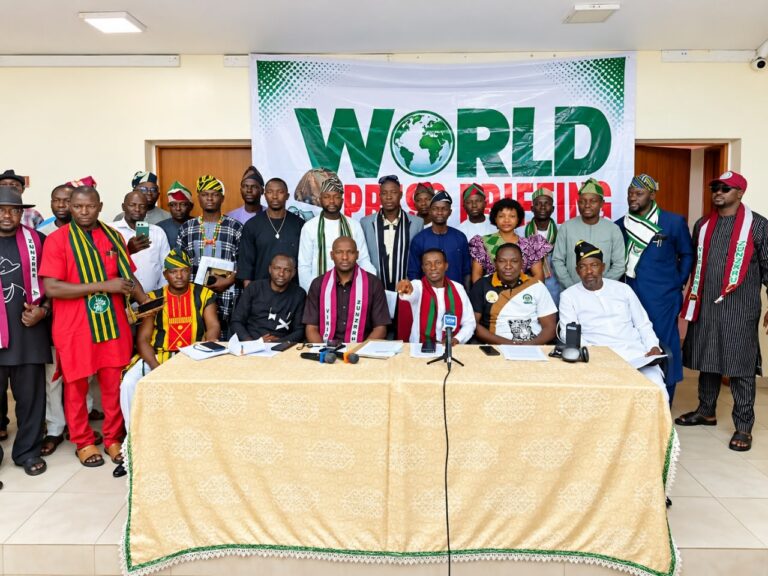
A newly formed Yoruba socio-political group, Omo Odùduwà Collective, has criticised the handling of Nigeria’s economy under President Bola Tinubu, arguing that the ongoing reforms have failed to address the worsening hardship faced by millions of Nigerians.
The group, comprising former presidential adviser, Babafemi Ojudu, Dele Farotimi, Professor Akinyemi Onigbinde and other professionals drawn from different sectors, said while many of Nigeria’s challenges predated the current administration, the government must be held accountable for the consequences of its policy choices.
In a statement announcing its formation, the group said Nigerians were grappling with rising living costs, declining purchasing power, food insecurity, unemployment and growing uncertainty about the future. “The issue is not whether reforms are necessary. It is whether those reforms are pursued within a framework that places the welfare of citizens at its centre. Economic policies must be judged not only by statistics and projections but by their impact on human lives,” the statement said.
The group also cautioned political leaders against shifting attention to the 2027 elections while pressing national challenges remain unresolved.
“As the nation approaches the 2027 electoral cycle, we urge the political class to focus less on politics and more on rescuing the Nigerian state,” it stated.
Beyond the economy, the group identified constitutional restructuring, security and governance reforms as urgent priorities requiring national consensus. It argued that Nigeria’s diversity could no longer be effectively managed through what it described as excessive centralisation of power, renewing calls for genuine federalism, devolution of powers, fiscal federalism and greater autonomy for states.
“First is constitutional restructuring. Nigeria’s diversity cannot continue to be managed through excessive centralisation. Genuine federalism, devolution of powers, fiscal federalism and greater autonomy for states remain essential to national stability and progress,” the group said.
Other News
It further argued that the country’s current security architecture had struggled to contain terrorism, banditry, kidnapping and other violent crimes, advocating the establishment of constitutionally regulated state police structures.
“Second is security. The current centralised security architecture has proved inadequate against the growing threats of terrorism, banditry, kidnapping and violent crime. We support the establishment of constitutionally regulated state policing structures, alongside broader investments in education, job creation and economic inclusion.”
The group further expressed concern over what it described as a widening gap between the hardship experienced by citizens and the conduct of public officials, urging the government to demonstrate greater transparency, fiscal discipline and accountability.
“At a time of widespread hardship, the government must demonstrate empathy, fiscal discipline, transparency and accountability. Anti-corruption agencies must be seen to pursue corruption at all levels without fear or favour,” it stated.
It also criticised what it called a growing tendency to equate criticism of the government with hostility towards the Yoruba people, describing such a position as inconsistent with Yoruba political traditions.
According to the statement, Yoruba society historically encouraged open debate, accountability and independent thinking, adding that criticism should not be viewed as disloyalty.
The group said it was established as a platform for dialogue, advocacy, research and civic engagement, aimed at promoting democratic values, accountability and national renewal.
Signatories to the statement include Professor Akinyemi Onigbinde, who serves as convener, Senator Babafemi Ojudu, Dele Farotimi, Dr Adeolu Oyekan, Dr Olasunkanmi Olapeju, Samuel Arinloye Adebisi, Kayode Ogundamisi and Kazeem Olasupo.